Plant Wilting After Repotting? Causes and Fixes
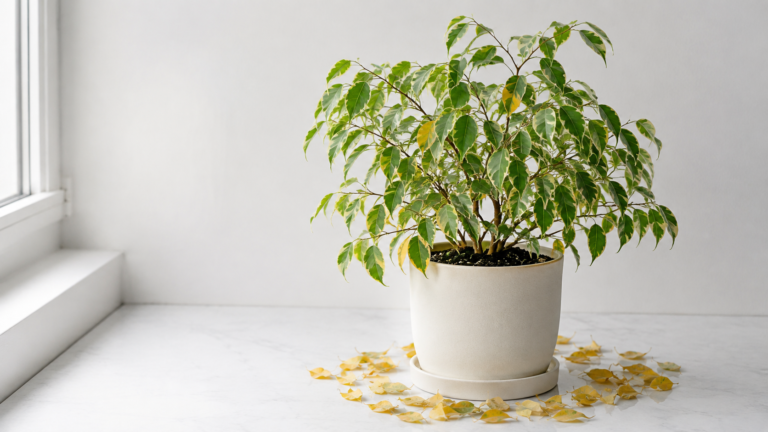
A plant wilting after repotting is usually reacting to lost and disturbed roots: some of the fine roots that take up water were broken during the move, so for a while the leaves lose water faster than the roots can supply it. Mild drooping that steadies and then improves is normal. Wilting that gets worse points to a fixable mistake in the repot itself, most often a rootball that stayed dry inside the new mix, a pot that is too big and staying soggy, or a stem buried deeper than before. Check the soil and the planting depth before you do anything else, because the fix for each is different and some of them are opposites.
Why Repotting Causes Wilting
Most of a plant's water uptake happens through its finest roots, and those are the ones most easily torn when a rootball is loosened, scored or pulled from a pot. The leaves keep losing water to the air at the same rate as before. For a few days the supply side is smaller than the demand side, and the plant droops.
Purdue University's publication on transplant shock of trees and shrubs (Paul C. Pecknold, read September 11, 2026) describes the same principle in outdoor plants: new transplants do not have extensive root systems and are frequently stressed by lack of water, with symptoms including wilting leaves, yellowing, and leaf rolling or curling. The same publication warns that overwatering after transplanting is just as injurious as underwatering. That warning matters most for houseplants, because the usual reaction to a drooping plant is more water.
This article covers wilting caused by the repot itself. If your plant is adjusting to a new home or a new room without any root disturbance, transplant shock in houseplants covers that broader situation and how long it tends to last.
First, Check Four Things
Before you water, move or fertilize anything, spend two minutes on this.
| Check | What you find | Likely cause |
|---|---|---|
| Push a finger into the new mix, then into the old rootball | New mix damp, old rootball dry | Dry rootball inside fresh mix |
| Feel the mix a few days after repotting | Still wet throughout, pot heavy | Soggy mix, often from an oversized pot |
| Look where the stem meets the soil | Soil higher on the stem than it was before | Planted too deep |
| Gently wiggle the stem | Plant rocks loosely in the pot | Air pockets; roots not in contact with mix |
If none of these apply, the soil is lightly moist and the plant is steady, you are most likely looking at ordinary root stress. That needs patience, not action.
Cause 1: The Old Rootball Stayed Dry
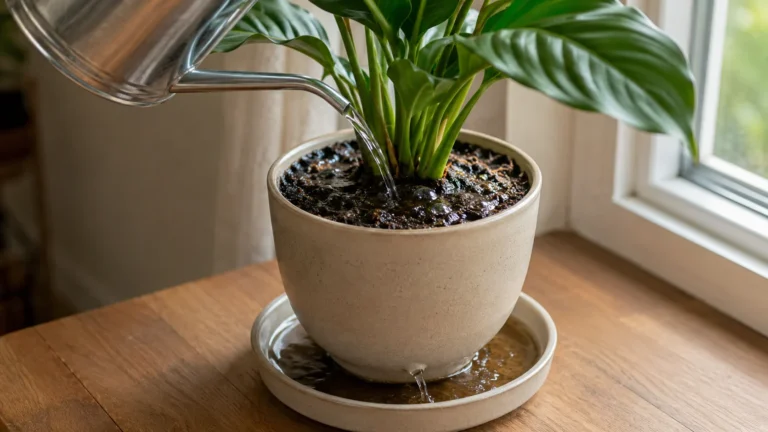
This one catches careful people. You repot into fresh, moist mix and water well. The new mix around the edges soaks up the water, and the old, dense rootball in the middle, where the roots actually are, stays dry. Water takes the easy path through the loose new mix and past the tight old core.
Peat-based mixes make it worse, because dry peat sheds water. Clemson Cooperative Extension's Indoor Plants: Transplanting and Repotting (read September 11, 2026) advises watering thoroughly after potting and repeating many times, especially if the mix contains peat.
The fix: water slowly, in several rounds a few minutes apart, aiming at the base of the plant rather than the edges of the pot. Let each round soak in before the next, then let it drain completely.
Cause 2: The Mix Is Staying Too Wet
The opposite problem looks the same from above. A plant wilting in soil that is still wet days after repotting is a warning sign, not a thirst sign.
It usually comes from a pot that is much bigger than the roots. Purdue University's Repotting Houseplants (Rosie Lerner, read September 11, 2026) cautions that oversized containers hold too much moisture and risk root rot, which is why Clemson recommends a pot only 1 or 2 inches larger in diameter than the current one. A small, freshly disturbed root system surrounded by a large volume of wet mix cannot use that water, and roots sitting in saturated mix lose the air they need.
The fix: stop watering until the top of the mix has dried. Do not leave the pot standing in a saucer of runoff. If it stays wet for well over a week and the plant keeps declining, slide it out and look at the roots. Overwatered vs underwatered: how to tell helps you read the leaves in the meantime.
Cause 3: The Plant Sits Deeper Than Before
Stems are not roots. A stem buried under soil it was never meant to sit in stays damp against tissue that is not built for it, and that can lead to rot at the base.
University of Arkansas Cooperative Extension's repotting guidance (Sherri Sanders, read September 11, 2026) is direct: make sure the top of the root ball is at the same position as in the original pot, and do not plant it deeper.
The fix: if you catch it in the first days, lift the plant, add mix under the rootball and reset it at its old level. If the base of the stem already feels soft, plant stem soft and mushy covers what to check next.
Cause 4: Air Pockets Around the Roots
Loose mix poured around a rootball can leave gaps. Roots touching air instead of mix cannot take up water from it.
Colorado State University Extension's PlantTalk on repotting (read September 11, 2026) suggests gently tapping the pot on the potting bench to settle the soil around the roots.
The fix: tap the pot on a table a few times, add a little mix where the surface sinks, and water once to settle it. Do not press down hard, which compacts the mix and squeezes out the air roots need.
What Actually Helps Recovery
Once the four checks are clear, recovery is mostly about lowering the demand on the roots while they regrow.
- Keep it out of harsh direct sun and away from heat vents. Strong light and heat make leaves lose water faster, which is the one thing a plant with fewer working roots cannot keep up with.
- Leave it in one spot. Moving it around to find better conditions only adds changes it has to adjust to.
- Water by the soil, not by the droop. Check the mix first. Drooping alone is not a reason to water a plant sitting in damp soil.
- Hold off on fertilizer. Wait for new growth. Many bagged mixes include some fertilizer already, and damaged roots are not ready for more.
- Do not repot again. A second disturbance a week after the first resets the clock.
When It Is More Than Repotting Stress
Normal repotting stress levels off and then slowly improves. Look closer if you see:
- Wilting that keeps getting worse even though the soil is moist.
- Soft, brown or black roots, or a sour smell from the mix. Colorado State notes that healthy roots are white and firm, and black, mushy ones should be cut out. That is root rot, and it needs its own rescue.
- A base of the stem that has gone soft.
If none of those appear, the most useful thing you can do is wait. For the wider set of reasons plants droop, why is my plant drooping walks through the rest.
How to Avoid It Next Time
Most repotting wilt comes from the repot, so most of it can be prevented:
- Water the plant a day before repotting so the rootball is moist all the way through.
- Moisten the new mix before you use it.
- Go up only one to two inches in pot diameter.
- Keep the top of the rootball at its original level.
- Tease apart circling roots gently rather than tearing them.
- Repot as the plant begins active growth, which Colorado State identifies as spring for most houseplants.
Frequently Asked Questions
Is it normal for a plant to droop after repotting?
Some drooping is common, because fine roots are lost when a rootball is disturbed. It should level off and slowly improve. Drooping that gets worse, especially in wet soil, needs a closer look.
Should I water a plant that is wilting after repotting?
Only if the soil, including the old rootball in the center, is dry. If the mix is still wet, more water makes things worse. Purdue warns that overwatering after transplanting is as harmful as underwatering.
Should I fertilize a plant after repotting?
Not right away. Wait until you see new growth. Many potting mixes already include some fertilizer, and freshly disturbed roots are not in a position to use more.
Can I put a repotted plant back in the sun?
Put it back in its usual spot, but keep it out of harsh direct sun while it recovers. Strong sun and heat increase water loss from the leaves, which the reduced root system cannot yet keep up with.