Why Is My Plant Losing Leaves? Normal vs. Not
Before you assume something is wrong, ask one question: has this plant been moved, repotted, or bought recently? If yes, some leaf drop is expected, not a warning sign. Iowa State University Extension notes that a plant brought into a new environment is under real stress, because "conditions indoors are less favorable than those outdoors," and that it typically takes a plant 1 to 2 months to adjust after being brought inside, with leaf drop happening during that window. For a newly purchased plant moving from greenhouse conditions to a home, the adjustment runs longer: "leaf drop may continue for several weeks as it often takes houseplants 2 to 3 months to adjust to their new environment."
If the plant hasn't moved recently, work through causes in order: soil moisture first, then light, then pests, then consider whether it's simply winter.
Is this normal adjustment? The recently-moved-or-purchased check
This is the single most common trigger for leaf drop, and it gets less attention than it deserves because it isn't really a "problem" to fix. It's a plant catching up to a new environment.
Ask yourself:
- Did you buy this plant in the last few months?
- Did you move it to a new room, a new window, or a new home?
- Did you repot it recently?
If any answer is yes, expect some leaf loss, and expect it to take time. Iowa State Extension's guidance covers both scenarios separately: a plant brought indoors seasonally typically needs 1 to 2 months, while a newly purchased plant adjusting from greenhouse to home conditions typically needs longer, around 2 to 3 months. The extension notes plants "are usually able to adjust to their indoor environment fairly quickly if they receive good, consistent care," while "poor or inconsistent care will prolong the adjustment period," so steady, unchanging care during this window actually shortens it.
If your plant is going through this specifically because it was just brought home or repotted and looks generally wilted or sad rather than just dropping a few leaves, transplant shock covers that pattern in more depth, including how long it typically lasts.
Old-leaf drop vs. whole-plant drop: which pattern you have
Not all leaf drop looks the same, and the pattern tells you a lot before you go looking for a cause.
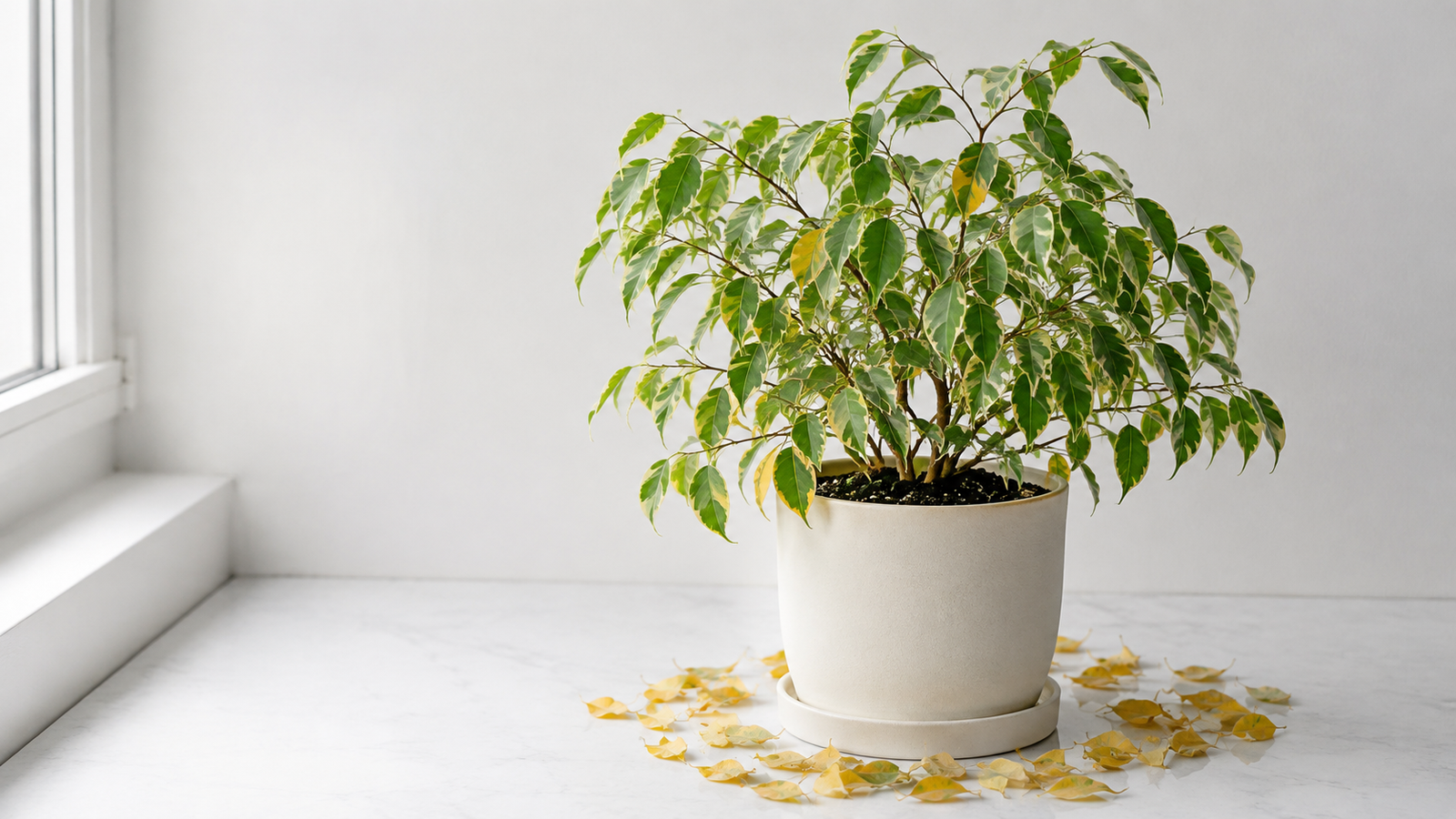
Occasional lower, older leaf yellowing and dropping on a plant that is otherwise growing normally is routine turnover. Plants continuously replace their oldest leaves as they age, especially the ones lowest on the stem that get the least light. One leaf every few weeks on a plant that's clearly still growing is not a symptom of anything.
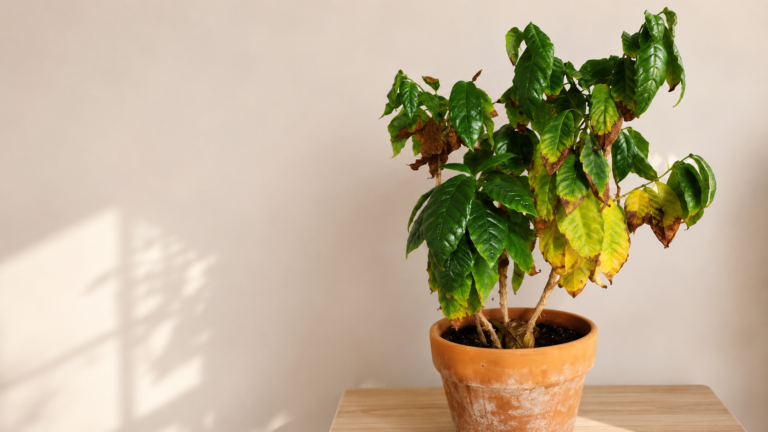
Several leaves dropping at once, leaves dropping from all over the plant rather than just the bottom, or leaves dropping while still green is the pattern that calls for a cause. This is the pattern to work through the checklist below for.
Work through it in order: soil, light, pests, season
If the recently-moved check doesn't explain it, go through these in order, because the most common causes come first.
1. Check the soil. Both over- and underwatering cause leaf drop, and they're the most common cause overall. Overwatered vs. underwatered walks through telling them apart, but the short version: consistently soggy soil, yellowing lower leaves, and a musty smell point to too much water; dry, shriveled or crispy leaves and soil that pulls away from the pot's edge point to too little.
2. Check the light. Both too little and too much light cause leaf drop, and so does a sudden change in light level, even a move of a few feet. A plant moved from a bright window to a dim corner, or the reverse, can drop leaves in response to the change itself, separate from whether the new spot is actually worse.
3. Check for pests. Small pests on the undersides of leaves or in leaf joints stress a plant enough to cause drop. Sticky residue, fine webbing, or visible insects point here.
4. Consider the season. If it's winter and the plant is otherwise healthy, reduced light and often reduced watering slow most houseplants down, and some leaf thinning during this period is common. This overlaps with why is my plant not growing, which covers the dormancy side of the same seasonal slowdown.
What normal adjustment looks like vs. real decline
Both a plant that's adjusting and a plant that's in real trouble drop leaves, so the pattern over time is what tells them apart.
Normal adjustment: leaf drop happens, but the plant keeps producing new growth, the remaining leaves look healthy, and the rate of drop slows down over the following weeks. The trend is toward stabilizing.
Real decline: leaf drop continues or accelerates, no new growth appears, remaining leaves look progressively worse (yellowing, browning, or wilting), and there's no sign the trend is stopping. The trend is toward getting worse.
If you're seeing decline rather than stabilizing adjustment, go back to the soil-light-pests checklist above and look harder, since something specific is driving it.
What to do while you wait it out
If you've concluded this is normal adjustment, the best response is consistency rather than intervention:
- Keep the care routine steady. Don't respond to leaf drop by watering more, moving the plant again, or feeding it. Extra changes add more adjustment on top of the one already happening.
- Water based on need, not worry. How often to water indoor plants covers the check-first rule, which matters more than usual right now since an anxious response to leaf drop often leads to overwatering.
- Give it steady light, without moving it around to "help." A stable spot is more useful than a search for a better one.
- Expect it to level off. Within the timelines above, new growth is the sign the plant has settled in.
When leaf drop is not normal
A few situations mean this isn't simple adjustment and deserves a closer look:
- The plant has been in the same spot for a long time with no recent change, and leaf drop has started suddenly.
- Leaf drop is accompanied by other symptoms: a soft stem, a bad smell from the soil, or soil that stays wet for a long time. This combination points toward root rot rather than ordinary adjustment.
- New growth has stopped entirely and the plant looks progressively worse over several weeks rather than stabilizing.
In any of these cases, go back through the soil-and-light checklist with fresh eyes, since a specific, fixable cause is more likely than ongoing adjustment. For the full beginner routine that prevents most of these causes from starting, indoor plant care for complete beginners puts them in the order that matters most.
Frequently asked questions
Is it normal for a new houseplant to lose leaves?
Yes. Iowa State University Extension notes that plants experience real stress moving from greenhouse to home conditions, and leaf drop can continue for several weeks while the plant adjusts, typically over 2 to 3 months.
How many leaves can a plant lose before it's a problem?
There's no fixed number; the pattern matters more than the count. Occasional single-leaf loss, especially older lower leaves, is routine turnover. Multiple leaves dropping at once, or leaves dropping while still green and from all over the plant, is worth investigating.
Should I fertilize a plant that's losing leaves to help it recover?
No. A stressed or adjusting plant isn't using nutrients efficiently, and added fertilizer can create a second problem on top of the first. Wait until you see clear new growth before feeding again.
Can moving a plant a few feet cause leaf drop?
Yes. Even a small change in light level can trigger leaf drop, separate from whether the new location is actually better or worse for the plant. This is one reason a stable spot matters more than constantly optimizing placement.
How long should I wait before assuming something else is wrong?
Give it the adjustment window first: roughly 1 to 2 months after a seasonal move indoors, or 2 to 3 months for a newly purchased plant. If leaf drop hasn't slowed and no new growth has appeared by then, work through the soil, light, and pest checklist for a specific cause.