How Often to Water Indoor Plants: Beginner’s Guide
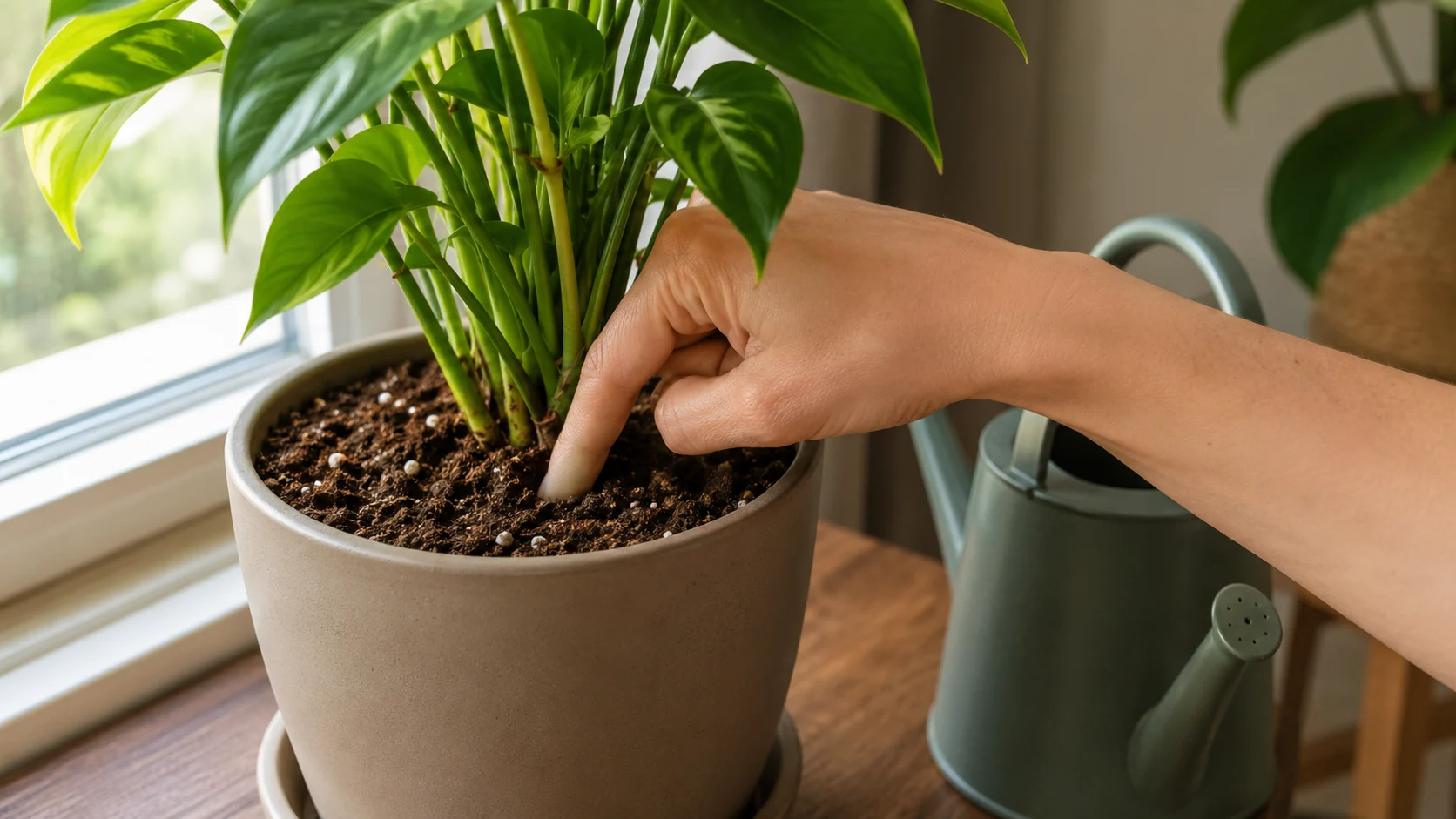
There is no universal number of days for watering indoor plants. Water most houseplants when the top one to two inches of soil feel dry, not on a fixed schedule. In many homes that lands somewhere between every 7 and 14 days, but the soil decides, not the calendar. The simplest check: push a finger about two inches into the soil and water only if it comes out dry. Watering too often, before the soil has dried, is one of the most common reasons houseplants fail, because roots that sit in wet soil begin to rot (University of Maryland Extension; Iowa State University Extension).
If that feels like less of a rule than you were hoping for, stay with me. By the end of this guide you will have a check you can run in about ten seconds, and you will know exactly what to do when you are not sure. That confidence is what keeps a plant alive, far more than any number on a calendar.
The honest short answer: check the soil, not the calendar
Almost every beginner wants the same thing: a clean answer like "every seven days." It feels safe. The problem is that a schedule ignores everything that actually controls how fast a pot dries out. The University of Maryland Extension puts it plainly: plants "should not be watered on a schedule, but rather should be watered when they need it." Iowa State University Extension says the same thing in a way that is easy to remember: check on a schedule, do not water on a schedule.
So the real rule is a habit, not a date. You check the soil at the same time each week (Sunday morning coffee is a good anchor), and you only reach for the watering can if the soil is actually dry. Some weeks you water. Some weeks you walk away. Both are correct.
The 10-second check before every watering
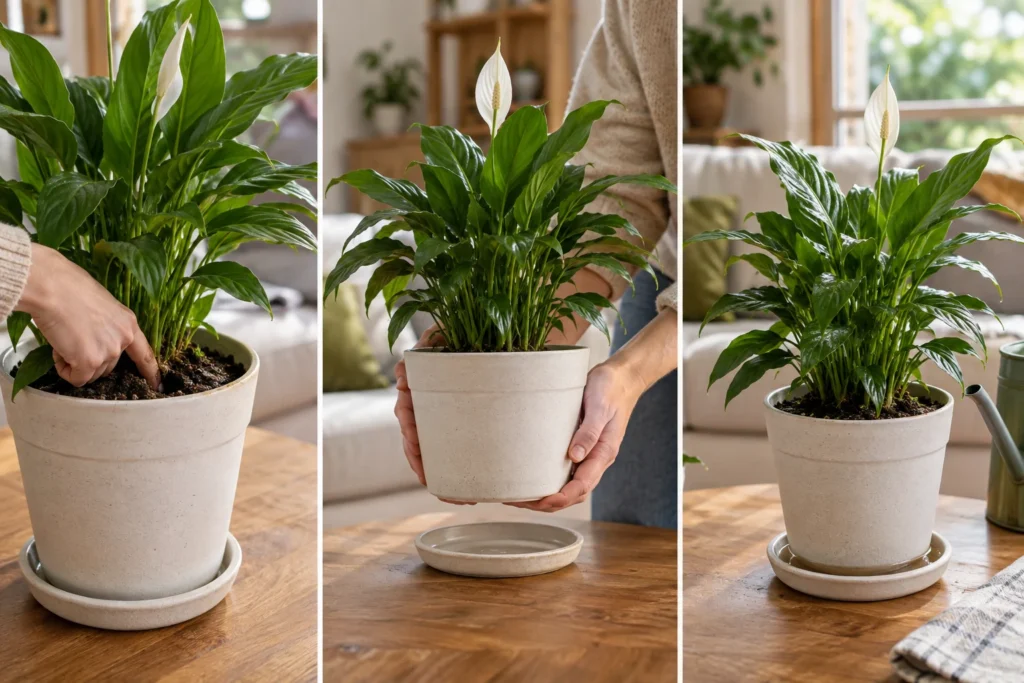
Here is the exact procedure. Run it every time, before you add a drop of water.
- The finger test. Push your index finger straight down into the soil, about two inches deep (up to the second knuckle for most people). If the soil feels dry at that depth, it is time to water. If it feels cool, damp, or clingy, wait. This is the single most reliable check, and it is the one the extension services recommend.
- The lift test. Once you have owned a plant for a couple of weeks, pick up the pot right after you water and notice how heavy it feels. A pot full of wet soil is noticeably heavier than a dry one. After a few checks you will be able to tell a plant needs water just by lifting it, no finger required.
- The drainage confirm. Make sure the pot has a drainage hole. If water has nowhere to escape, the bottom of the pot stays swamped even when the surface looks dry, and the finger test can fool you. A pot without drainage is the most common hidden cause of a plant that keeps dying for "no reason."
If the finger test and the lift test disagree, trust the finger test. It reads the root zone, which is what matters.
Why watering on a schedule kills plants
This is the part most beginner articles skip, and it is the part that saves plants. "Water once a week" is comforting advice, but it is bad advice, because the same plant in the same pot needs very different amounts of water depending on the time of year and where it sits. A pothos in a bright window in July can dry out in five days. The exact same plant in January, in a dim corner with the heat on, might still be damp after two weeks. Watering both on a fixed weekly schedule means you either drown it in winter or starve it in summer.
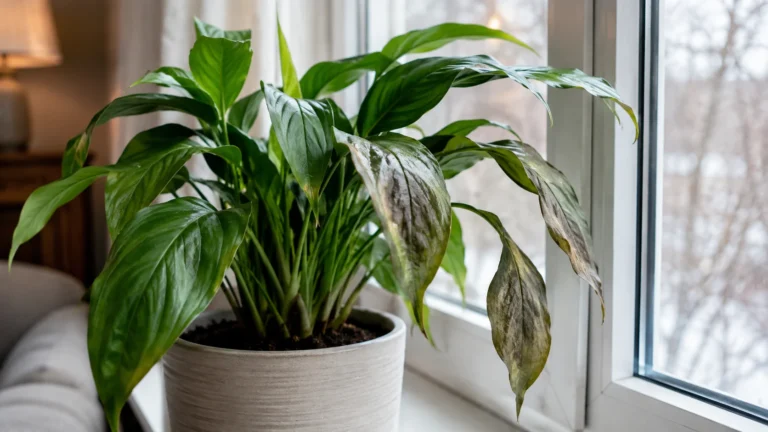
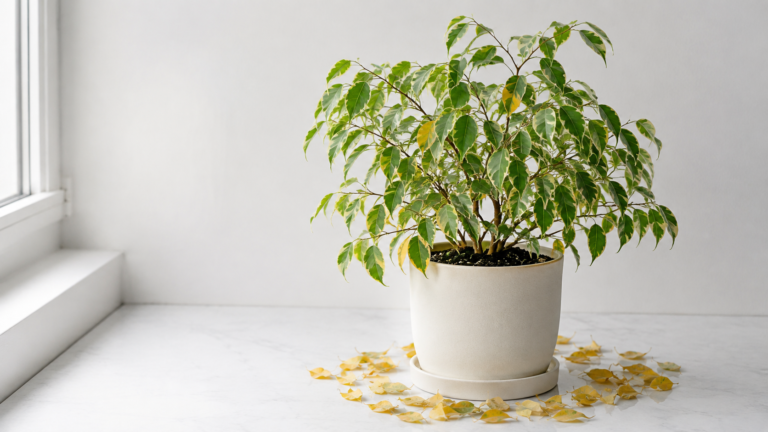
And here is the honest trade-off, the thing worth memorizing: underwatering is usually recoverable, while overwatering often is not. A thirsty plant wilts, you water it, and it perks up within hours. A chronically wet plant develops root rot, and roots that have rotted cannot take up water at all. Iowa State University Extension describes it directly: roots that sit for long periods in wet soil develop root rot, which shows up as yellowing leaves, wilting, and eventually death. By the time the leaves look bad, the damage underground is often done.
That is why "err on the dry side" is the safest instinct a beginner can build. When you are torn between watering and waiting, waiting is the lower-risk choice.
For a fuller walk-through of how to tell the two apart, see our guide on how to tell an overwatered plant from an underwatered one, and if the leaves are already changing color, why houseplant leaves turn yellow covers the most common causes.
What actually changes how often you water
Once you drop the calendar, you only need to understand the handful of factors that speed up or slow down how fast a pot dries. These are the real controls:
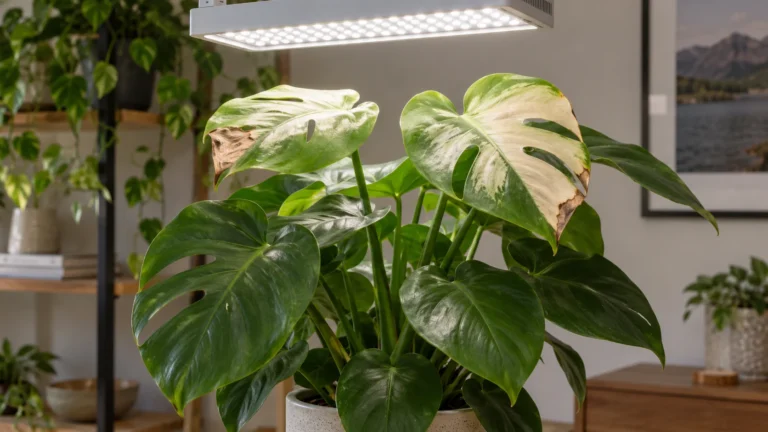
- Light. More light means faster growth and faster water use. A plant in bright light drinks more often than the same plant in a shady spot. Because light drives so much of this, it helps to understand what growers mean by bright indirect light, the condition most houseplants prefer.
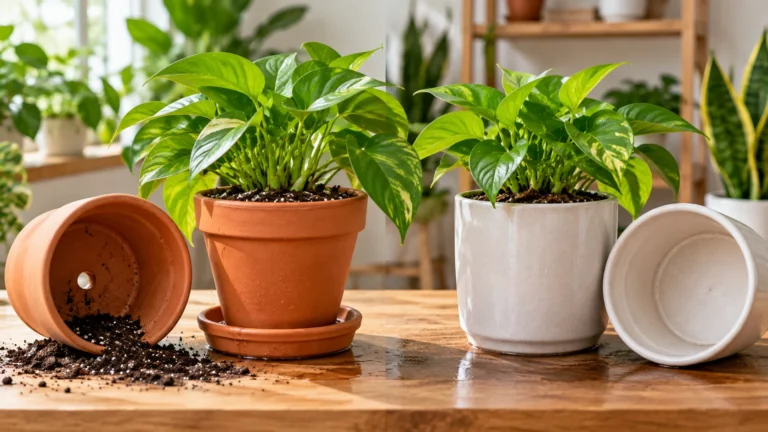
- Pot material. Terracotta (unglazed clay) is porous and lets water evaporate through its walls, so terracotta pots dry out faster. Plastic and glazed ceramic hold moisture longer. Neither is better, but they change your timing.
- Pot size. A small pot holds little soil and dries quickly. A large pot holds a big reservoir of moisture and stays wet much longer, which is why a small plant in an oversized pot is easy to overwater.
- Season. Most houseplants grow actively in spring and summer and slow down in fall and winter. Slower growth means less water used, so nearly every plant needs watering less often in the colder, darker months.
- Humidity and heat. Dry indoor air (especially with heating or air conditioning running) pulls moisture out faster. Humid rooms like bathrooms slow drying down.
- Plant type. This is the big one. Tropical foliage plants such as peace lilies and calatheas like to stay lightly moist and need water more often. Succulents, cacti, and snake plants store their own water and want to dry out fully between drinks, sometimes only every two to three weeks.
Frequency adjustment table
Use this to reason about your own plant instead of memorizing a number. The left column dries out faster and needs watering more often; the right column stays wet longer and needs it less often.
| Factor | Water more often | Water less often |
|---|---|---|
| Light | Bright light | Low or indirect light |
| Pot material | Terracotta (porous clay) | Plastic or glazed ceramic |
| Pot size | Small pot | Large pot |
| Season | Spring and summer (active growth) | Fall and winter (slower growth) |
| Air | Dry, heated, or air-conditioned rooms | Humid rooms (kitchens, bathrooms) |
| Plant type | Tropical foliage (peace lily, calathea) | Succulents, cacti, snake plants |
A plant that lands mostly in the left column might need water every few days. One that lands mostly on the right might go two weeks or more. Most beginner-friendly plants sit somewhere in between, which is where that rough "every 7 to 14 days" range comes from. If you are still choosing plants, our list of the best low-light indoor plants for beginners leans toward forgiving species that tolerate a missed check.
How to water correctly when you do water
When the soil is dry and it is time to water, the goal is a deep, thorough soak, not a daily splash.
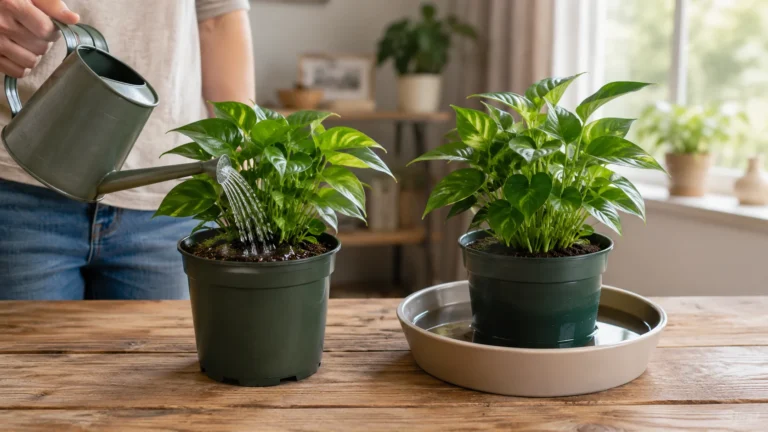
- Soak it fully. Pour water evenly over the soil until it runs freely out of the drainage holes at the bottom. This wets the entire root ball, not just the top layer. University of Maryland Extension advises watering so that water drains freely from the bottom of the container.
- Let it drain completely. Give the pot a minute or two to finish dripping.
- Empty the saucer. Never let a plant sit in a tray of standing water. Roots left in that puddle stay waterlogged and rot. Tip out any water that collects in the saucer or the decorative outer pot.
Deep, occasional watering builds healthier roots than frequent light sips, which tend to wet only the surface and encourage shallow roots.
The one rule for nervous beginners: when in doubt, wait
If you remember nothing else, remember this. When you are unsure whether to water, wait a day and check again. Iowa State University Extension gives the same advice in almost the same words: if you question whether the soil is dry, wait at least one more day. A day of thirst does no lasting harm to a healthy plant. A day too much water, week after week, is what does the damage.
Killing a plant is not a character flaw, and it is not a reason to give up. Every experienced plant owner has lost a few while learning to read the soil. Run the ten-second check, respect the dry side, and you have already avoided the mistake that takes out the most beginner plants.
Frequently asked questions
How often should I water indoor plants? There is no fixed number. Check the soil and water when the top one to two inches feel dry, which for many homes falls between every 7 and 14 days. Light, pot type, season, and plant species all shift that timing, so the soil check is what decides, not a calendar.
How do I know if I am overwatering or underwatering? Overwatered plants often have soft, yellowing leaves and stay wet at the roots; underwatered plants wilt and have dry, crispy leaf edges with bone-dry soil. Because the symptoms can overlap, check the soil moisture first. If the soil is soggy and the plant looks sick, you are likely overwatering.
Should I water my plants on a set schedule? No. Both University of Maryland Extension and Iowa State University Extension advise against watering on a fixed schedule. Check the soil on a regular schedule instead, and only water when it is actually dry.
How often should I water indoor plants in winter? Less often than in summer. Most houseplants grow slowly in the low light of fall and winter and use much less water, so a plant you watered weekly in July may only need it every two weeks or so in January. Keep checking the soil rather than assuming.
Is it better to underwater or overwater? Erring slightly dry is safer. A thirsty plant usually recovers within hours of watering, while chronic overwatering causes root rot, which is often fatal and hard to reverse. When unsure, wait.