Do Plant Pots Really Need Drainage Holes?
Yes, and the reason is worth more than the rule. Illinois Extension puts it directly: a hole at the bottom of the container is critical, because it allows water in the soil to drain freely so adequate air is available for the roots. Washington State University Extension states the same requirement, that planting containers must have drainage holes for root aeration. The practical consequence is the part people miss. In a pot with a hole, watering too much is a mistake you can correct, because the surplus leaves and the soil dries out again. In a pot with no hole, the surplus stays, and there is no way to remove it, see it or measure it. A pot without a drainage hole does not make overwatering more likely. It makes overwatering almost impossible to fix.
What Happens Inside a Pot After You Water It
Water in a container does not simply fall out of the bottom. It moves down through the mix until surface tension holds it in place, and the result is that a layer near the base of every pot stays saturated after watering, even a pot with a large hole in it. Horticulturists call that layer the perched water table, and it exists in your pots right now.
In a pot with a drainage hole, everything above that saturated layer drains away in the first few minutes. Air returns to the upper soil, and the roots in it can breathe. Clemson Cooperative Extension states the requirement plainly: roots need both water and oxygen, and when they are surrounded by water they cannot take up oxygen, so they may rot and eventually the whole plant may die.
In a pot with no hole, nothing above the saturated layer has anywhere to go. It stays. The next watering adds to it. The saturated zone grows upward from the base into the part of the pot where most of the roots live, and because you cannot see the bottom of the pot, the first evidence usually arrives as a symptom rather than as a puddle.
Container shape makes this worse or better before you have done anything. Steven Tjosvold of University of California Agriculture and Natural Resources sets out the relationship: as container height decreases, water-holding capacity increases, and as container height increases, water-holding capacity decreases. A shallow, wide decorative bowl with no hole is the hardest possible case, because the saturated layer occupies a much larger share of the pot.
The Gravel Layer Does Not Solve It
This is the workaround almost everyone reaches for first, and it is the one with the clearest evidence against it.
Linda Chalker-Scott, Extension Horticulturist at Washington State University, addresses it directly in The Myth of Drainage Material in Container Plantings. Her summary of the research: nearly 100 years ago soil scientists demonstrated that water does not move easily from layers of finer textured materials to layers of more coarse textured ones, and gravitational water will not move from a fine soil texture into a coarser material until the finer soil is saturated. Her conclusion is blunt. Since the stated goal of putting coarse material in the bottom of containers is to keep soil from getting waterlogged, "it is ironic that adding this material will induce the very state it is intended to prevent."
Illinois Extension describes the same effect from the reader's side: instead of extra water draining immediately into the gravel, the water perches, or gathers, in the soil just above the gravel.
So a gravel layer does not create drainage where there is no exit. What it does is take up space at the bottom of the pot, which raises the saturated soil layer closer to the roots. The plant is worse off than it would have been with mix all the way down.
The same reasoning applies to a layer of expanded clay pebbles, pot shards or stones inside a sealed pot. There is a genuine and much smaller version of the idea, which is that a coarse layer gives surplus water somewhere to sit below the mix rather than in it, but the wet zone still sits directly against the bottom of the root ball and none of it leaves the pot. It buys a little room, not drainage.
Activated charcoal is often recommended alongside the gravel for pots without holes. We could not find published extension guidance supporting it as a substitute for drainage, so we are not going to tell you it works.
The Second Problem: You Cannot Flush It
Drainage does one more job that gets almost no attention until it goes wrong.
Fertilizer and tap water both leave dissolved salts behind in the mix as water evaporates and as the plant takes up moisture. The standard remedy is to run plenty of water through the pot and let it drain out, carrying the accumulated salts with it. A pot with no hole cannot be flushed. Anything that goes in stays in, and it concentrates over months.
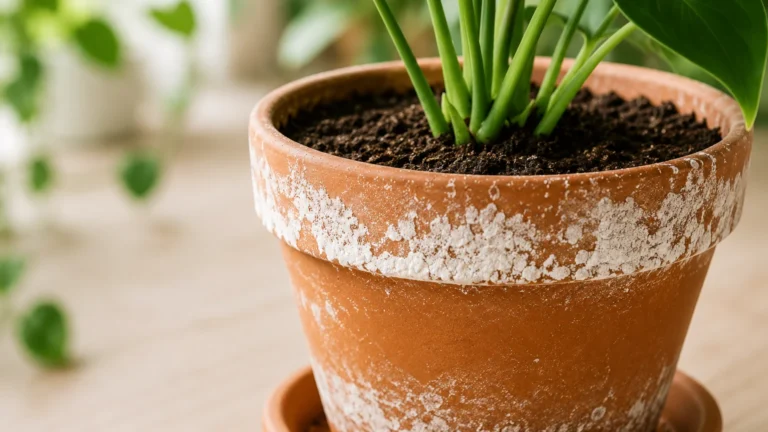
If your water is hard, this is not a hypothetical: the crust on the soil surface and the pale rim on the pot are the same story, and hard water and mineral buildup in houseplants covers what it does and how flushing normally deals with it.
The Workarounds People Actually Use, and What Each Costs
Nobody throws out a beautiful pot because of a fact sheet. Here is the honest accounting of the four real options.
| Option | What it costs you | Verdict |
|---|---|---|
| Drill a hole | A masonry or diamond-tipped bit, eye protection, patience, water to keep the bit and the pot cool, and a genuine risk of cracking thin ceramic or glass. Not possible on some materials. | The best outcome if the pot survives. Illinois Extension's advice for a pot that came without a hole is to find a way to make one, and drilling is the way it names. |
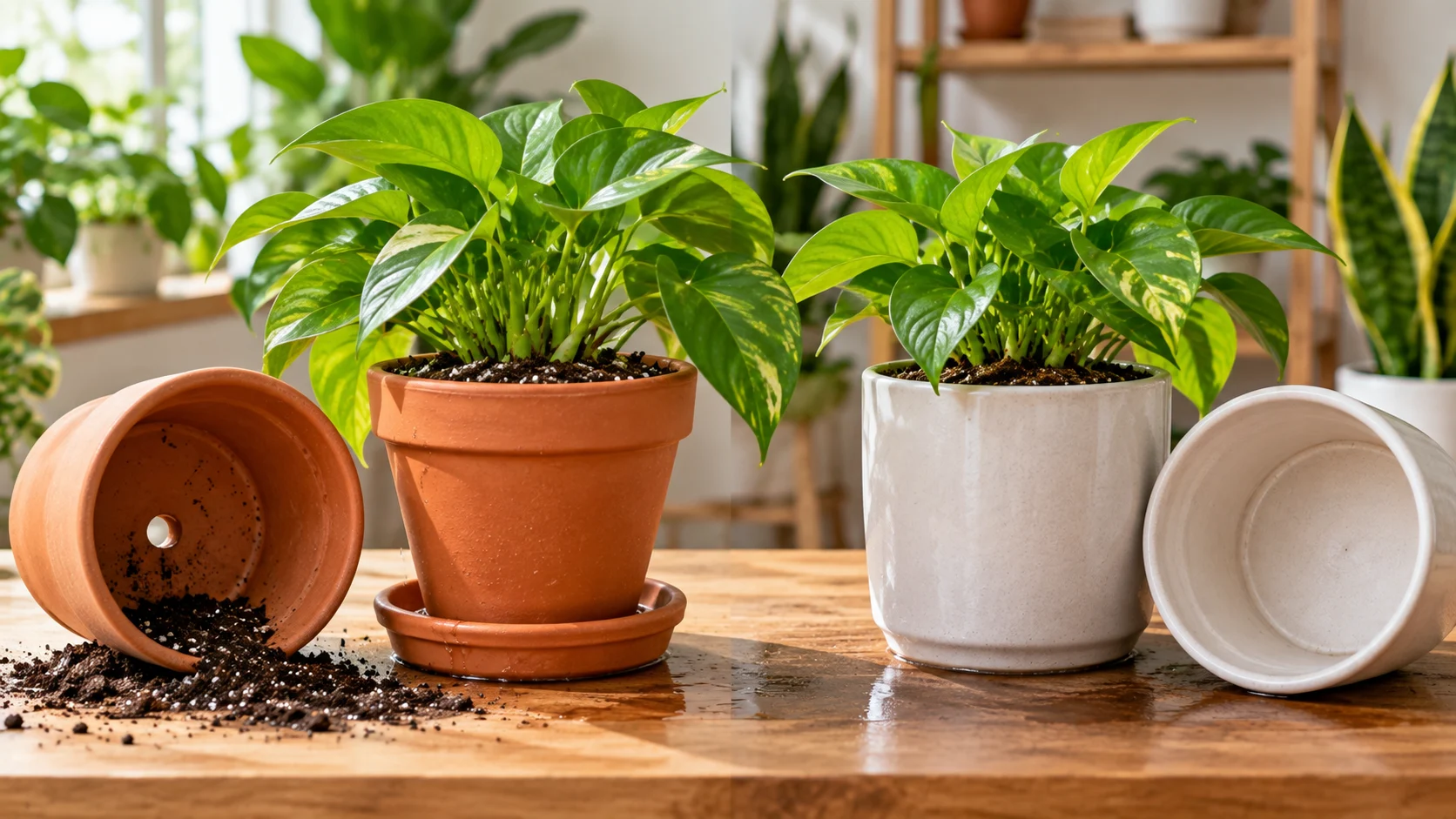
| Double potting, also called a cachepot | Nothing horticulturally. You keep the plant in a plain nursery pot with holes, and drop it inside the decorative one. You have to lift it out to water, let it drain fully, and put it back. | The right answer for most people. Illinois Extension suggests exactly this, either a pot liner that fits inside, or removing the decorative outer container before watering and replacing it once drainage is complete. |
| Water sparingly, by measured amount | Every margin for error. You are estimating how much the mix can hold, with no feedback, no way to see the bottom of the pot and no way to remove a mistake. It also rules out flushing salts. | Survivable for a drought-tolerant plant in the hands of someone disciplined. It is management of a permanent hazard, not a fix. |
| Add gravel or pebbles at the bottom | Usable soil depth, and it moves the saturated zone up toward the roots. | Does not work as advertised, for the reasons above. |
If you go with the double-potting route, the one habit that matters is emptying the outer container. A nursery pot standing in the water that ran out of it is back to having no drainage, and Clemson Cooperative Extension's instruction is exactly that: do not let the pot sit in the water that runs out, and empty the saucer.
"But My Plant Is Fine in One"
Some plants do survive in sealed pots for a long time, and it is worth being straight about why.
They survive because the person watering them is watering very little, very rarely, and usually with a plant that wants to dry out anyway. The pot has not become safe. The watering has become conservative enough to compensate for it, which works right up until a generous watering, a cold month when the plant uses less, or someone else looking after the plant while you are away.
That is why the failure, when it comes, tends to be sudden and total rather than gradual. There is no early warning in the saucer because there is no saucer, and by the time the leaves report it, the roots have been sitting in water for weeks. If you want to know how much water a given plant should be getting in the first place, how much water a houseplant actually needs is the place to start.
How to Tell It Is Already Going Wrong
The signs are the ordinary overwatering signs, arriving faster and with less warning than usual.
- Wilting or drooping despite wet soil. The single most useful contradiction in houseplant diagnosis, and the signature of root rot.
- Soil that is still damp a week or two after watering, especially at depth rather than at the surface.
- A sour or swampy smell from the soil surface.
- Lower leaves yellowing, several at once.
- A stem that has gone soft at the base, which is the point at which the situation is serious. A soft, mushy stem is the page for that.
If you find any of these in a pot with no hole, the first move is not a smaller watering can. It is getting the plant out of the pot and looking at the roots.
The Reasonable Middle Ground
Being careful is not the same as being anxious, and this subject produces a lot of anxious watering. A drainage hole is precisely what lets you stop worrying: it converts overwatering from an invisible accumulation into a visible event that ends when the water stops running out of the bottom.
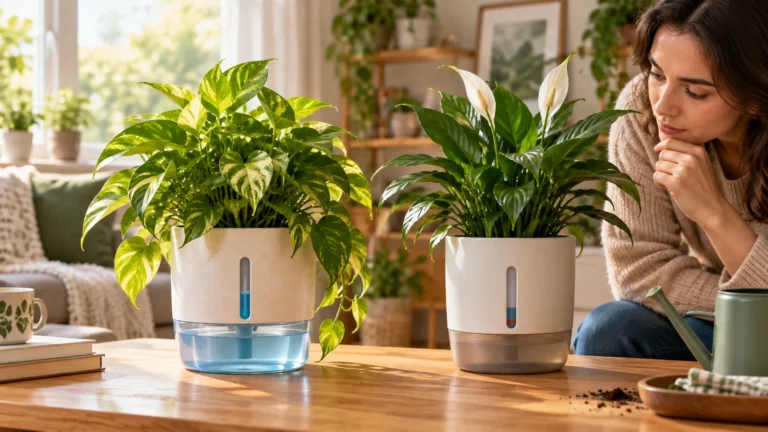
If you already water nervously, the fear of overwatering is worth a read, because underwatering out of caution is its own way to lose a plant. And if the appeal of the sealed pot was that it seemed lower maintenance, self-watering pots are the design that genuinely addresses that problem, with their own list of plants they suit and plants they harm.
Frequently Asked Questions
Can a plant survive in a pot with no drainage hole?
Some can, for a while, with very careful watering, and drought-tolerant plants tolerate the arrangement best. But the pot has not become safe. There is no way to remove excess water, no way to flush salts, and no visible warning before the roots are affected.
Does a layer of rocks at the bottom count as drainage?
No. Washington State University Extension's review of the research finds that water will not move from a fine soil into a coarser material until the fine soil is saturated, so a gravel layer holds water above itself. Illinois Extension describes the water perching in the soil just above the gravel. The saturated zone ends up closer to the roots, not further from them.
How many drainage holes does a pot need?
One functioning hole is enough for most houseplant pots. What matters is that it stays clear and that the pot is not standing in the water it releases, which Clemson Cooperative Extension addresses by advising you to empty the saucer rather than let the pot sit in it.
Can I drill a hole in a ceramic pot myself?
Illinois Extension's advice for a pot without a hole is to find a way to make one, and drilling is the method it names. In practice you need a masonry or diamond-tipped bit, eye protection, water to keep the bit and the pot cool, and an acceptance that thin or glazed ceramic can crack. If the pot is precious, double potting risks nothing.
Is a decorative pot with no hole useless then?
Not at all. It is an excellent outer container. Keep the plant in a plain nursery pot with holes, lift it out to water it, let it drain completely, and set it back inside. You get the pot you wanted and the drainage the plant needs.