Best Pots and Soil for Houseplants: Beginner Guide
The pot and the mix are one decision, not two. For nearly every common houseplant, the answer is a container with a drainage hole, filled with a light, porous potting mix that drains freely while still holding some moisture, and sized only one to two inches larger in diameter than the pot the plant is in now. Clemson Cooperative Extension gives that sizing rule and describes the job a mix has to do: dense enough to support the plant, able to let water and air pass through readily, yet still retaining adequate moisture. Garden soil does not belong in a pot. What changes between one plant and the next is how fast the whole arrangement dries out, and you adjust that with the mix and the pot together rather than with either one alone.
What a Pot and a Mix Are Actually For
Roots need two things at once, and the tension between them is the entire subject.
They need water, and they need air. Clemson Cooperative Extension states the failure mode plainly: roots need both water and oxygen, and when they are surrounded by water they cannot take up oxygen, so they may rot and eventually the whole plant may die. Everything below is in service of holding those two in balance.
A container mix therefore has four jobs, and Clemson's fact sheet on indoor plant soil mixes lists them: it must be dense enough to support the plant, hold nutrients, allow water and air to pass through readily while still retaining adequate moisture, and be free of insects, diseases and weed seeds.
Notice what is not on that list. Nothing about being rich, dark or heavy. A potting mix is a structure for roots first and a food source a distant second.
Why Garden Soil Fails in a Pot
This is the most common and most expensive early mistake, and it is worth understanding rather than just obeying.
Clemson Cooperative Extension advises against native garden soils in containers because they carry organisms you do not want indoors, and notes that soil taken from a garden needs sterilizing, by baking at 180 degrees Fahrenheit for 30 minutes, to kill pathogens, insects and weed seeds. That alone rules it out for most people.
The physical problem is just as real. Garden soil in a pot compacts under repeated watering, and once it has compacted it holds water and excludes air. The same soil in a garden bed is fine, because there is a whole soil profile beneath it for water to move into. A pot is a closed box with one small exit.
That is also why the most popular container myth does not work. Putting a layer of gravel or pot shards at the bottom of a container does not improve drainage. Linda Chalker-Scott of Washington State University Extension summarizes the research: water does not move easily from a fine-textured material into a coarser one, so gravitational water will not pass into the gravel until the soil above it is saturated. Her conclusion is that containers must have drainage holes for root aeration, and that added drainage material only hinders water movement.
What Is Actually in a Bag of Potting Mix
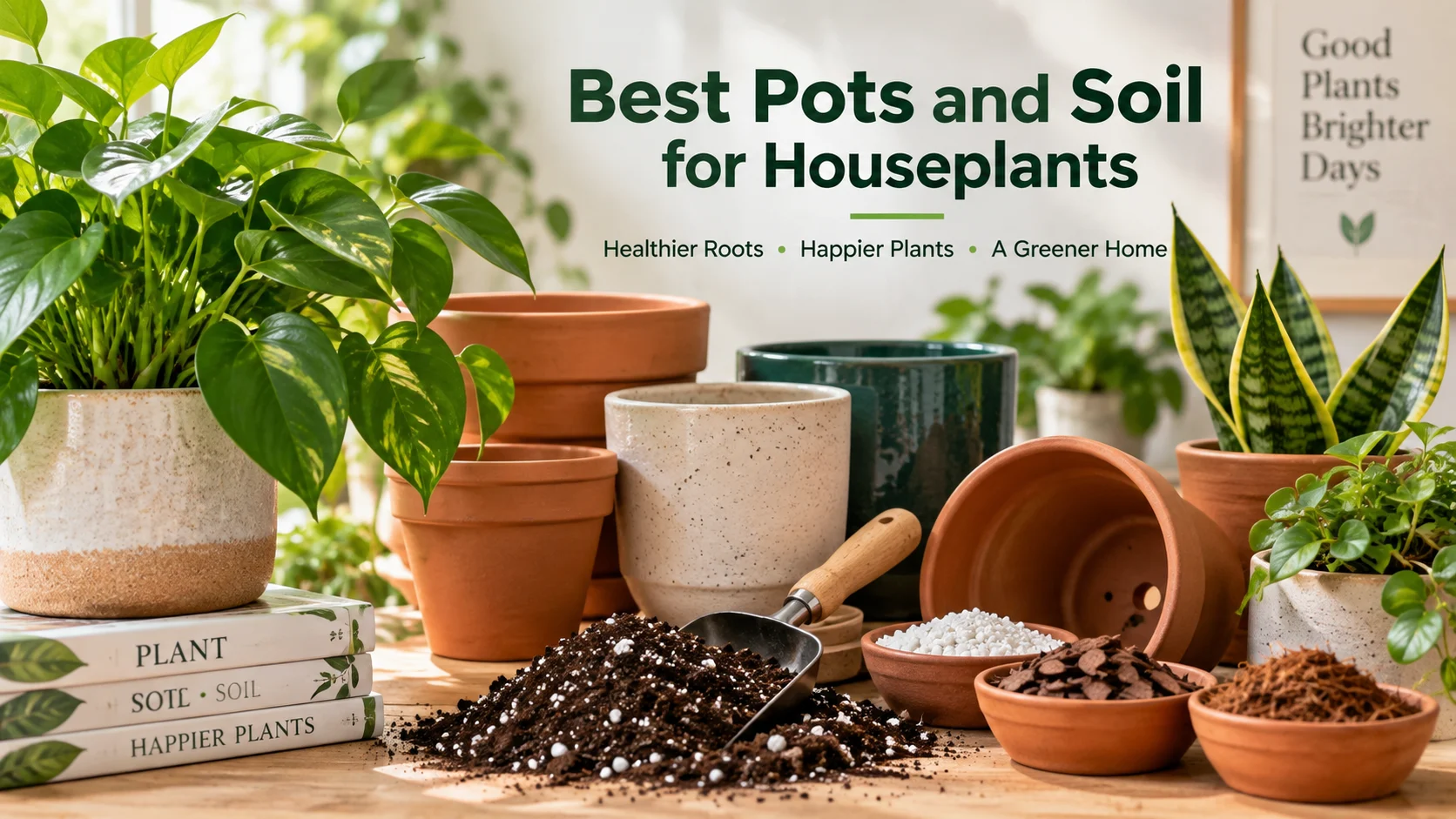
Most commercial mixes contain no soil at all. Clemson describes the standard as peat-lite: peat moss combined with perlite or vermiculite, with coconut coir now widely used as a lower cost and more sustainable alternative to peat. These soilless media are sterile, light and easy to handle.
The components divide neatly by what they do.
| Component | What it contributes | What too much of it does |
|---|---|---|
| Peat moss or coconut coir | The bulk of the mix, and most of its water holding | Stays wet for a long time, which is where overwatering problems start |
| Perlite (white, light, gritty) | Air space, faster drainage | The mix dries out quickly and needs watering more often |
| Vermiculite (soft, flaky, brown) | Holds water and nutrients | Adds moisture retention where you may not want it |
| Bark fines | Structure, air space, slower breakdown than peat | Coarse and low in water holding on its own |
| Coarse sand | Weight and drainage | Heavy, and fine sand can do the opposite of what you intended |
Clemson publishes recipes if you want to see the proportions rather than trust a bag. For foliage plants it gives two parts peat with one part perlite and one part coarse sand, or equal parts peat, bark and perlite. Its Cornell Epiphytic Mix, for bromeliads and cacti, is one third each of Douglas fir bark, peat moss and perlite. One practical note from the same source: if you use coir in place of peat, rinse it thoroughly to avoid salinity problems.
The single most useful sentence Clemson publishes about mixes is in its watering fact sheet, and it is the one to carry with you: heavy, fine-textured potting media, and those containing a lot of peat moss, hold more moisture than loose, porous mixtures of bark, sand and perlite. That is the lever. If your plant likes to dry out, add porosity. If it hates drying out, do not.
The Pot: Three Things Matter and the Rest Is Taste
A drainage hole. This is not negotiable and it is not a preference. Both Illinois Extension and Washington State University Extension put it in the same terms: a hole at the bottom of the container is critical, because it lets water drain freely so adequate air is available to the roots. A decorative pot with no hole is a workable outer container and a poor planting container, and the difference is worth knowing before you plant into one.
Size, and this is where good intentions go wrong. Clemson's guidance when repotting is to select a pot one or two inches larger in diameter than the current one. The reason is that a pot holds a fixed volume of mix, and the roots in it can only use so much water. Move a small plant into a very large pot and most of that mix stays wet for a long time with no roots drawing on it, which is the exact condition that produces root rot. If your plant went downhill after a generous upgrade, the signs of root rot in houseplants is the page to read next.
Material, because it changes the watering. Clemson is specific: water evaporates rapidly from the sides of a porous clay pot, which requires more frequent watering than a nonporous glazed or plastic pot. That is not a verdict on either material. It is a variable you get to set. Terracotta is a way of making a mix effectively drier, and plastic or glazed ceramic is a way of making it effectively wetter, and both can be the right choice depending on the plant and on how often you actually water.
The Part Almost Nobody Mentions: Pot Depth Changes the Mix
Here is the thing that explains a lot of confusing outcomes, and it very rarely appears in guides to choosing a pot.
"Well draining" is not a property of a potting mix by itself. It is a property of a mix inside a particular container shape. In any pot, a layer of the mix near the bottom stays wetter than the rest after watering, and how much of the pot that wet layer represents depends on how tall the pot is.
Steven Tjosvold of University of California Agriculture and Natural Resources puts the relationship directly: as container height decreases, water-holding capacity increases, and as container height increases, water-holding capacity decreases. His practical warning is the useful part for a houseplant owner: a container soil that works well in a tall container may have too high a water-holding capacity and too little air-filled porosity in a short one.
In plain terms, the same bag of mix behaves like a wetter mix in a shallow bowl and a drier mix in a tall pot. That is why shallow decorative bowls are the hardest containers to keep a plant alive in, and why a mix that has always worked for you can suddenly seem to be holding water when you switch to a low, wide planter. If you want to use a shallow container, add porosity to the mix rather than blaming it later.
Three Worked Combinations
| Plant type | Mix | Pot | What you are compensating for |
|---|---|---|---|
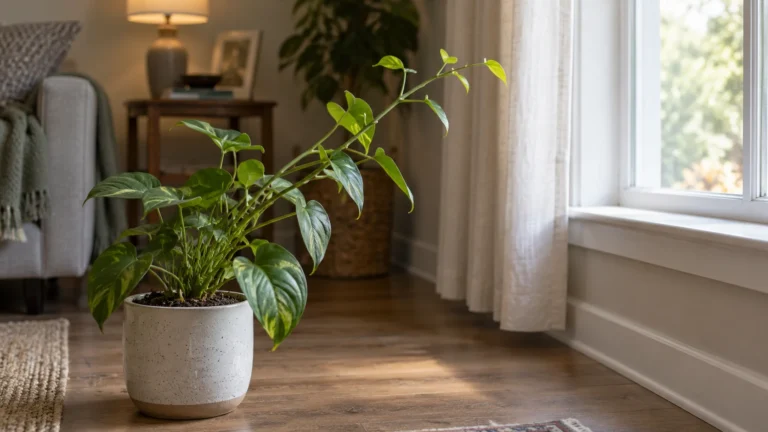
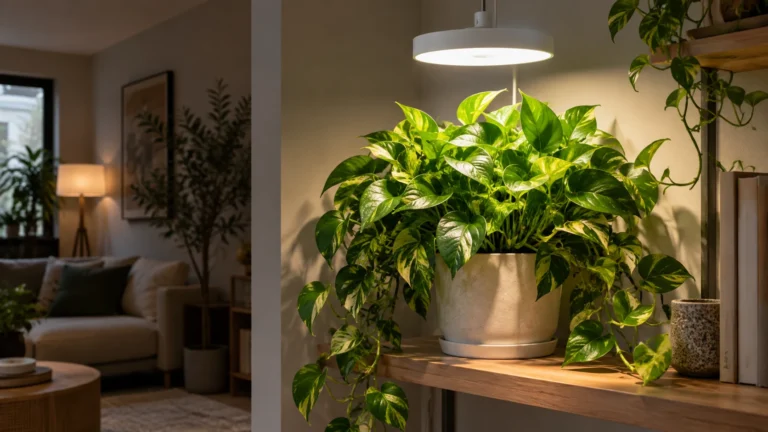
| Pothos, philodendron, most easy foliage plants | A standard peat or coir based mix, with extra perlite if you tend to water generously | Plastic or glazed, one to two inches larger than the current pot | Nothing much. These plants tolerate a wide range, which is why they are recommended to beginners |
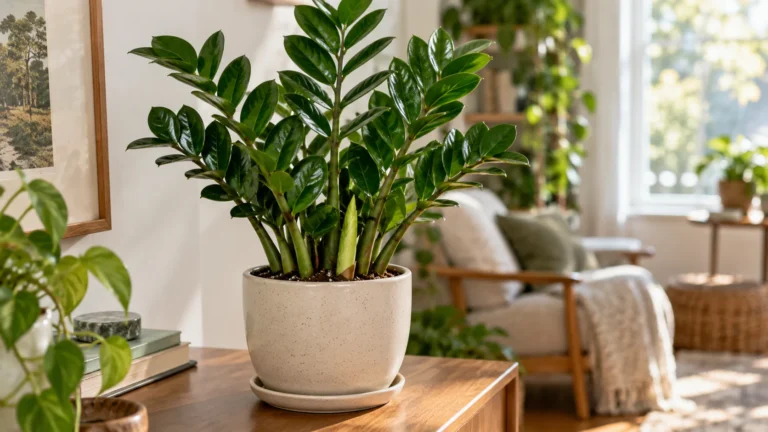
| Snake plant, ZZ plant, succulents and cacti | A coarse, gritty mix with a high proportion of bark, perlite or coarse sand | Terracotta, and on the small side rather than generous | Their intolerance of sitting wet. Every choice here is aimed at drying faster. Snake plant care for beginners covers the rest of the routine |
| Ferns, calatheas, thin-leaved tropicals | A mix with more peat or coir, less grit | Plastic or glazed, standard depth | Their dislike of drying out completely. Here you are deliberately holding moisture |
The pattern is the point. You are not looking for the best mix or the best pot. You are stacking small decisions in one direction or the other until the container dries out on a schedule that matches both the plant and your own habits.
What the Right Pot and Mix Cannot Fix
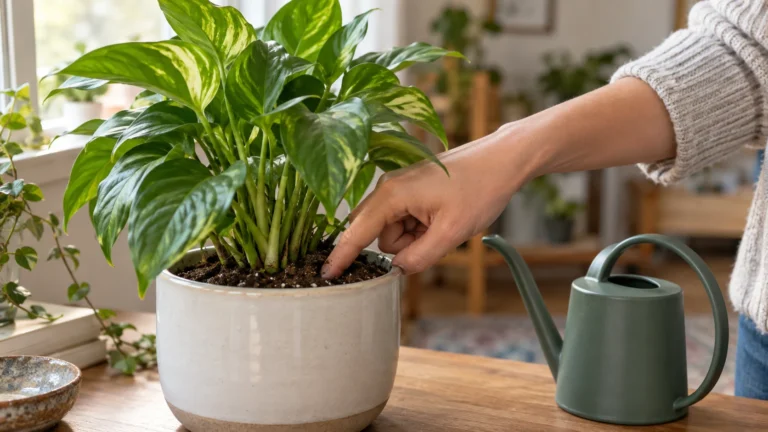
They cannot fix a watering routine based on a calendar. A perfect free-draining mix in a correctly sized terracotta pot will still drown a plant that is watered every Sunday whether it needs it or not, and it will still dry out a plant that is forgotten for a month. The container sets how fast the soil dries. It does not decide when you water, which is the point how often to water indoor plants makes at length, and telling an overwatered plant from an underwatered one is the diagnosis that follows when it goes wrong.
They also cannot fix a mismatch between the plant and the room. A fern in a dry, dark corner is not going to be rescued by the correct mix.
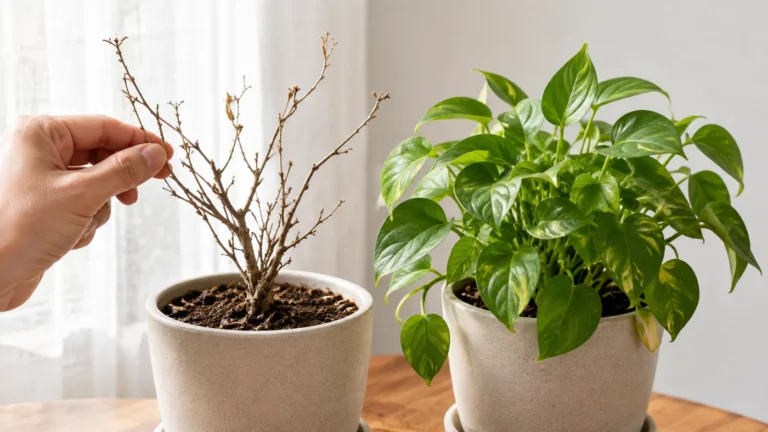
And they cannot repair damage already done. Repotting a plant with rotted roots into ideal conditions helps only if there is enough healthy root left to work with.
If a reservoir-style container is what you are considering instead, the same logic applies with the stakes raised, because the mechanism is designed to keep the soil moist continuously. Our honest read on self-watering pots covers which plants that suits and which it harms.
When to Change the Pot at All
Clemson lists the signs that a plant needs repotting: roots in a solid mass around the root ball, roots growing out of the drainage hole, or a plant that needs frequent watering or wilts shortly after being watered.
If a plant is too big to repot practically, the same source offers the alternative: remove the top two or three inches of mix and replace it with fresh mix every other year or so, which is called topdressing.
And if none of those signs is present, leave it alone. Repotting is a stress, not a treat, and a plant in a pot it is comfortable in does not need a new one because the season has changed. The rest of the beginner routine, in the order that matters, is in our complete beginner's guide to indoor plant care.
Frequently Asked Questions
What is the best soil for indoor plants?
A soilless potting mix rather than garden soil. Clemson Cooperative Extension describes the common standard as peat-lite, meaning peat moss or coconut coir combined with perlite or vermiculite. Adjust it toward more perlite or bark for plants that like to dry out, and toward more peat or coir for plants that do not.
How much bigger should a new pot be?
Clemson advises one or two inches larger in diameter than the current pot. A much larger pot holds more wet mix than the root system can use, which keeps the root zone saturated for longer than the plant would like.
Should I put gravel or stones in the bottom of the pot?
No. Washington State University Extension's review of the research is that water does not move easily from a fine material into a coarser one, so a gravel layer holds water above itself rather than draining it away. Containers need drainage holes instead.
Is terracotta better than plastic?
Neither is better in general. Clemson notes that water evaporates rapidly through porous clay, so a clay pot needs watering more often than a glazed or plastic one. Choose clay for plants that must dry out and for people who water generously, and plastic or glazed for plants that resent drying and for people who water sparingly.
Can I reuse the mix from a plant that died?
It depends on why it died. Mix from a plant lost to root rot or to a soil-borne problem is not worth the risk of reusing on a healthy plant, and old mix in general has compacted and lost structure. That is its own question with a longer answer.