Anxious Overwatering: How to Break the Habit for Good
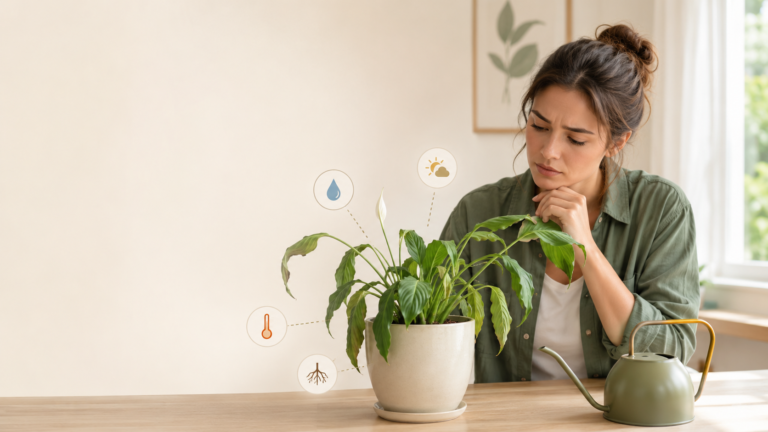
If you already know the "check the soil before you water" rule and you still keep watering anyway, the problem was never a lack of information. Overwatering out of anxiety is a habit loop: a small flicker of worry when you walk past the plant, a watering action that relieves that worry instantly, and a repeat performance the next time the worry shows up, whether or not the soil actually needed water. Repeating the rule doesn't touch that loop, because the loop was never about the rule. The fix that actually works is swapping the action you reach for when the worry hits, not memorizing the rule harder.
Why "just check the soil first" doesn't fix this
Nearly every article on overwatering ends with the same advice: stick your finger in the soil, and only water if it's dry. That advice is correct, and it's also usually not new information to someone who reaches for the can every day or two anyway. If a plain fact were enough, this wouldn't be a recurring habit. Something else is doing the work.
That something is relief. Watering a plant you're worried about produces an immediate, physical sense that you've done something. Whether the plant needed it or not is a fact that takes days to show up, brown edges, yellowing, a mushy stem. The relief from watering, by contrast, arrives in seconds. Your brain reliably reinforces whatever produces fast relief, regardless of whether that action was correct, because the reward loop doesn't wait around for the slow, delayed feedback of "was that actually the right call."
The loop underneath the habit
This follows the same basic three-part shape that shows up across habit-change writing generally: a cue, a routine, and a reward.
- Cue: you walk past the plant, glance at it, and feel a flicker of uncertainty, is it thirsty, is that leaf a little duller than yesterday.
- Routine: you water it, because watering is the action that's always available and always feels productive.
- Reward: the uncertainty resolves immediately. You feel like you've done your job as a plant owner, at least for the moment.
The plant's actual soil moisture never enters that loop. That's why knowing the finger-test rule doesn't break it: the rule targets the routine, but the cue and the reward keep pulling you back to watering because watering is the fastest way to make the uncertainty go away, whether or not it's the correct action.
The fix: swap the routine, keep the reward
You don't need to talk yourself out of the urge to check on your plant. That urge is fine, even useful. What needs to change is what the checking turns into.
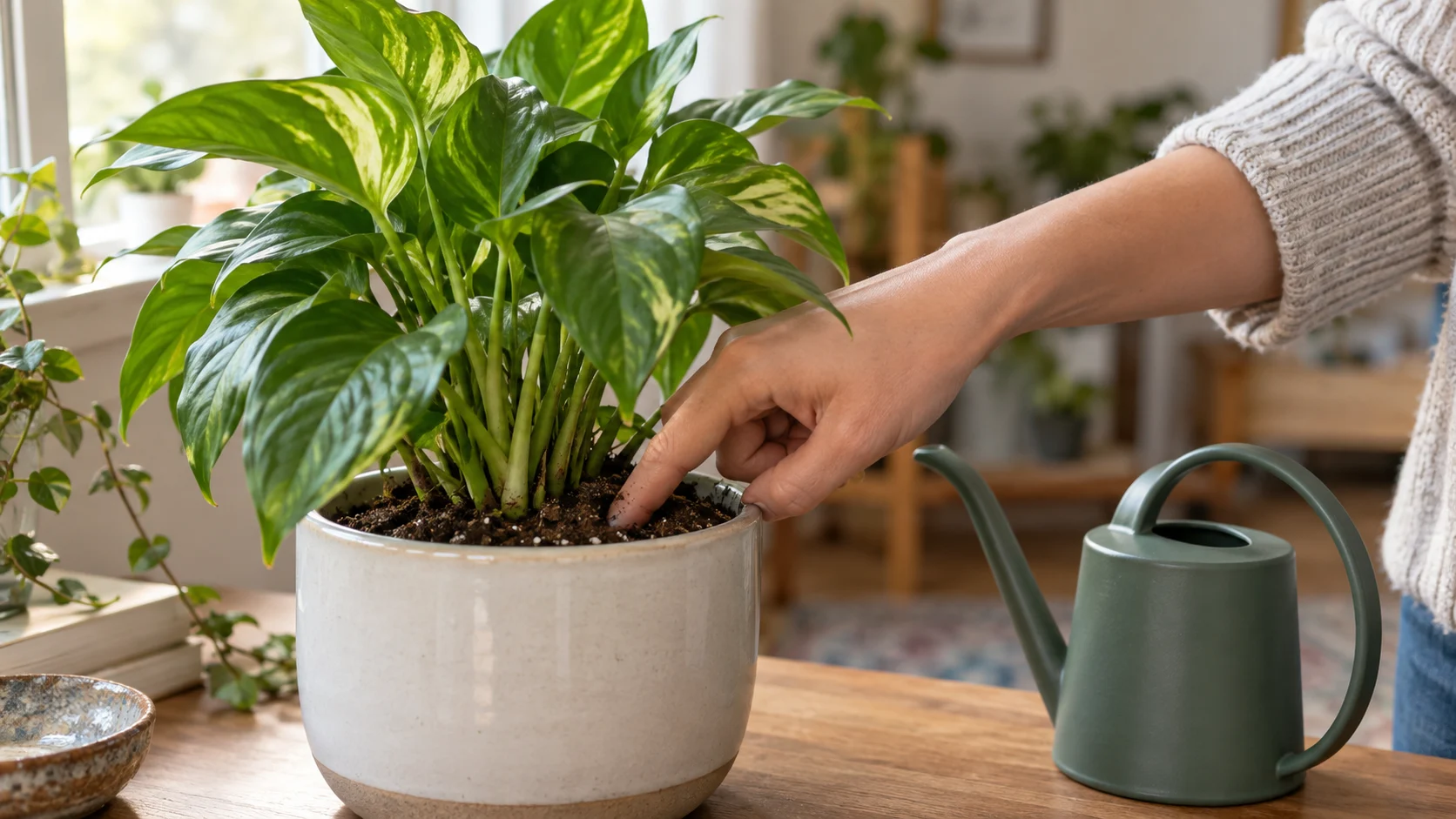
- Make the finger-check itself the whole ritual, not a step before watering. When you feel the urge, go touch the soil. Full stop. That's the action. It gives you the same "I did something" payoff, direct physical contact with the plant, without a drop of water leaving the can unless the soil is actually dry. Our guide to how to tell if your plant needs water covers the finger, lift, and skewer tests so you have more than one physical check to rotate through.
- Add a small barrier between the urge and the can. Store your watering can somewhere slightly less convenient, a different room, a closed cabinet, so reaching for it takes a deliberate walk instead of an automatic grab. That extra ten seconds is often enough for the "wait, did I already check?" thought to catch up.
- Use a tool that gives you a number instead of a feeling. Uncertainty is what triggers the loop, so anything that replaces "I'm not sure" with a concrete reading interrupts the cycle at its source. Are moisture meters accurate and worth it covers whether this particular tool earns its keep, honestly, including where it doesn't.
- Track it somewhere you can see, instead of trusting memory. A simple checkmark on a card near the pot each time you check the soil, whether or not you water, does two things: it gives you the small satisfaction of logging an action (feeding the same reward loop harmlessly), and it shows you, in writing, how often you're actually checking versus how often the plant needs it.
Why this works better than willpower
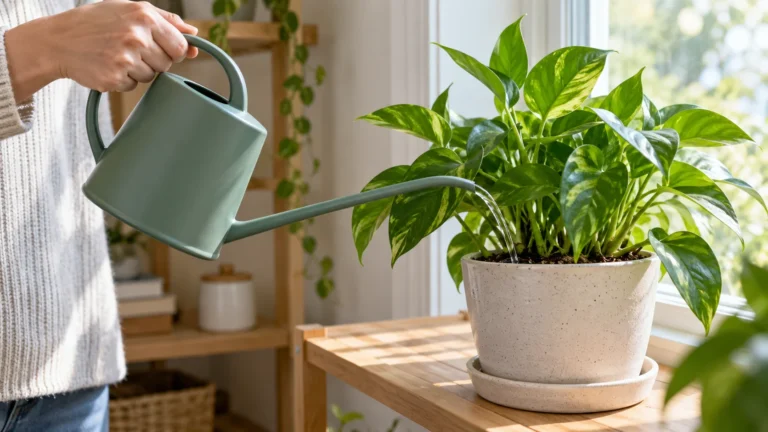
Trying to simply resist the urge to water treats the loop as a discipline problem, which is exhausting and rarely holds up on a bad week. Redirecting the loop, giving yourself a different, harmless action that produces the same fast relief, works with the habit instead of fighting it. You still get to walk over, touch the plant, and feel like you did something. You just stop pouring water into soil that's already wet.
What this technique can't fix
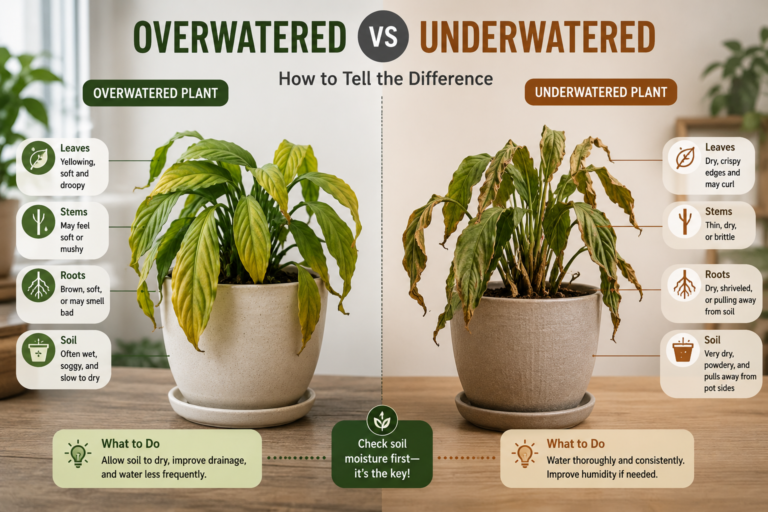
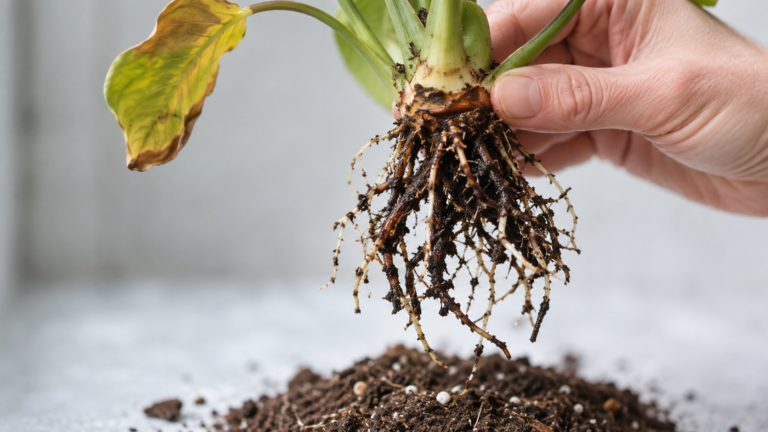
If your plant is already showing signs of chronic overwatering, a mushy stem, soil that stays wet for days, yellowing lower leaves, or a sour smell from the pot, breaking the habit going forward won't undo existing damage. That needs a direct look at the plant itself. Overwatered vs. underwatered: how to tell the difference will help you confirm what you're dealing with, and if the roots are affected, root rot signs in houseplants covers what to check and what to do about it. Habit change is prevention. It's not a substitute for fixing a plant that's already struggling.
A realistic starting point
Pick one plant, ideally the one you worry about most, and commit to the swap for two weeks: touch the soil instead of reaching for the can, log it on a card, and only actually water when the soil passes the check described in how often to water indoor plants. Two weeks is enough to notice the pattern without expecting to have rewired the habit completely. If you slip and water anyway, that's not a failure of the method, it's information: notice what the trigger was that time, and you'll catch it faster next time.
FAQ
Is anxious overwatering a sign of a psychological problem?
Not in the way this article means it. This is about an ordinary habit loop, checking on something you care about and reaching for the fastest way to feel reassured, not a clinical condition. If general anxiety is affecting more than your plant care, that's worth discussing with a healthcare provider, but the technique here is a plant-care habit fix, not a mental health treatment.
Why do I overwater even though I know the soil-check rule?
Because knowing a rule and breaking a habit loop are different skills. The rule targets what you do (check before watering); the habit loop is driven by an urge for quick relief from uncertainty, which the rule alone doesn't address. Swapping the action you take when the urge hits works better than trying to out-willpower it.
How long does it take to break the habit of overwatering?
It varies, but give any new routine at least two to three weeks of consistent practice before judging whether it's working. Tracking your checks on a card or log makes the progress visible, which helps more than trying to remember whether you're improving.
Will a self-watering pot solve this for me?
It can help by removing the daily decision entirely for that plant, but it changes what you're anxious about rather than eliminating the anxiety, and it comes with its own overwatering risks if the reservoir isn't managed correctly. Worth knowing both sides before switching a plant over.
What if I check the soil and it's still hard to tell if it needs water?
That's exactly the uncertainty that drives the habit loop, and it's worth solving directly rather than defaulting to watering "just in case." How to tell if your plant needs water covers several physical checks so you're not relying on one ambiguous test alone.