ZZ Plant Care for Beginners: The Full Routine
ZZ plant (Zamioculcas zamiifolia) tolerates more neglect than almost any common houseplant, because it stores water and energy in thick, potato-like rhizomes buried under the soil. Give it bright indirect light (it also tolerates low light, just with slower growth), and water only once the soil has dried out completely, checked with a finger or by how light the pot feels, never on a fixed weekly schedule. The plant beginners actually lose is not the one they forget about. It's the one they water too often. Overwatering, which rots those water-storing rhizomes, is the real risk here, not neglect.
This routine sits inside the broader four-decision framework in indoor plant care for beginners. If you're weighing a ZZ plant against another famously forgiving option, our snake plant care for beginners guide covers how the two compare.
Light: wide tolerance, best growth in bright indirect
ZZ plant is one of the small group of houseplants genuinely comfortable across a wide light range, from a dim interior corner to bright indirect light near a window. That range is a big part of why it shows up so often on "impossible to kill" lists alongside pothos and snake plant.
Growth is fastest and glossiest in bright indirect light. In lower light, the plant survives and continues producing new shoots, just more slowly and with more spacing between leaflets. That slower pace in a dim spot is a normal adjustment, not a sign of decline. What ZZ plant does not want is direct, hot sun through unfiltered glass: the leaves can scorch or bleach in prolonged harsh light, which is the opposite problem from what most beginners expect with such a tough plant. Our roundup of best low-light indoor plants for beginners covers where ZZ plant ranks against other dim-corner options.
Water: why there's no interval that works for every home
This is the part where most product listings and quick-care cards get beginners into trouble, because they hand out a number, something like "water every two to three weeks," as if every home, pot and season were identical. They aren't. A ZZ plant in a bright room in summer dries out on a very different clock than the same plant in a dim room in winter.
The rule that actually holds up: let the soil dry out completely, then water it thoroughly. Check with a finger pushed about two inches into the soil. If it's dry at that depth, water. If it's still cool or clingy, wait. Once you've watered a few times you can also learn the pot's weight when fully dry versus freshly watered, and use that as a faster daily check. Neither test cares what day of the week it is, and that's the point. For the full method behind both checks, see how often to water indoor plants.
The reason this matters more for ZZ plant than for a typical tropical foliage plant is the rhizome. Those thick underground structures store water, which is exactly why the plant tolerates a missed check so well, and exactly why they rot if they're kept constantly wet. A rhizome sitting in soggy soil for weeks doesn't get a grace period the way a leaf does.
Soil and potting
ZZ plant wants a fast-draining mix and a pot with a drainage hole, full stop. Because the plant's main vulnerability is a wet rhizome rather than dry leaves, drainage matters more here than watering frequency does. A standard well-draining houseplant mix, or a regular potting mix with some extra perlite worked in, both work fine.
ZZ plant is genuinely happy staying snug in its pot. It doesn't need or want frequent repotting, and a slightly tight pot is not a problem the way it would be for a fast-growing tropical. Repot only when you see rhizomes visibly pushing against the pot's sides or roots emerging from the drainage hole, and move up only one pot size at a time.
One placement note worth knowing before you bring a ZZ plant home if you share the house with pets or small children: the ASPCA has identified ZZ plant among houseplants that can irritate a pet's mouth and digestive tract if chewed, due to calcium oxalate crystals in the leaves and stems. If a pet or child has chewed on any part of the plant, the right move is to call a veterinarian, pediatrician, or a poison control service right away. That's a call to make, not a wait-and-see situation.
The one mistake that actually kills most ZZ plants
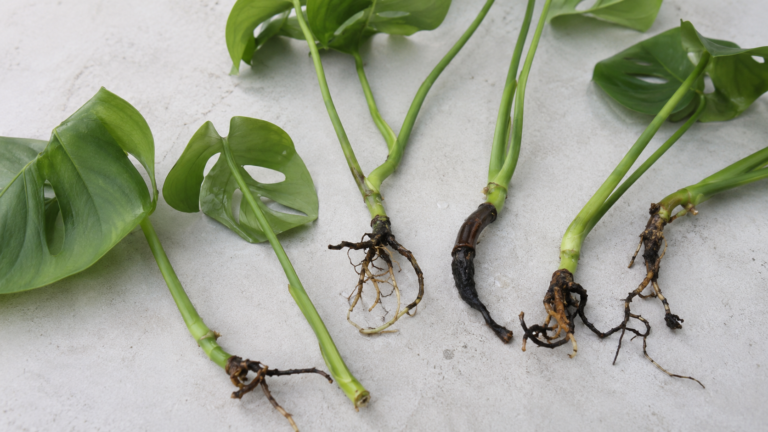
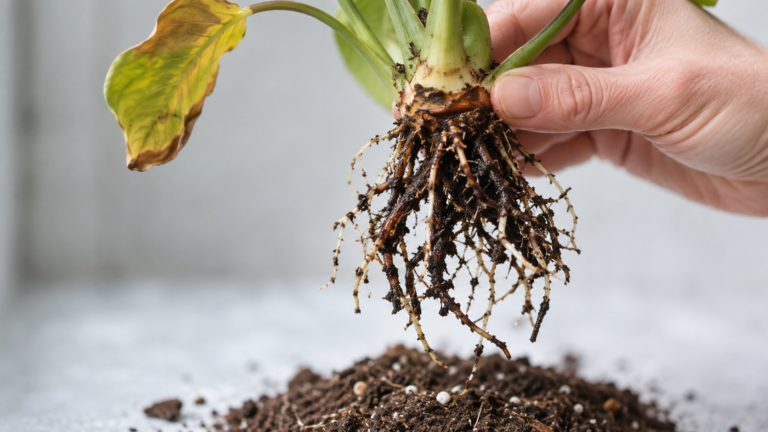
If a ZZ plant dies, overwatering is almost always the reason, and it shows up underground before it shows up in the leaves. By the time you see yellowing leaflets, a soft or mushy base, or a rhizome that's gone brown and squishy instead of firm and pale, rot has usually already taken hold below the soil line.
Because the diagnostic detail overlaps with pages that already cover it thoroughly, the short version is enough here: overwatered vs underwatered helps you confirm which one you're actually looking at, and root rot signs and rescue covers what to do once rot is confirmed.
What normal growth looks like
New ZZ plant growth appears as tightly coiled, glossy spears emerging from the soil near the base of an existing stem, unfurling into leaflets over the following weeks. That coiled-spear stage often worries new owners because it looks nothing like a leaf yet. It's completely normal, and it's the plant's characteristic way of putting out new growth.
Growth is slow even in ideal conditions, and it's common for a ZZ plant to pause visibly for months, especially over winter or in a dimmer spot, and then resume once conditions turn favorable again. That pause is not a symptom. What is worth acting on is a stem or rhizome that's turned soft or discolored at the base, which points back to the overwatering issue above rather than a normal rest period.
ZZ plant: reputation vs reality
| Common assumption | What's actually true |
|---|---|
| "Impossible to kill" means it forgives any watering habit | It's drought tolerant because of its rhizomes; it is not tolerant of constantly wet soil |
| It needs very little light to survive | It tolerates low light but grows fastest and fullest in bright indirect light |
| A missed watering is the main risk | Overwatering and rhizome rot is the real risk; a missed watering rarely does lasting harm |
Frequently asked questions
How often should I water a ZZ plant?
There's no fixed number of days that works for every home. Let the soil dry out completely, checking with a finger about two inches down, and water only once it's dry at that depth. How long that takes depends on your light, pot size and the season.
Can a ZZ plant survive in a room with no windows?
It tolerates low light better than most houseplants, but it still needs some indirect natural or bright artificial light to keep producing new growth. A space with genuinely no light source isn't enough for any houseplant long term.
Why is my ZZ plant not growing?
Slow or paused growth, especially in winter or lower light, is normal for this species on its own. It becomes a concern only alongside a soft, discolored stem or rhizome, or soil that stays wet for many days, which points to overwatering rather than a normal rest period.
Is a ZZ plant safe to keep if I have pets?
The ASPCA has identified ZZ plant as a houseplant that can irritate a pet's mouth and stomach if chewed. If your pets are curious chewers, keep the plant somewhere they can't reach it, and if you think a pet has eaten any part of it, contact a veterinarian or a pet poison-control service right away rather than waiting to see what happens.
Does a ZZ plant need fertilizer?
Not much. It grows slowly and stores water and nutrients in its rhizomes, so it needs feeding far less often than a fast-growing tropical, and it's much more likely to be hurt by overfeeding than by being fed too little.