Plant Stem Soft and Mushy? Confirm It and Save What You Can
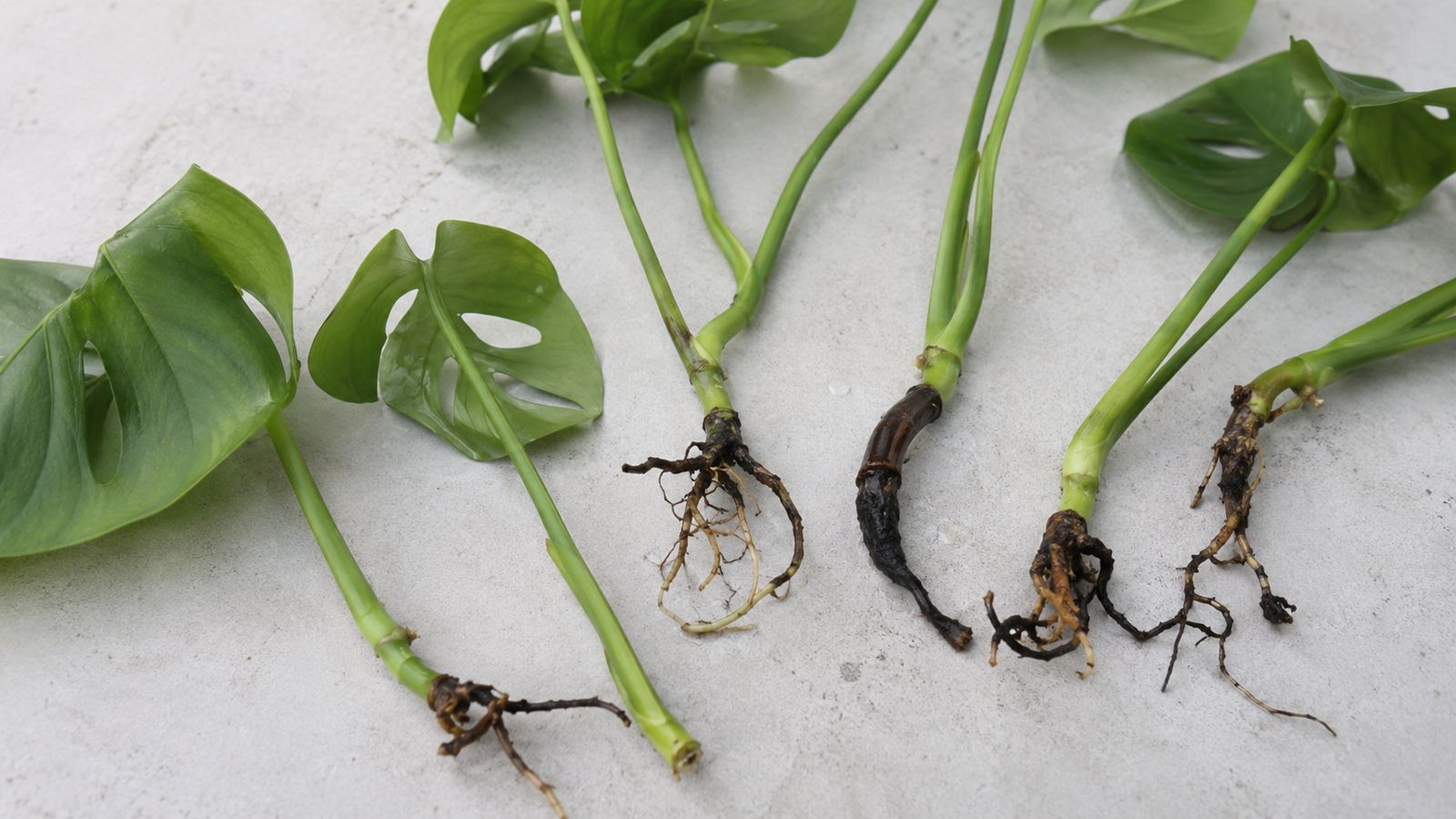
A stem that gives under a light pinch, instead of resisting it, is a stem in trouble. In most cases this is the same problem described in root rot, just continuing its journey upward: soil that stayed wet let fungi attack the roots, and the damage has now reached the stem itself. Confirm it by touch rather than by sight alone. Firm stem tissue resists a gentle pinch and springs back. Rotted tissue dents in, stays dented, and often smells sour rather than plant-like.
Whether the plant can be saved depends on where the softness stops. If it is limited to the lower stem and the roots underneath, cutting back to firm tissue and repotting has a real chance. If the mush has reached the crown, or wraps all the way around the stem, the plant as a whole usually cannot be saved, even though healthy top growth can sometimes still be cut for a fresh start.
Confirm it: the pinch test
Do not rely on looking at the stem from a distance. Discoloration can be subtle, and some stems are naturally darker near the soil line. Touch is the reliable test.
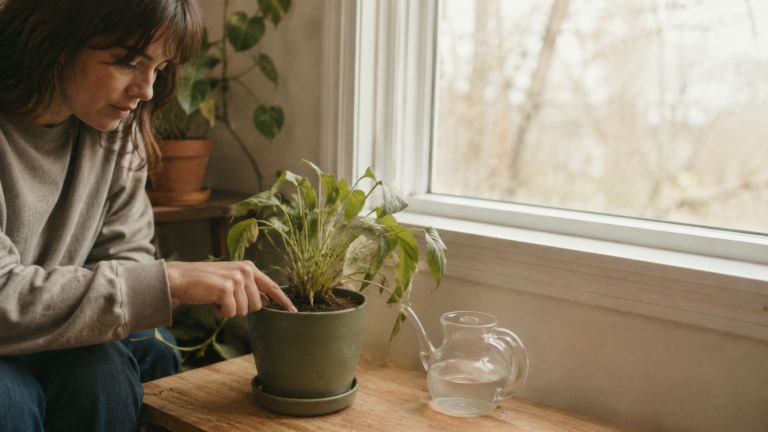
Pinch the stem gently between your thumb and finger, starting low, near the soil, and working upward.
- Firm tissue resists the pinch and springs back the moment you let go. This is healthy, whatever color it is.
- Rotted tissue dents in under light pressure and stays dented. It often feels slightly wet or slippery rather than dry, and a wound at that spot frequently carries a sour or swampy smell.
Work your way up the stem in small sections until you find the point where firm tissue starts. That point matters more than any single spot you first noticed, because it tells you how much of the plant is actually affected.
Two different situations, and why the difference matters
A soft stem shows up in two patterns that look similar at first touch but call for different responses.
Pattern one: rot that has traveled up from the roots. This is the common case, and it is the same event described in root rot signs and rescue steps. University of Maryland Extension identifies specific fungal causes of this pattern: Phytophthora root rot "can cause the lower portions of stems to turn black, brown or mushy which can lead to lower leaf yellowing and drop," and with Rhizoctonia, "the infected roots and lower portions of stems will turn brown and collapse." In both cases the stem softness is downstream of what is happening at the roots, which is why checking the soil and the roots matters as much as checking the stem. If the soil has been wet for a long time, the plant is drooping despite wet soil, or there is a bad smell from the pot, treat this as root rot and follow the full rescue there: the two problems are one and the same.
Pattern two: localized damage on an otherwise normal plant. If the soil dries out normally between waterings, the finger and lift tests show nothing unusual, and the rest of the plant looks fine, a soft spot is more likely a physical wound, a cutting node that sat in water too long, or condensation that pooled against the stem. This is a smaller, more containable problem and usually does not need a full repot.
Telling the two apart is worth the extra minute, because pattern one calls for pulling the plant out of its pot and checking the roots, while pattern two often just needs the damaged section cut away.
Other causes of a soft stem
A few situations produce a soft stem without classic root rot:
- A cutting or propagation node left in water too long, past the point where roots formed, can soften from prolonged saturation.
- A physical bump or crush injury, especially on thick-stemmed plants, can leave a bruised area that softens over a few days.
- Condensation or splashed water sitting against a stem, particularly where a leaf joins the stem, can create a small localized soft spot in an otherwise healthy plant.
None of these need the full root-rot rescue. Cut away the damaged section back to firm tissue, let the cut air-dry for an hour or two before returning the plant to normal care, and keep water off that area going forward.
Can it be saved? How far up to cut
The rule is texture, not a measurement. Starting from the softest point, cut upward in small increments and check each cut surface. You have reached healthy tissue when two things are true together: the stem resists the pinch test again, and the freshly cut cross-section looks pale, green, or its normal healthy color rather than brown, gray, or streaked. A single clean cut into firm, evenly colored tissue is a good sign. If the next section up is still discolored or spongy, keep moving up.
The rescue steps
- Unpot the plant if the softness reaches near or below the soil line, so you can see the roots as well as the stem. Root rot signs and rescue steps covers what a healthy root looks like versus a rotted one.
- Cut back to firm tissue, using clean scissors or pruning snips, working from the softest point upward until the cut surface is healthy.
- Check the roots at the same time. If they are also soft and dark, this is pattern one, and the rescue continues as described in the root rot article: trim rotted roots, repot in fresh mix in a pot that drains, water far less afterward.
- If the roots are firm and only the stem was affected, a clean cut and normal care afterward is usually enough. No repot is needed unless you disturbed the roots getting to the stem.
- Do not fertilize while the plant is recovering. 7 beginner houseplant mistakes covers why feeding a stressed plant adds a second problem rather than helping.
When it is not recoverable, and what you can still save
Two signs mean the plant, as a whole, is past saving: the mush has reached the crown, where all new growth originates, or the soft tissue circles the entire stem at the base rather than staying to one side. In either case, water and nutrients can no longer travel between the roots and the top growth, and no amount of trimming restores that connection.
This is not necessarily the end of the plant's genetics, though. If any part of the stem above the damage is still firm and carries healthy leaves, a cutting taken from that firm tissue can sometimes be rooted separately, giving you a fresh start from the same plant. This works for some houseplants more reliably than others, and is worth attempting only if you already have healthy growth to work with. It is a consolation option, not a guaranteed rescue.
Preventing it
The prevention list is the same one that prevents root rot, because the two problems share a cause. University of Maryland Extension's management guidance for these fungi includes avoiding excess water, using clean or new pots, avoiding regular garden soil in favor of a sterile potting mix, and removing and isolating any plant that shows infection so it does not spread to healthy neighbors. If you inspect a newly purchased plant before it joins the rest of your collection, you catch this kind of problem before it spreads.
The daily habit that prevents most of it is checking before you water rather than watering on a schedule, covered in how often to water indoor plants, plus the physical checks in how to tell if your plant needs water.
Frequently asked questions
Is a mushy stem always root rot?
Not always, but it usually is. University of Maryland Extension describes stem softening as a direct extension of root rot fungi like Phytophthora and Rhizoctonia. If the soil has been wet for a long time and other root-rot signs are present, treat it as the same problem. If the rest of the plant and its watering routine look normal, a soft stem is more likely a smaller, localized issue such as a bump or a wet cutting node.
How do I know how far up to cut?
Cut in small sections starting from the softest point and check each cut surface. Stop when the stem resists a pinch and the freshly cut cross-section is pale, green, or its normal healthy color rather than brown or streaked.
Can a plant survive if the whole stem is mushy?
Not as the same plant, if the softness circles the entire stem or reaches the crown. If any firm, healthy stem tissue remains above the damage, a cutting from that section can sometimes be rooted as a fresh start, though this is not guaranteed.
Should I use a fungicide on a mushy stem?
No commercial fungicide recommendation applies reliably to home conditions for this kind of rot. The effective response is cultural: remove the affected tissue, correct the watering and drainage that caused it, and repot in fresh, well-draining mix.
Will cutting the stem hurt the plant further?
No. Removing dead or dying tissue is the correct response. Leaving rotted tissue in place lets the problem continue spreading into tissue that is still healthy.