Is My Plant Dead or Dormant? Check Before You Toss It
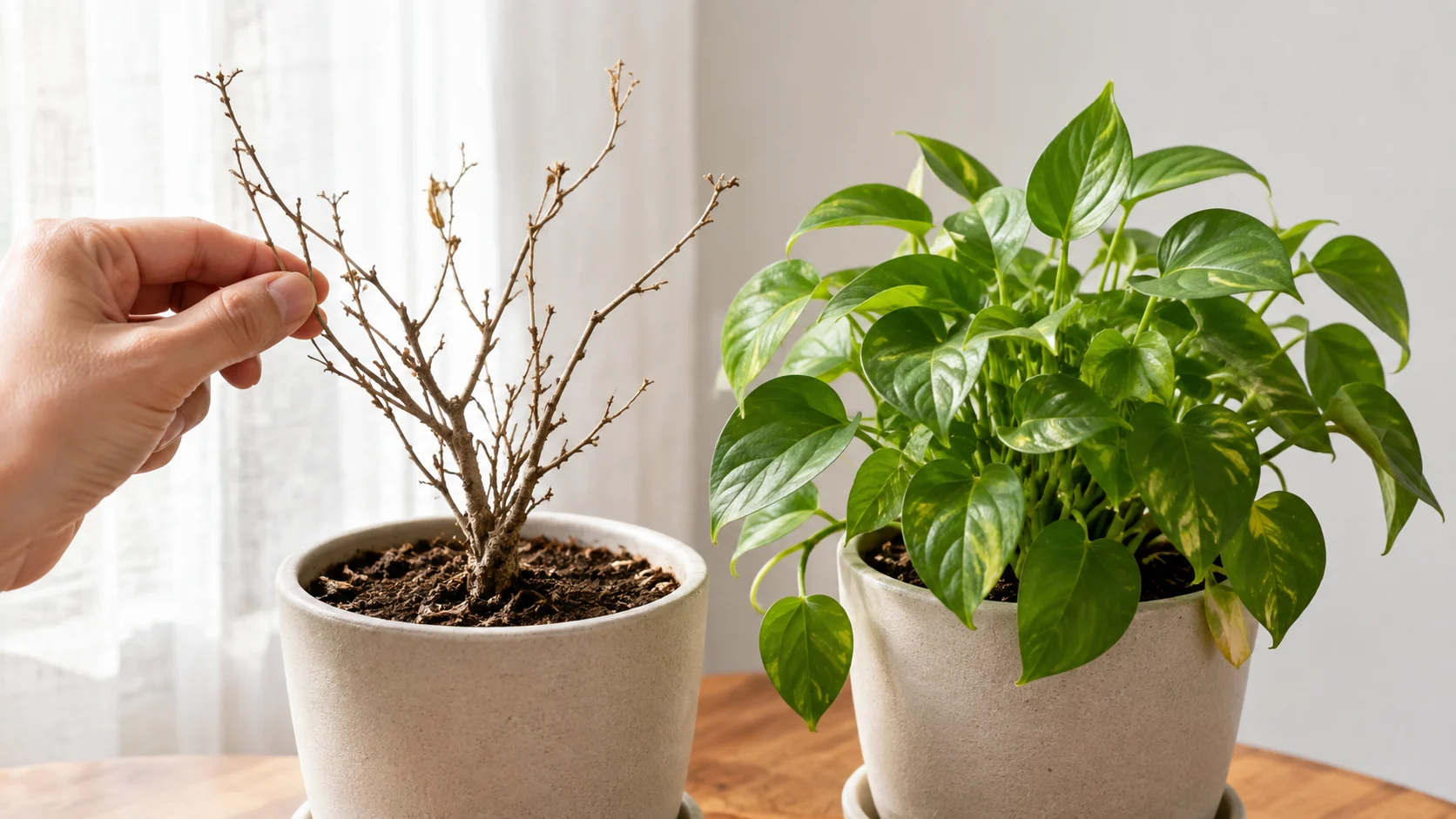
Before you give up on a plant that's showing no leaves and no growth, it's worth knowing this: most common houseplants don't have a true winter dormancy the way outdoor perennials do. So a plant that has looked lifeless for months is more often in decline than deliberately resting, which means the check below is worth doing rather than assuming and waiting.
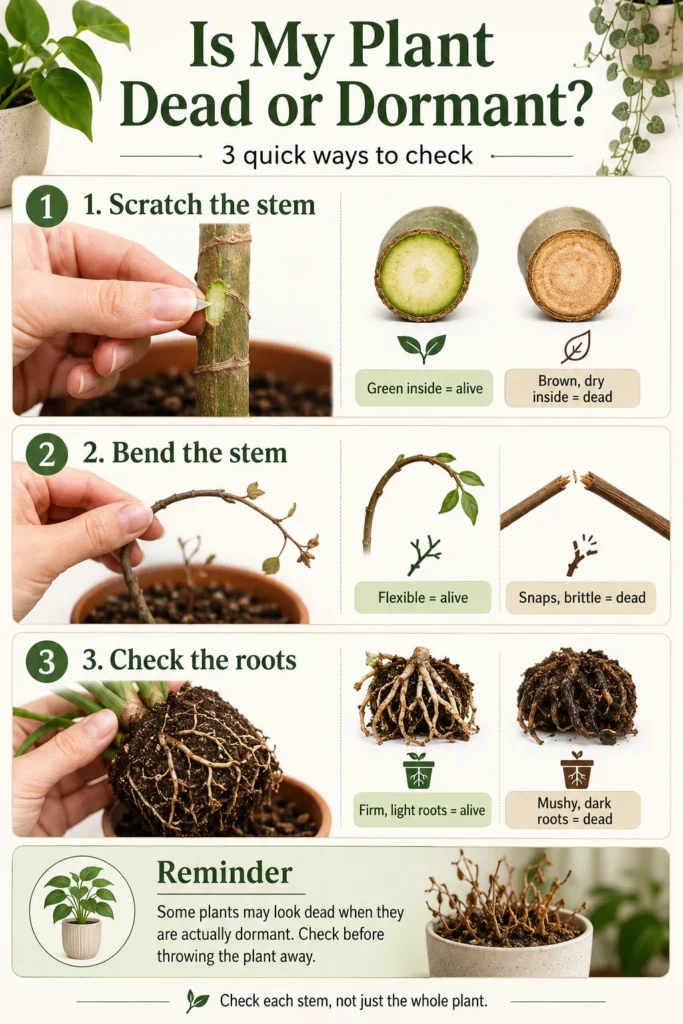
The check has three steps, in order from least to most invasive. Scratch the outer layer of a stem with a fingernail: green or moist tissue underneath means it's alive; brown and dry means that section is dead. If that's unclear, gently bend a thin stem: flexible means alive, a dry snap means dead. If you still need confirmation, check the roots: firm and pale means alive, soft, dark, and smelly means dead.
When dormancy is real for a houseplant
It's worth being honest that true dormancy is the less common answer for most houseplants people keep. Some plants do have a genuine rest period built into their biology: certain bulb plants, some succulents, and a handful of seasonal houseplants slow down or lose top growth on purpose and come back later. If you know your plant is one of these, and it went into this state gradually and predictably, patience is the right call.
For the much larger group of common leafy houseplants, though, "no growth for months" is more often a sign of stalled growth from low light, cold, or root problems, or genuine decline, rather than a deliberate rest. Why is my plant not growing covers the wider stalled-growth picture, including the seasonal slowdown that is normal in winter for almost any houseplant, which is milder than true dormancy and doesn't usually come with bare, leafless stems.
The check, in order: scratch, bend, roots
Do these in sequence. Each one gives you more certainty, and they get more invasive as you go, so there's no reason to jump straight to the most disruptive one.
1. The scratch test. With a fingernail or the edge of a coin, gently scrape a small patch of the outer layer off a stem, ideally somewhere inconspicuous. Underneath, living tissue is typically green or shows moisture. Dead tissue is dry, brown, and often crumbly. Test in more than one spot if the first result is ambiguous, since a stem can be alive in one section and dead in another.
2. The bend test. Take a thin stem or a small branch and bend it gently. A living stem is flexible and bends without breaking, or breaks with a slightly moist, fibrous snap. A dead stem is dry and brittle, and snaps cleanly and easily, more like a dry twig than living plant tissue.
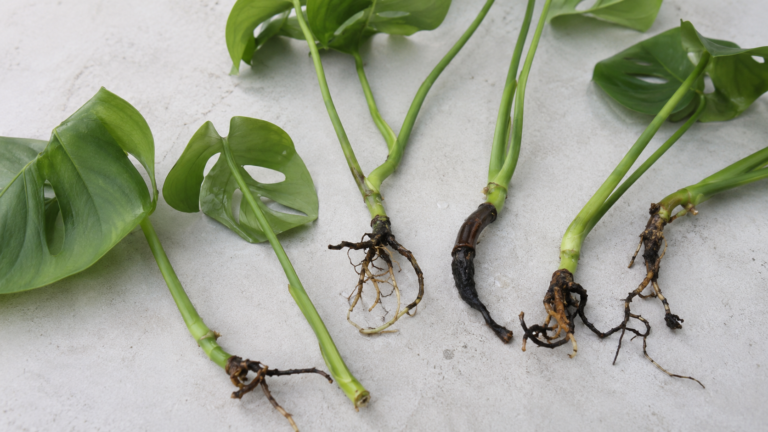
3. The root check. This is the most invasive step, so save it for when the first two are unclear or when you're already planning to repot. Slide the plant carefully out of its pot. Firm, pale roots (white, cream, or tan, depending on the plant) mean the plant is alive below the soil even if the top looks bad. Soft, dark, mushy roots with an unpleasant smell point to root rot, which is a different problem from simple dormancy or slow decline and has its own rescue steps.
Check per stem, not just the whole plant
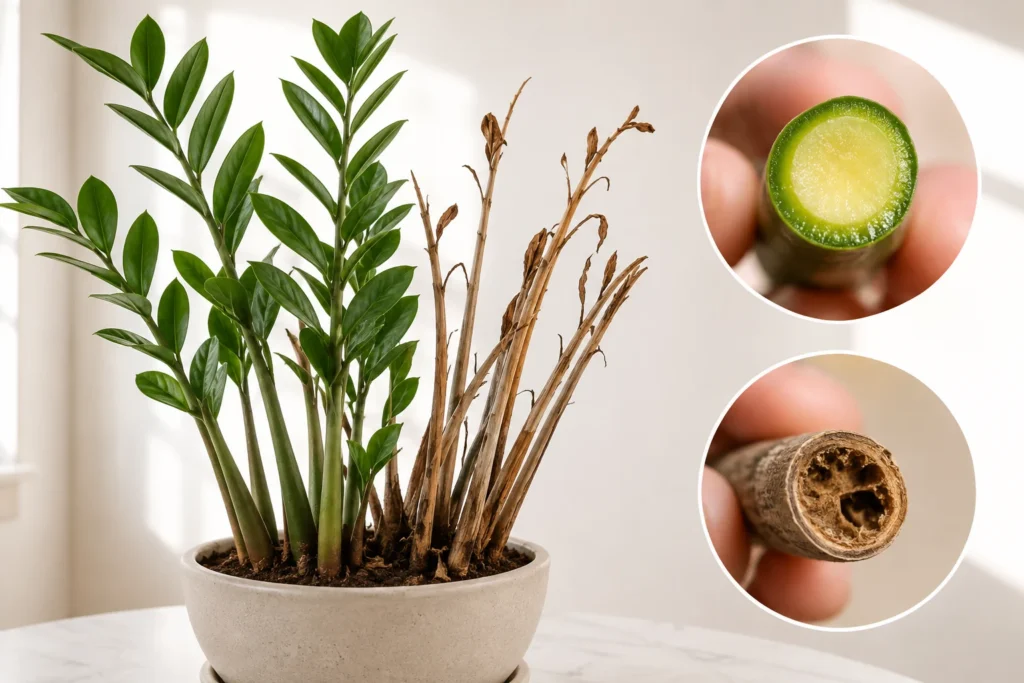
A plant with several stems doesn't have to be uniformly alive or dead. It's common for one or two stems on a multi-stem plant to die back while others remain healthy, especially after a period of stress like underwatering, cold exposure, or a recent move. Apply the scratch and bend tests to each stem individually rather than assuming the whole plant shares one fate. A plant that has one dead stem and two living ones is a plant worth keeping and trimming back, not one to discard.
If it's alive: what changes now
If the scratch, bend, or root check comes back positive for life, the next move depends on what likely caused the slowdown in the first place:
- If it's simply winter and the rest of the plant looks otherwise stable, do very little. Reduce watering frequency slightly, since a plant using less energy also uses less water, and hold off on fertilizing until you see new growth.
- If the plant was recently moved, repotted, or purchased, this may be transplant shock rather than dormancy, and the recovery timeline there applies.
- If the soil has been consistently wet or the roots showed any softness, treat this as a watering and drainage problem first, using how to tell if your plant needs water to reset the routine going forward.
- In all cases, be patient before concluding nothing is happening. A plant confirmed alive by the checks above can still take weeks to show visible new growth, particularly if it went through a stressful period.
If it's dead: what's still worth saving
A confirmed-dead stem or plant isn't necessarily a total loss. If any part of the plant tested alive during the per-stem check, that part can often be kept, trimmed back to the point where living tissue starts. On multi-stem plants, this can mean discarding one dead stem while the rest of the plant continues normally.
If the whole plant reads as dead by every test, root and stem, there generally isn't a rescue path left, and it's reasonable to let it go. For future plants, most of what leads to this point is preventable with the basics covered in indoor plant care for complete beginners, particularly getting the watering routine right from the start.
Frequently asked questions
How do I know if my plant is dormant or dying? Use the scratch test first: living tissue is green or moist underneath the outer layer, dead tissue is dry and brown. True deliberate dormancy is uncommon in most common houseplants, so a leafless plant is more often declining than resting, unless you know the specific plant has a genuine rest cycle.
What does a healthy root look like versus a dead one? A healthy root is firm and holds its shape when gently pulled or pinched, and is pale in color for most houseplants. A dead or rotted root is soft, collapses under light pressure, and often has an unpleasant smell.
Can part of a plant be dead while the rest is alive? Yes, especially on plants with multiple stems. Check each stem individually with the scratch and bend tests rather than assuming the whole plant shares one outcome. A dead stem can be trimmed away while living stems continue growing normally.
Do houseplants go dormant like outdoor plants do in winter? Most common leafy houseplants don't have a true dormancy cycle the way outdoor perennials and shrubs do. Some do slow down noticeably in winter due to lower light, which is a milder seasonal slowdown rather than full dormancy, and a smaller group of plants (certain bulbs and succulents) have a genuine dedicated rest period.
How long should I wait before giving up on a plant with no leaves? There's no fixed number, but the scratch, bend, and root checks give you an answer faster than waiting does. If every test comes back dead, waiting longer won't change the outcome. If any test shows life, patience is worthwhile, since new growth can take weeks to appear even on a plant confirmed alive.