Transplant Shock in Houseplants: How Long It Lasts
A plant that looked perfect at the store and now droops, drops a few leaves, or just looks a little defeated in your living room is almost always going through transplant shock, not developing a disease. It is stress, and it is temporary. Iowa State University Extension notes that houseplants genuinely experience stress when moved between environments, because conditions at home are "dramatically different (less favorable) than those in a greenhouse." For a newly purchased plant, the extension notes it often takes 2 to 3 months to fully adjust to its new environment, and that leaf drop can continue for several weeks during that window.
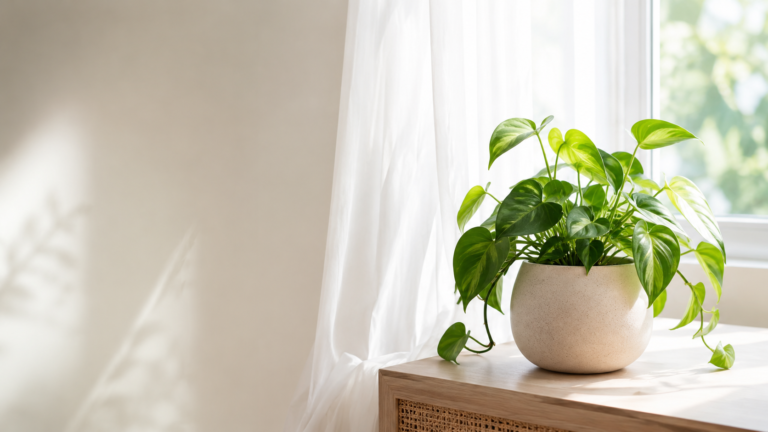
The right response is steady, moderate care, not more of anything. Bright but indirect light, a stable spot, average room temperature and humidity, and water only once the top of the soil has dried out.
Three different triggers, one shared pattern
"Transplant shock" gets used for three situations that share a cause, sudden change, but differ in severity:
- Buying a new plant. The biggest jump, moving from a controlled greenhouse environment with tailored light, humidity, and airflow to an ordinary room. This is the version Iowa State Extension's 2-to-3-month figure describes.
- Repotting an existing plant. The roots themselves are physically disturbed, on top of any environmental change, which usually means a somewhat rougher and slightly longer adjustment than a simple relocation.
- Moving a plant to a new spot in your own home. No root disturbance at all, just a change in light or temperature. This is usually the mildest version and resolves fastest.
If you've just repotted a plant specifically, expect the recovery to lean toward the longer end, since the roots are dealing with disturbance on top of any change in surroundings.
What transplant shock actually looks like
The presentation is fairly consistent across all three triggers:
- Drooping or wilting, even though the soil is not dry. Why is my plant drooping covers the wider set of causes, but a recent move is one of the most common and least worrying ones.
- Some leaf drop, usually older or lower leaves first. Why is my plant losing leaves covers what counts as normal versus concerning.
- Slower or paused growth for a period, rather than active decline.
- Slight yellowing on a leaf or two, without the widespread yellowing that points to a watering problem.
What ties these together is that they show up shortly after the move and then gradually stop, rather than getting steadily worse. That trajectory, stabilizing rather than worsening, is what separates ordinary shock from a real problem.
How long it lasts
For a newly purchased plant, Iowa State University Extension puts the adjustment period at roughly 2 to 3 months, with leaf drop possible for several weeks within that window. For a plant that was simply relocated within your home, with no root disturbance, expect the adjustment to be shorter, often just a couple of weeks, since there's no root recovery involved, only a response to changed light or temperature.
The extension also notes something practical: "plants are usually able to adjust to their indoor environment fairly quickly if they receive good, consistent care," while inconsistent care stretches the timeline out. In other words, how you handle the plant during this window affects how long the window lasts.
What to do: less is more
The instinct after a plant looks sad is to do something. Resist most of it.
- Give it a stable, appropriately bright spot and leave it there. Iowa State Extension's guidance for a newly purchased plant is a "brightly lit location," explicitly avoiding direct sun, which would add heat and light stress on top of the adjustment already underway.
- Keep the temperature and humidity ordinary. No need for anything special. Just avoid drafts, heating vents, and cold windows.
- Water only when the top of the soil has dried out, not on a schedule and not more frequently because the plant looks unwell. The extension's own guidance is to "allow the soil to dry moderately between waterings." How often to water indoor plants covers the check-first approach that applies here too.
- Be patient with the timeline above. If the plant is stabilizing rather than getting worse, it is doing exactly what it's supposed to.
What not to do
A few common responses actively slow recovery down:
Don't fertilize right away. A stressed plant with an unsettled root system isn't positioned to use added nutrients, and feeding it now risks adding a second stress on top of the first rather than helping. Wait for clear signs of new growth.
Don't move it again to "find a better spot." Every move restarts part of the adjustment. Pick one reasonable spot (bright, indirect light, away from drafts and heat sources) and give it time before reconsidering.
Don't water more because it's drooping. Drooping from transplant stress is not the same as drooping from a dry pot, and extra water on top of stress risks tipping into overwatering. Check the soil before adding water rather than assuming thirst is the cause.
Don't repot it again immediately if you just brought it home. A plant that's already adjusting to a greenhouse-to-home move does not need a second disturbance layered on top. Give it time in its nursery pot first, unless the pot itself has no drainage.
When it's not shock anymore
Give the plant its expected window, roughly 2 to 3 months for a new purchase, before assuming something else is going on. Past that point, or sooner if things are clearly getting worse rather than stabilizing, check for a specific cause instead of continuing to wait:
- Soil that stays wet for a long time, a soft stem, or a bad smell point toward root rot, not ordinary shock.
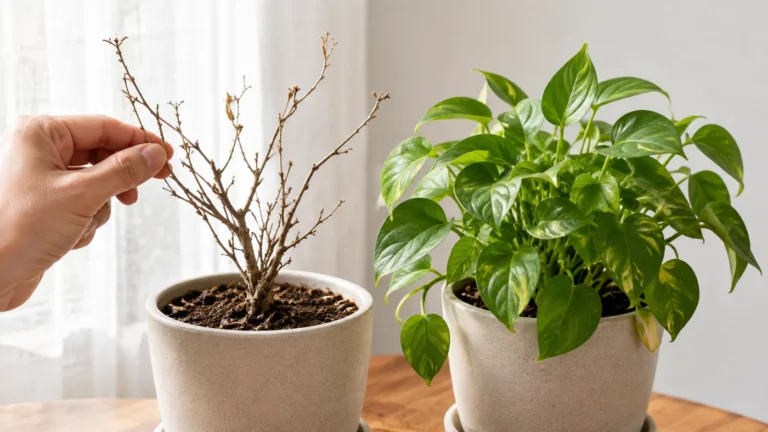
- A plant with bare stems and no leaf activity at all, well past the adjustment window, may be worth checking with is my plant dead or dormant. Sometimes what looks like failed recovery is actually a dormant period, and sometimes it genuinely isn't recovering.
- Continued decline with no stabilization at any point is the clearest sign this has moved past normal shock and needs a specific diagnosis.
If you're setting up care for a new plant from scratch, indoor plant care for complete beginners covers the full routine, including how the first few weeks with a new plant should look.
Frequently asked questions
How long does transplant shock last for houseplants?
For a newly purchased plant, Iowa State University Extension puts full adjustment at roughly 2 to 3 months, with leaf drop possible for several weeks within that period. A plant simply moved to a new spot in your home, with no root disturbance, typically adjusts faster.
Should I fertilize a plant going through transplant shock?
No, not right away. Wait until you see clear new growth, which signals the plant has settled in and can actually use the nutrients.
Is drooping after repotting normal?
Yes, some drooping is expected, since repotting disturbs the roots on top of any environmental change. It should gradually improve rather than continue getting worse; if it doesn't, check the roots for the signs described in root rot.
Should I repot a new plant right away to give it fresh soil?
Not immediately. A plant already adjusting to a greenhouse-to-home move doesn't need a second disturbance layered on top. Let it settle into its current pot first, unless that pot has no drainage at all.
How is transplant shock different from root rot?
Transplant shock stabilizes over its expected window and the plant gradually looks better. Root rot gets worse over time regardless of how long you wait, and typically comes with soil that stays wet, a soft stem, or a bad smell, none of which are features of ordinary transplant shock.