Bright Indirect Light Explained (No Meter Needed)
Bright indirect light means a spot that is well-lit but where the sun's rays do not fall straight onto the leaves for most of the day. The easiest way to check any spot without a meter is the shadow test: hold your hand a few inches above the plant, between it and the window. A sharp, crisp-edged shadow means direct light. A soft, fuzzy-edged shadow means bright indirect light. Almost no shadow at all means low light. Most houseplants prefer bright indirect light, which you usually find near an east or west window, or a few feet back from a bright south-facing one.
If you have ever bought a plant, read "bright indirect light" on the care tag, and thought "what does that even mean in my apartment," you are not alone. It is the single most common instruction on houseplant labels and one of the least explained. This guide breaks it down in plain terms, gives you a no-tools test, maps it to the windows you actually have, and tells you the honest part that most articles skip.
What "bright indirect light" actually means
Think of it as a middle ground. The plant sits somewhere the room is genuinely bright, but the disc of the sun is not shining directly onto the foliage. The light is reaching the leaves after bouncing around the room, passing through a sheer curtain, or coming in at an angle rather than as a hard, direct beam.
This matters because most popular houseplants are tropical understory plants. In the wild they grow beneath a canopy of taller trees, so they evolved to handle bright, filtered light rather than the full, unbroken sun that hits an open field. Bright indirect light indoors is our attempt to copy those conditions. The Royal Horticultural Society groups houseplant needs into roughly three buckets: full sun, bright indirect light, and shade. Bright indirect light is where the largest share of common beginner plants belongs.
The shadow test: judge any spot with no tools
You do not need to buy anything to read a spot. On a normal bright day, around midday, stand your hand in the exact position where the plant will live and look at the shadow it casts on the wall, floor, or a sheet of white paper.
- Sharp shadow, crisp edges: direct light. Great for cacti, succulents, and other sun-lovers, but often too intense for a plant labeled "bright indirect," which can scorch.
- Clear shadow, soft or fuzzy edges: bright indirect light. This is the target for most tropical houseplants.
- Faint, weak shadow you can barely see: low light. A plant can survive here, but read the honest section below before you place anything fussy.
Do the test at the time of day the spot gets its most light, not first thing in the morning or after sunset. One reading tells you more than any label.
Direct, bright indirect, medium, and low light in plain terms
People throw these four terms around as if everyone agrees on them. Here is a beginner-friendly version:
- Direct light: the sun physically hits the leaves for a good part of the day. Think an unobstructed south or west windowsill.
- Bright indirect light: the room is bright, but no direct beam lands on the plant. Near an east or west window, or set back from a south window.
- Medium light: noticeably dimmer. A few feet into the room from a bright window, or right at a north-facing window.
- Low light: you can read comfortably, but it feels shaded. Far from any window, an interior wall, or a north window in a small room.
The jump between these is bigger than your eyes suggest, which is the trap we will get to in a moment.
Window-direction guide: which window gives what
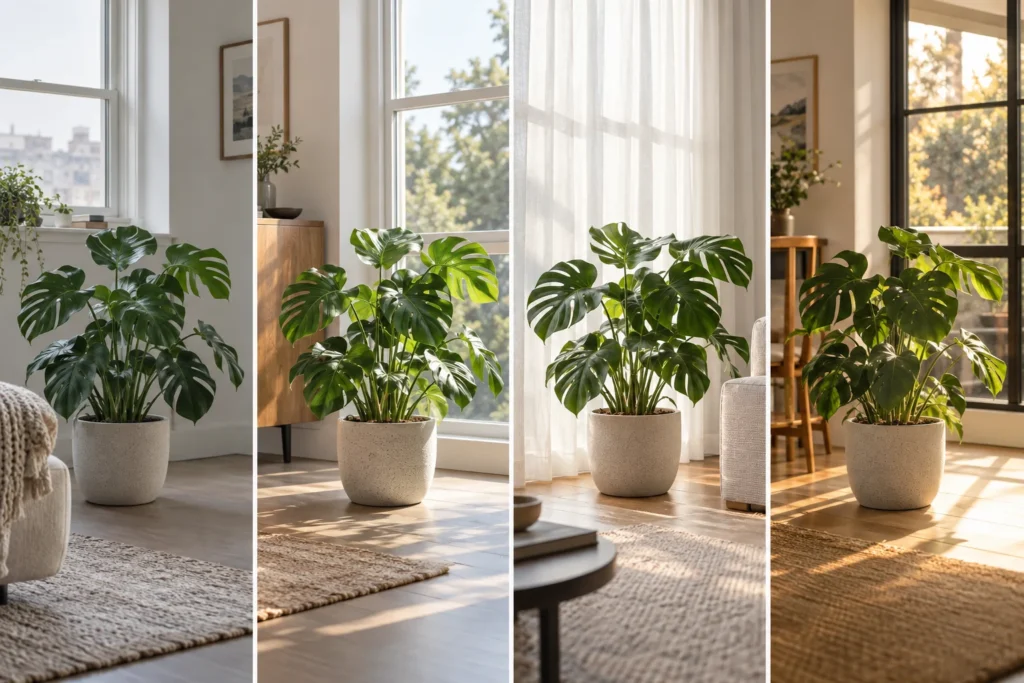
Direction changes everything, because it decides when and whether the sun's beam actually enters the room. The guide below is for the Northern Hemisphere. If you live in the Southern Hemisphere, swap north and south: there, a north-facing window is the bright, sunny one and a south-facing window is the dim one.
| Window direction | What it gives (Northern Hemisphere) | Where "bright indirect" starts |
|---|---|---|
| North | Soft, even light, no direct sun. Gentle but weak. | Right at the glass is usually medium; anything more than a couple of feet back becomes low light. |
| East | Bright, gentle morning sun, then bright indirect the rest of the day. | On or very near the sill is often ideal bright indirect. |
| South | The strongest, longest light. Direct sun for much of the day. | A few feet back from the glass, or behind a sheer curtain, gives bright indirect. |
| West | Bright indirect for much of the day, then strong, hot direct sun in the afternoon. | Beside the direct beam, or a foot or two back, is bright indirect. |
East and west windows are the most forgiving homes for a "bright indirect" plant. A south window is excellent but often too strong right at the glass, so you pull the plant back or filter it with a thin curtain. A north window is the gentlest and rarely gives more than medium light.
The honest part: your "bright" is the plant's "medium"
Here is what retailers and quick listicles tend to skip. Human eyes are remarkably good at adjusting, so a room that feels bright and cheerful to you can be much dimmer than you think for a plant. The University of Florida IFAS Gardening Solutions makes this point directly: terms like "low light" and "bright indirect light" are vague and even misleading, because our eyes are so adaptable that we are poor judges of light intensity.
Two practical consequences follow.
First, distance from the window matters far more than beginners expect. Light falls off quickly as you move into a room. A spot that is genuinely bright indirect right beside the glass can drop to medium a few feet away, and to low light across the room, even though the whole room still looks fine to you. When a plant "on the shelf across from the window" slowly declines, weak light is often the quiet reason.
Second, most plants sold as "low light" tolerate low light rather than thrive in it. They will survive in a dim corner, but they grow slowly, get leggy, and rarely put out new leaves. Tolerate and thrive are not the same promise. If you want a plant to actually fill out, give it real bright indirect light, not the darkest spot it can technically endure. Our roundup of the best low-light indoor plants for beginners is built around exactly this honesty: which plants genuinely cope with dim rooms, and what "coping" really looks like.
Light changes with the seasons, so move your plants
A spot is not a fixed value. The sun sits lower and weaker in winter, days are shorter, and a window that delivered lovely bright indirect light in July can become a medium-to-low spot by December. A plant that was thriving in summer can quietly start to starve without you changing a thing.
The fix is simple and free: reassess your spots as the seasons turn, and be willing to move plants closer to the window in winter, then back again when the strong summer sun returns. Re-run the shadow test every few months. Light also drives how thirsty a plant is, which is why a plant in a dimmer winter spot needs watering less often. Our guide to how often to water indoor plants explains why you check the soil instead of following a fixed schedule.
Signs a plant gets too much or too little light
Your plant will tell you when the light is wrong. Read the leaves.
Too much direct light:
- Pale, bleached, or washed-out patches on the leaves
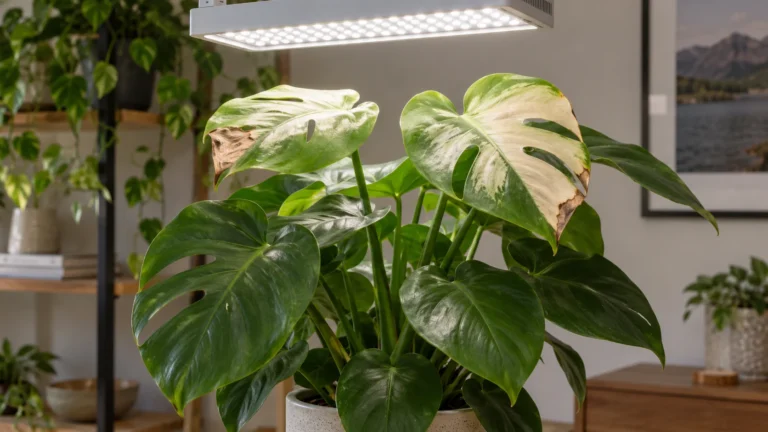
- Dry, crispy brown scorch marks, often on the side facing the window
- Leaves feeling limp or wilting in the hottest part of the day even when the soil is moist
Too little light:
- Long, stretched, leggy growth reaching toward the window
- Big gaps between leaves on the stem
- Small, pale new leaves, or no new growth for a long stretch
- Lower leaves yellowing and dropping
Yellowing in particular has several possible causes, and light is only one of them. If your plant's leaves are turning yellow, work through the full checklist in our guide to houseplant leaves turning yellow before you change anything.
When a spot is just too dark
Sometimes the honest answer is that a room simply does not have a bright indirect spot to offer, especially a north-facing room, a basement, or a hallway with no window. No amount of rearranging fixes a genuinely dark room.
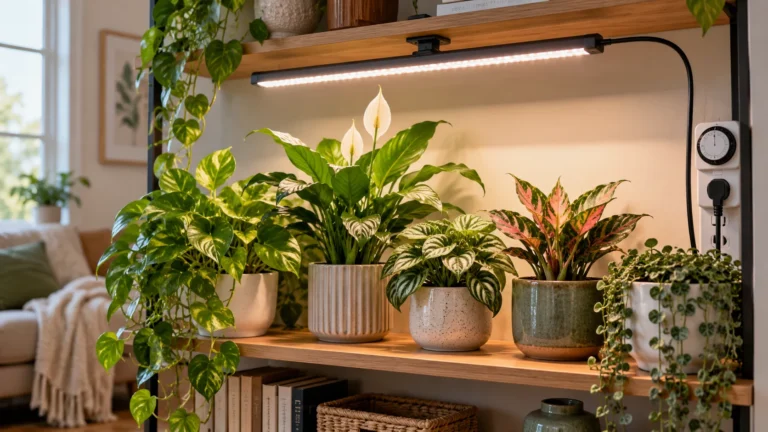
In that case a grow light is the straightforward, honest solution rather than a gadget for enthusiasts. For reference, the University of Florida IFAS notes that plants grown entirely under fluorescent light do well with roughly 600 foot-candles for about 16 hours a day. You do not need to memorize numbers to start; the point is that supplemental light is a real answer when a window cannot deliver, not a sign you failed. Match the light to the plant, and even a windowless corner can hold greenery.
Frequently asked questions
Is bright indirect light the same as shade? No. Shade for a plant still means fairly bright ambient light with no direct sun, but "bright indirect" is brighter than a shady corner. A truly shaded interior spot is closer to low light, where fewer plants thrive.
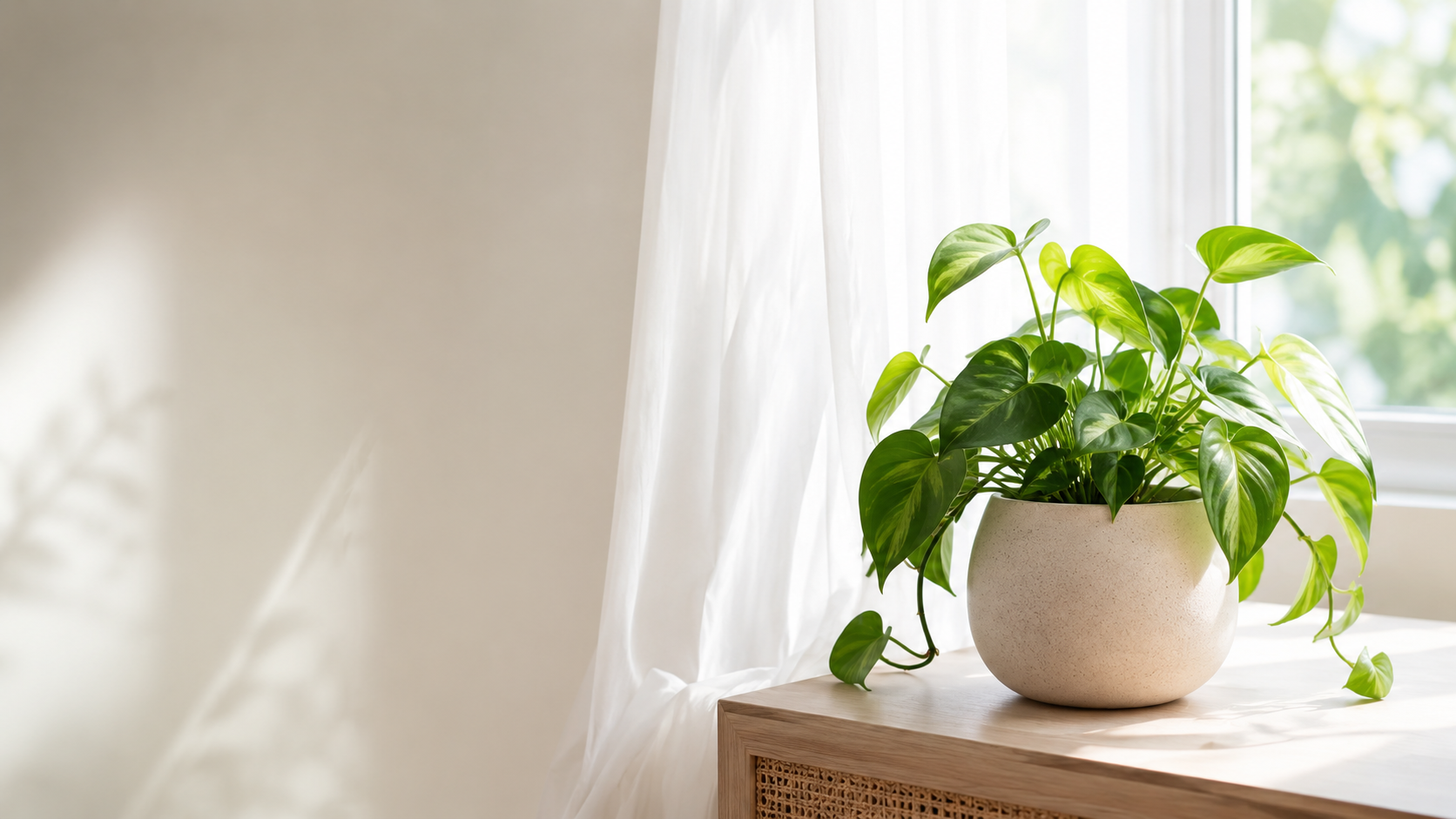
Can bright indirect light come through a curtain? Yes. A sheer or thin curtain over a sunny south or west window is one of the easiest ways to turn strong direct sun into bright indirect light. The curtain diffuses the beam so it no longer lands hard on the leaves.
How far from a window is still bright indirect light? It depends on the window and the room, which is why the shadow test beats any fixed rule. As a rough guide, bright indirect light is often within a few feet of a bright east, west, or south window. Past that, most rooms drop to medium and then low light faster than they look.
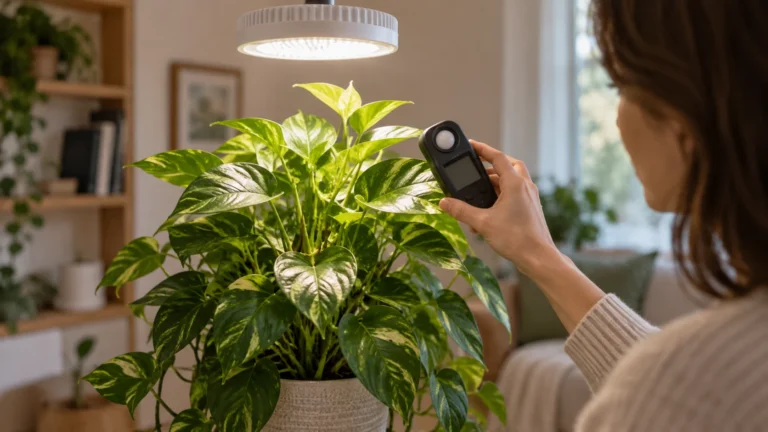
Do I need a light meter to get this right? No. A meter or a phone light-meter app can help if you want precise numbers, but the shadow test is enough for nearly every beginner. Read the shadow, match it to the plant's needs, and adjust if the leaves show stress.
Will a north-facing window work for bright indirect light plants? Usually only right at the glass, and even then it tends to be on the gentle side. A north window is best for plants that are happy in medium to low light rather than ones that specifically want bright indirect light.
Sources: Royal Horticultural Society, Houseplant 101; University of Florida IFAS Gardening Solutions, Caring for Houseplants. Foot-candle figures reported by UF/IFAS. Light guidance is general; individual plants vary.