How to Water Houseplants the Right Way
Watering a houseplant correctly means checking the soil first, then pouring slowly and evenly until water runs out of the drainage holes, then letting the pot finish draining before setting it back down, done when the soil actually needs it, never on a fixed weekly schedule. That's the whole method. Where beginners go wrong is less often the pour itself and more often the belief that there's a correct interval to follow. There isn't one. This guide covers the technique properly, and is honest about which watering tools are genuinely useful and which are solving a problem you may not have.
The direct answer, in four steps
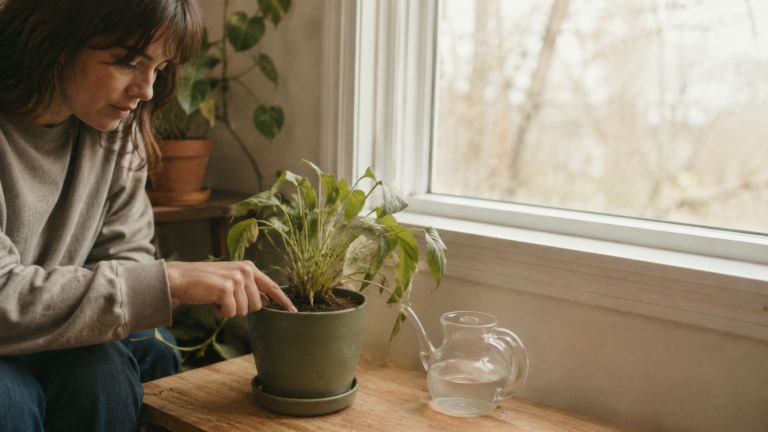
- Check before you pour. Push a finger about two inches into the soil. Dry at that depth means water; damp or cool means wait. Our guide to how to tell if your plant needs water covers the finger, lift and skewer tests for different pot sizes in full.
- Water slowly and evenly. Pour around the base of the plant, not in one spot, giving the water time to soak in rather than run straight down the inside wall of the pot and out the bottom without wetting the middle of the root ball.
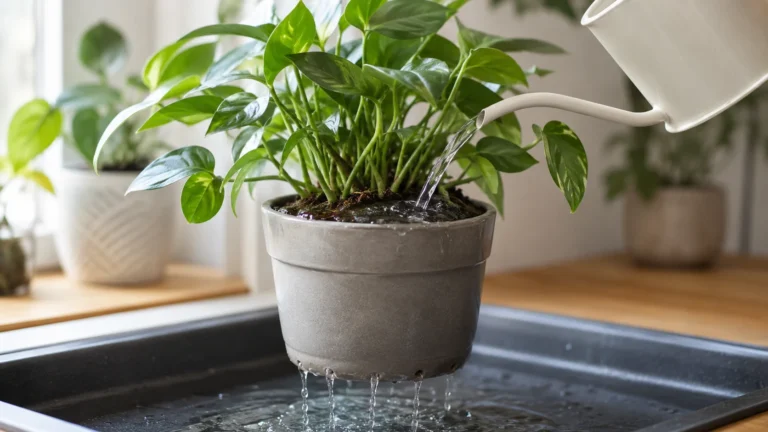
- Water until it runs from the drainage holes. A quarter-cup splash on the surface wets only the top layer and trains roots to stay shallow. A full soak, until water drains freely from the bottom, wets the entire root ball and encourages roots to grow down and out.
- Let it drain, then empty the saucer. Give the pot a couple of minutes to finish dripping, then tip out anything that's collected underneath. Roots left standing in a puddle of drainage water stay waterlogged, and that's one of the most common hidden causes of root rot.
Why we won't give you a watering schedule
Almost every page that ranks for a watering query eventually hands you a number, something like "water every 7 to 10 days," and that number is where a lot of houseplants actually die. It isn't wrong because the writer didn't care; it's wrong because a fixed interval ignores everything that actually controls how fast a pot dries out.
The same pothos in the same pot can dry out in five days in a bright summer window and stay damp for two weeks in a dim corner in January. Water both on the same weekly schedule and you either drown one of them or starve the other. Light, pot size, pot material, the plant itself, humidity, and the season all change the real answer, and they change it enough that a single number is more likely to be wrong for your home than right.
So instead of a schedule, use a check. Push a finger into the soil, feel how heavy the pot is, or push a skewer into a deep pot, and let what you find decide, not the day of the week. For the physical checks themselves and how to pick the right one for your pot size, how to tell if your plant needs water covers it in full, and how often to water indoor plants walks through the factors (light, pot material, season, plant type) that actually move the timing.
Top watering vs bottom watering: two ways to deliver the same water
There are two mechanical ways to get water into a pot, and neither one is universally "better." Top watering, pouring onto the soil surface, is the default, and it's the only practical option for flushing built-up mineral salts out of the soil periodically. Bottom watering, setting the pot in a shallow tray of water and letting it draw up through the drainage hole, pulls moisture upward evenly and keeps leaves and topsoil dry, which some growers prefer for plants prone to fungal issues on the surface.
Which one suits your plant and your habits is a genuine "it depends," not a universal winner, and it deserves its own honest answer rather than a paragraph here. See bottom watering vs top watering for the full comparison and a decision framework based on your plant and pot, not a blanket recommendation.
The watering tools people ask about, and where they actually help
The niche around houseplant care sells a lot of gear, and a beginner reading about watering online will quickly run into moisture meters, self-watering pots, and specialty watering cans, often pitched as things you need. Most of them are optional. None of them replace the check-first habit above; at best, they make it a little faster or a little more consistent.
- Moisture meters measure something related to soil moisture, not soil moisture itself, and that distinction matters more than the marketing suggests. Whether they're worth using, and when a finger or a wooden skewer beats them outright, is covered honestly in are moisture meters accurate and worth it?
- Self-watering pots genuinely help some plants and genuinely harm others, because they keep the base of the pot consistently moist by design. That's an advantage for a thirsty tropical and a liability for a plant that wants to dry out fully between waterings. The honest breakdown, including which common houseplants do badly in one, is in self-watering pots: honest pros and cons.
- Watering cans are the one piece of gear almost everyone eventually buys, and a handful of features, spout length and shape mostly, actually change how easy watering is day to day. What matters and what doesn't is in watering can features that actually matter.
None of these tools change the underlying rule. They change how convenient or how precise it is to follow it.
The two mistakes that cause the most damage
Watering on a schedule instead of a check. This is the single most common root cause behind the "why is my plant dying" pages this site also covers. A fixed interval eventually waters a plant that didn't need it yet, and that's how root rot starts, quietly, underground, well before the leaves show anything wrong.
Watering shallow instead of deep. A quick splash across the surface wets the top inch and stops there, leaving the lower two-thirds of the root ball bone dry. The plant looks watered and isn't. Always water until it runs from the drainage holes, every time you water.
When in doubt, wait a day
If the soil check leaves you unsure, not clearly dry, not clearly damp, treat that uncertainty as an answer of its own. A healthy plant is not harmed by one extra day of thirst. A plant that's watered slightly too often, week after week, is exactly how chronic overwatering and root rot get started, so when the check is ambiguous, waiting one more day and checking again is always the lower-risk choice.
Frequently asked questions
How often should I water my houseplants?
There's no fixed number that applies to every home. Check the soil (a finger, a lift, or a skewer depending on pot size) and water only when it's actually dry at root depth. Light, pot size, pot material and season all shift the real timing.
Is it better to water from the top or the bottom?
Neither is universally better. Top watering is simpler and lets you flush mineral buildup out of the soil periodically; bottom watering keeps foliage and topsoil dry and distributes moisture evenly. See our full bottom vs top watering comparison for a decision framework based on your plant.
Do I need a moisture meter to water correctly?
No. A finger or a wooden skewer costs nothing and, for most houseplants in most pots, reads the situation just as well or better. Moisture meters can add value in specific cases, such as very large pots, dense soil, or households managing many plants, covered in full in are moisture meters accurate?
Are self-watering pots a good idea for beginners?
It depends entirely on the plant. They help thirsty, consistently-moist-loving plants and can cause root rot in plants that want to dry out between waterings, like most succulents and snake plants. See self-watering pots: honest pros and cons before choosing one.
What's the biggest watering mistake beginners make?
Watering on a schedule instead of checking the soil first. It feels responsible, but it's the single most common cause of the overwatering and root rot problems that actually kill first houseplants.