What Size Pot for Repotting? The Up-Potting Rule
For most houseplants, choose a new pot one to two inches larger in diameter than the current one, and no bigger. Clemson Cooperative Extension's Indoor Plants: Transplanting and Repotting (read September 11, 2026) gives that exact rule, and Colorado State University Extension's PlantTalk on repotting (read September 11, 2026) says the same: a pot only one to two inches larger in diameter than the current one. The reason is not tradition. A pot much bigger than the roots holds far more wet mix than the plant can use, and that wet mix is where root rot starts.
Why "Bigger Is Better" Backfires
The instinct makes sense. A bigger pot means more room, more room means more growth, and you will not have to repot again for years.
What actually happens is this. Roots take up water only where they are. In a pot that fits, roots reach most of the mix, and the whole pot dries at roughly the pace the plant drinks. In a pot that is far too big, the roots occupy the middle while a thick ring of mix around them stays wet, sometimes for a very long time. That mix has no roots drawing water from it. It just sits, holding moisture and pushing out air.
Purdue University's Repotting Houseplants (Rosie Lerner, read September 11, 2026) makes the same point: choose a pot of only the next larger size, because an oversized container holds too much moisture and puts the roots at risk of rot.
The Rule in Practice
| Current pot diameter | Next pot, by the one-to-two-inch rule |
|---|---|
| 4 inches | 5 to 6 inches |
| 6 inches | 7 to 8 inches |
| 8 inches | 9 to 10 inches |
| 10 inches | 11 to 12 inches |
Measure across the top of the pot, inside the rim. Pots are usually sold by that measurement.
The Part Nobody Explains: Why Two Inches Is a Big Jump for Small Pots
The one-to-two-inch rule is stated in diameter, but plants live in volume. Those are not the same thing, and the gap between them explains why small plants are the ones most often overpotted.
For two pots of the same shape, volume grows much faster than diameter. Using simple geometry for similarly shaped pots, where width and depth scale together, volume goes up by roughly the cube of the change in diameter. That gives estimates like these:
| Move | Diameter change | Approximate volume change (same-shape pots, geometric estimate) |
|---|---|---|
| 4 inches to 6 inches | 1.5 times wider | about 3.4 times the mix |
| 6 inches to 8 inches | 1.33 times wider | about 2.4 times the mix |
| 10 inches to 12 inches | 1.2 times wider | about 1.7 times the mix |
Real pots taper and vary in depth, so treat those figures as a way to see the pattern, not as measurements. The pattern holds: the same two-inch step is a much bigger leap for a small pot than for a large one.
Two practical conclusions follow:
- For small plants in 4-inch pots or smaller, lean toward one inch, not two. You are already more than doubling the mix.
- For large plants, the full two inches is usually fine, because it adds proportionally less.
When to Go Bigger Than Two Inches
The two-inch rule is for houseplants. Other guidance goes further for other kinds of plants. University of Georgia Cooperative Extension's Repotting Basics (Bodie V. Pennisi, read September 11, 2026), which covers woody container plants, suggests a container 3 to 4 inches larger in diameter than the current one.
That does not transfer neatly to a pothos on a shelf. Woody outdoor container plants grow differently and dry out on a different schedule. For typical indoor foliage plants, stick with one to two inches unless the plant is a very fast grower that has completely filled its pot, with dense roots and mix that dries out almost as soon as you water it.
When the Right Size Is the Same Size
Sometimes the best new pot is the one you already have.
If a plant is already as large as you want it, or its spot has no room for a wider pot, Purdue notes you can replant it in fresh soil in the same size pot. You slide it out, gently loosen or trim the outer roots, replace as much old mix as you can without tearing up the roots, and put it back. University of Arkansas Cooperative Extension's repotting guidance (Sherri Sanders, read September 11, 2026) adds that keeping plants a bit rootbound keeps them smaller and easier to manage, and advises replacing as much of the old soil as possible without overly disturbing the roots.
For plants too large to lift, Clemson describes topdressing instead: removing the top 2 or 3 inches of mix and replacing it with fresh mix every other year or so.
Depth Matters Too
Diameter gets the attention, but depth changes how wet a pot stays. Virginia Cooperative Extension's publication on properly watering container houseplants (read September 11, 2026) notes that taller containers drain more than shorter ones, and that mix in small containers dries out faster than in large ones.
That makes a wide, shallow bowl the trickiest pot to size into. It can match the rule in diameter and still hold a wet layer across most of the root zone. If you are choosing between two pots of the right diameter, the one with a normal depth is the safer pick for most plants.
Getting It Wrong Either Way
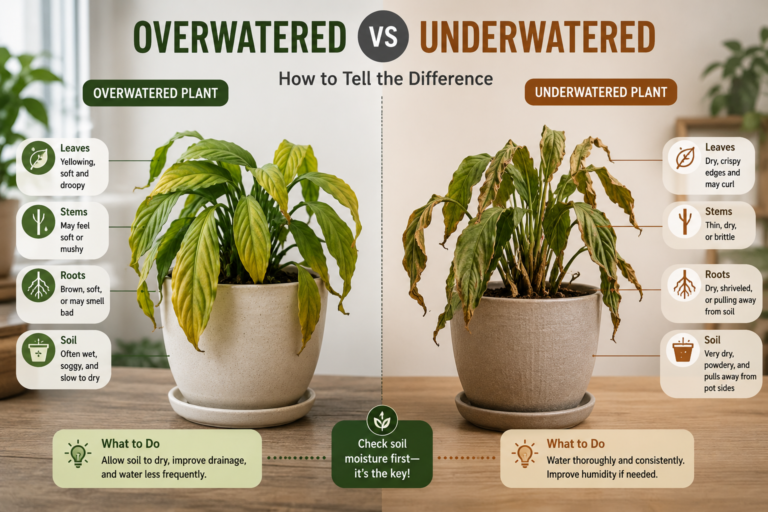
Too big. The mix stays wet for a long time after watering, the plant may stall or yellow, and in the worst case roots begin to rot. If you already made a big jump, water less often and only when the top of the mix is dry. How much water a houseplant actually needs covers how pot size changes that. If you see soft roots, a sour smell or a plant wilting in wet soil, go to root rot in houseplants.
Too small. Less dangerous. You will see the crowding signs sooner and repot again, which costs a little time and some mix. Erring small is the cheaper mistake.
A bigger pot is also sometimes chosen to space out watering, especially by people who worry they water too much. It is a poor tool for that. The extra mix does not change your habit; it changes how long mistakes last. Anxious overwatering is the better fix for that side of the problem.
If the real goal behind a bigger pot is less frequent watering, a reservoir design is the tool built for that job, with its own trade-offs, covered in self-watering pots: honest pros and cons.
Always Check the Hole
Whatever size you choose, it needs a drainage hole. Arkansas says nearly any material works as a container, plastic, clay, ceramic, metal or wood, but one requirement is critical: a drainage hole at the bottom. A correctly sized pot without one is still a pot that cannot get rid of extra water.
Frequently Asked Questions
How much bigger should a new pot be?
One to two inches larger in diameter than the current pot, per Clemson Cooperative Extension and Colorado State University Extension. For very small pots, one inch is often plenty.
Can a pot be too big for a plant?
Yes. Purdue advises choosing only the next larger size because an oversized container holds too much moisture, and roots that cannot use that water are at risk of rot.
Is it OK to go up two pot sizes at once?
For most houseplants it is safer not to. If you do, water less often than you did before and check the mix before each watering until the roots fill the new space.
What if my plant is too big but I don't want a bigger pot?
Replant it in fresh mix in the same size pot, which Purdue describes as an option for plants already at the size you want, or topdress by replacing the top 2 or 3 inches of mix, as Clemson describes.