When to Repot a Plant (and How to Do It Right)
Repot a houseplant when it has run out of room, which the roots will show you, and do it as the plant is starting its active growth, which for most houseplants means late winter into spring. Clemson Cooperative Extension's Indoor Plants: Transplanting and Repotting (read September 11, 2026) advises repotting during spring and summer while the plant is actively growing, and avoiding plants that are dormant or just beginning to flower. The calendar tells you the best window. The roots tell you whether you need to use it at all.
The Two Questions Inside "When"
"When should I repot?" is really two separate questions, and mixing them up is how plants get repotted too often.
- Does this plant need a bigger pot or fresh mix? That is a question about the plant.
- Is now a good moment to do it? That is a question about the season and the plant's condition.
A plant can need repotting in November. It usually still does better if you wait until growth picks up. A plant can be sitting in the perfect spring window and not need repotting at all. Answer the first question first.
Question One: Does It Need It?
The extension guides agree on a short list. Clemson names three: roots in a solid mass around the rootball, roots growing out of the drainage hole, and a plant that needs frequent watering or wilts shortly after being watered. University of Arkansas Cooperative Extension's repotting guidance (Sherri Sanders, read September 11, 2026) adds top-heavy plants that tend to fall over, plants producing small leaves and almost no new growth, and a salty crust on the soil surface.
The most reliable check is also the simplest. Purdue University's Repotting Houseplants (Rosie Lerner, read September 11, 2026) recommends turning the pot over, gently sliding the plant out and looking at the soil ball. If many roots are visible on the outside of it, the plant will probably appreciate a larger pot.
If you slide it out and see mostly mix with a few roots, put it back. It does not need you yet.
Question Two: Is Now the Right Time?
The good window. Colorado State University Extension's PlantTalk on repotting houseplants (read September 11, 2026) says houseplants typically respond best to transplanting in spring, when they are starting active growth. Arkansas puts it slightly earlier, in late winter just as natural light levels increase, because repotting almost always encourages new growth. Both point at the same thing: repot as the plant is about to grow, so new roots move into the fresh mix quickly.
Times to wait if you can:
| Situation | Why to wait |
|---|---|
| The plant is dormant or growing slowly in winter | Fresh mix sits wet around roots that are not growing into it. Is my plant dead or dormant helps you tell which you are looking at |
| It is just starting to flower | Clemson specifically advises against repotting plants that are beginning to flower |
| You just brought it home | It is already adjusting to your room. Adding root disturbance on top stacks two stresses. See transplant shock in houseplants |
| It was recently fertilized heavily or is already stressed | Let it steady first unless the pot itself is the problem |
The exception: do not wait for a problem in the roots. If a plant has soggy mix that never dries, a sour smell or roots that are brown and mushy, the pot and mix are actively harming it, and the season stops mattering. Root rot in houseplants covers that rescue, which is a different job from routine repotting.
How Often Plants Need It
Less often than most people assume. Clemson says fast-growing plants may need repotting annually, while slow-growing plants may need it every two to three years. Arkansas says most plants require it only once every three to five years, and that keeping plants a bit rootbound keeps them smaller and easier to manage.
Those ranges are wide because plants differ. The practical rule: check the roots once a year in spring, and repot only the plants that show the signs above.
How to Repot a Houseplant, Step by Step
This sequence follows Clemson, Colorado State and Arkansas guidance.
1. Water a day ahead. A lightly moist rootball slides out and holds together better than a bone-dry one.
2. Choose the new pot. One to two inches larger in diameter than the current pot, per both Clemson and Colorado State, with a drainage hole. Arkansas notes that almost any material works, plastic, clay, ceramic, metal or wood, but one requirement is critical: a drainage hole at the bottom.
3. Prepare the mix. Moisten fresh potting mix before you use it. Clemson notes that the first waterings need to be repeated many times, especially with peat-based mix, because dry peat sheds water.
4. Put a layer of mix in the bottom. Colorado State advises placing moistened mix in the bottom of the new pot, then setting the plant on top. Add enough that the plant sits at the same depth it did before.
5. Slide the plant out and look at the roots. Colorado State's description is the one to remember: healthy roots are white and firm, and any that are black and mushy should be cut out.
6. Loosen tight roots. If roots circle the rootball, Colorado State suggests teasing them apart, or scoring the rootball in a couple of places with a sharp knife. Clemson gives the same scoring advice for tight roots. Arkansas adds: cut any circling roots you find.
7. Set the depth. Arkansas is explicit: make sure the top of the root ball is at the same position as in the original pot, and do not plant it deeper. Clemson places the top of the rootball within 1 inch of the container top, which leaves room to water.
8. Fill around the sides. Add mix around the rootball and gently tap the pot on the bench to settle it, as Colorado State describes, rather than packing it down hard.
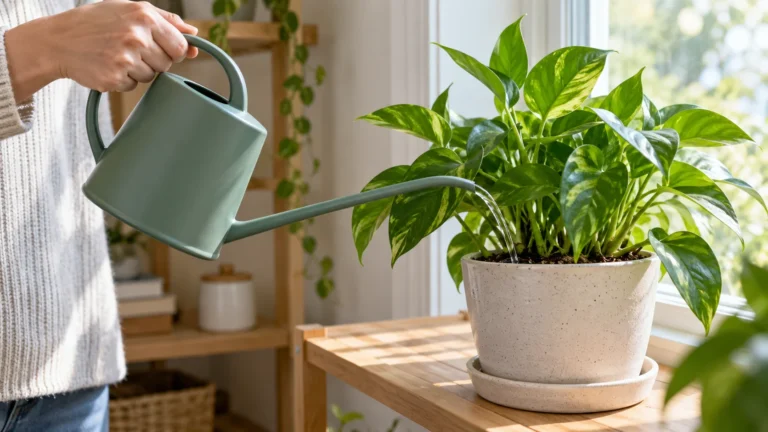
9. Water thoroughly. Let it drain completely, and do not leave the pot sitting in the runoff. How to water houseplants the right way covers the drain-and-empty habit.
10. Put it back where it was. A familiar spot, out of harsh direct sun and away from heat vents, gives it one less thing to adjust to.
After the Repot
Some drooping for a few days is common, because roots were disturbed and some fine roots were inevitably lost. Expect the plant to look a little flat before it looks better.
What helps is doing less. Hold off on fertilizer until you see new growth, since stressed roots in fresh mix are not in a position to use it, and many bagged mixes already include some. Fertilizer burn on houseplants explains what happens when feeding outpaces the roots. Water when the top of the mix has dried rather than on a schedule, since a bigger pot of fresh mix dries on a different clock than the old one.
What Repotting Cannot Do
Repotting is often treated as a cure-all. It is not.
It will not make a plant grow faster in winter, because light, not pot size, is what limits most indoor growth then. It will not fix a plant that is struggling because of its spot in the room. And a pot that is much bigger than the roots can use does not give the plant a head start. It gives it a large volume of mix that stays wet long after the roots have taken what they need, which is one of the most common routes to rot after a well-meant repot.
Sometimes the best answer is fresh mix in the same pot. Purdue notes that for a plant that is already as large as you want it, replanting in fresh soil in the same size pot is an option. Clemson describes another for plants too big to move: topdressing, removing the top 2 or 3 inches of mix and replacing it with fresh mix every other year or so.
Frequently Asked Questions
What is the best month to repot a plant?
There is no single month. Extension guidance points to late winter through spring, when the plant is starting active growth. Clemson extends the window through summer while the plant is actively growing.
Can I repot a plant in winter?
You can, and it is sometimes necessary, for example if the mix is waterlogged or the roots are rotting. For routine repotting, waiting until growth resumes is gentler, because roots move into the new mix faster.
Should I water right after repotting?
Yes. Water thoroughly so the mix settles around the roots, let it drain completely and empty any saucer. After that, water only when the top of the mix has dried.
How do I know if my plant does not need repotting?
Slide it out of the pot. If you see mostly mix with a few roots on the outside, and no roots circling or escaping the drainage hole, it has room. Put it back.