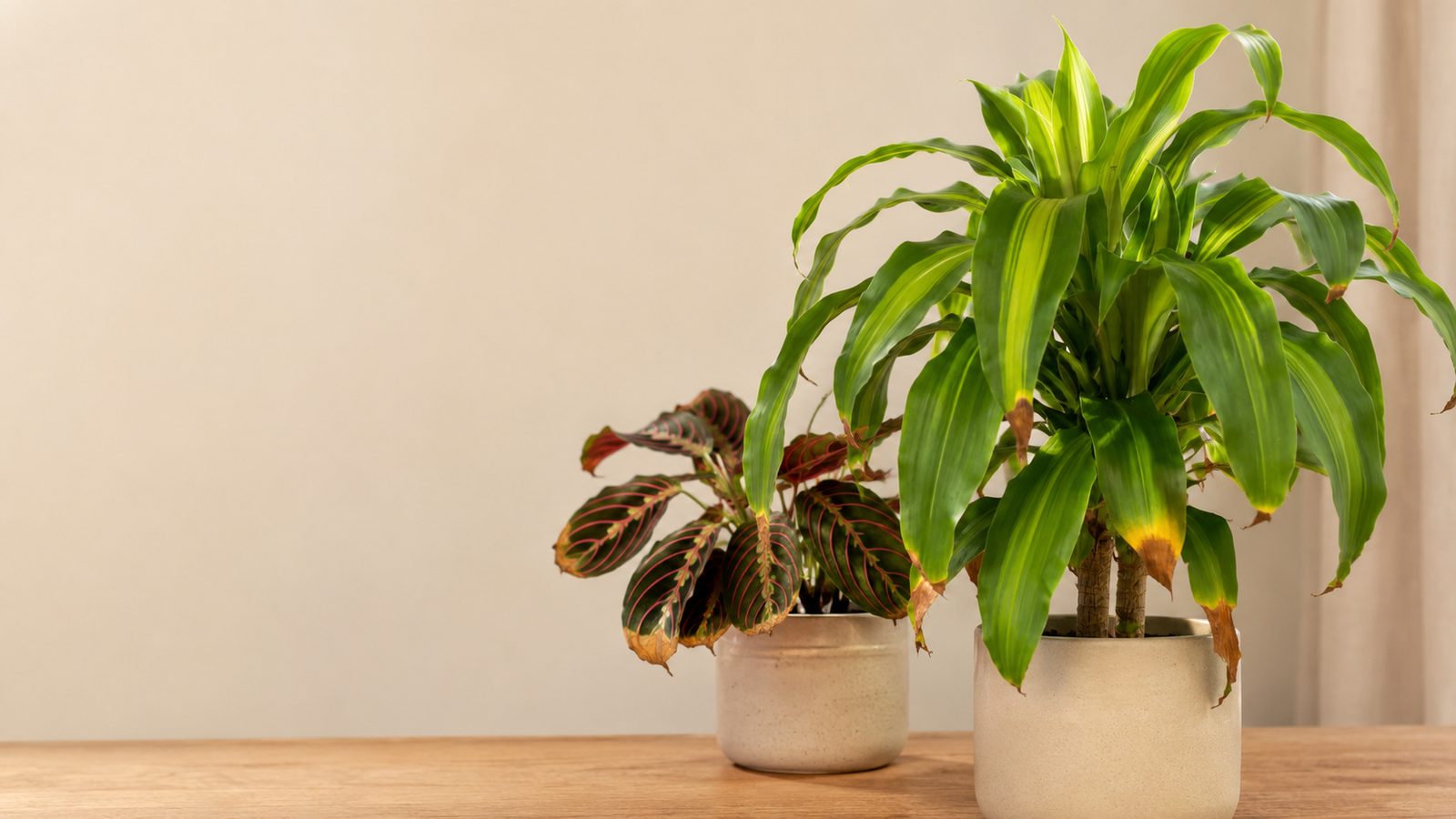
Why Plant Leaves Turn Brown and Crispy
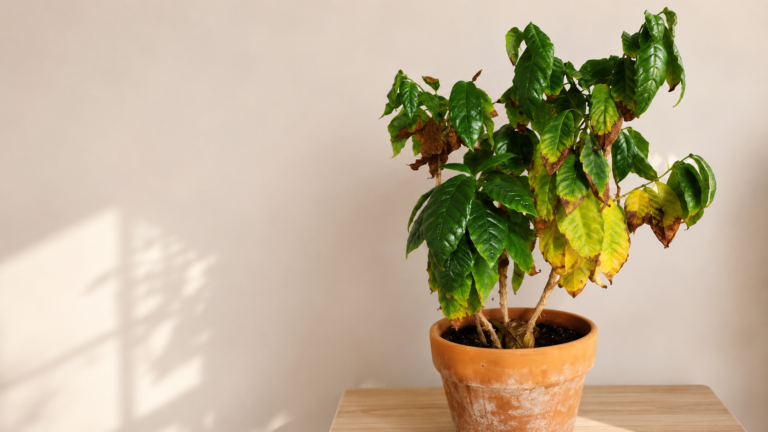
When whole leaves go brown, dry and crisp, it almost always means the leaf ran out of water. What makes this confusing is that there are two opposite ways for that to happen: the soil was too dry, or the roots were damaged by soil that stayed too wet and can no longer supply the plant. So check the soil before anything else. Dry soil plus crisp lower leaves points to underwatering. Wet soil plus crisp leaves points to the roots. Dry air, fertilizer salts and hot direct sun are the other three common causes.
Most guides on this symptom list the causes and then admit that overwatering and underwatering can look the same, without resolving it. They can be told apart, and the rest of this page is how.
Step 1: the soil check, because the same symptom has opposite causes
Push a finger about two inches into the soil, or run a wooden skewer to the bottom of a deep pot. This one reading is the fork in the road.
Dry at depth. The plant has not been getting enough water, or has been drying out too far between waterings. Iowa State University Extension names exactly this, noting that allowing plants to dry out too long between waterings causes leaf edges and tips to turn brown. Left long enough, the browning stops being confined to the edges and takes whole leaves.
Damp or wet at depth. Do not water. Roots sitting in wet soil become damaged, and damaged roots cannot take up water even though the pot is full of it. The plant then dries out from the top down while standing in water. The University of Wisconsin-Madison Plant Disease Diagnostics Clinic describes the pattern for root rot as wilting even though the soil is wet, with roots turning soft and brown and often carrying a bad odor.
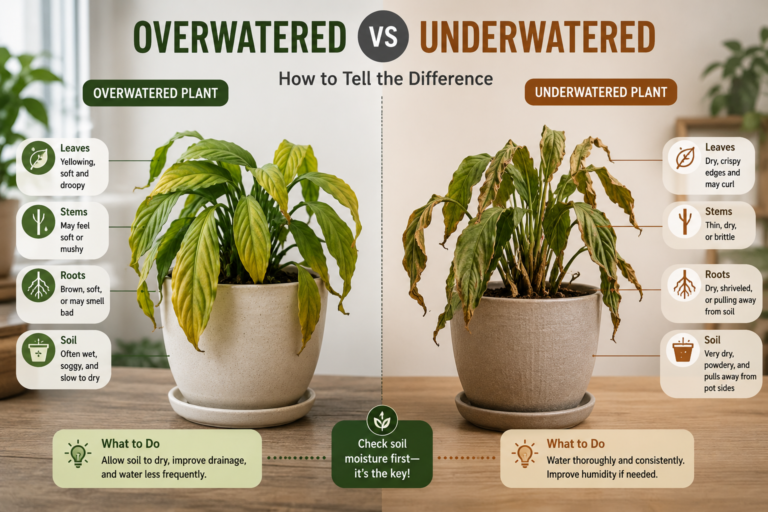
If you want the checks themselves, how to tell if your plant needs water covers the finger, lift and skewer tests. If you want the two conditions compared side by side, overwatered vs underwatered is the direct comparison.
Step 2: which leaves are dying?
Leaf position is diagnostic, and almost nobody uses it. Look at where on the plant the damage is concentrated.
| Pattern | What it usually means |
|---|---|
| Lowest, oldest leaves first, working upward | Water supply problem: either dry soil or damaged roots. The plant sacrifices old leaves first |
| Newest leaves at the growing tips | Dry air, or salt and mineral buildup reaching the newest tissue |
| The side facing a window, radiator or vent | Heat or direct sun on that side |
| Scattered across the plant with no pattern | Look at timing instead: a single event such as a cold night, a hot day, or one heavy feed |
| Every leaf at once, quickly | Something acute happened. Check for a heat source, a frozen draft, or a very recent feed |
Plants shed their oldest leaves as a matter of routine, so one bottom leaf browning slowly over weeks while the plant puts out new growth is not an emergency. Several at once, or a steady march upward, is.
Step 3: what does the dying leaf feel like?
This is the detail that resolves the ambiguity the other guides leave open. Handle a leaf that is partway through going brown.
Uniformly papery, brittle, and pale to mid brown. It crackles and crumbles. It has dried out. This is the dry route: not enough water reaching the leaf, whether because the soil was dry or because dry air pulled moisture out faster than the roots could replace it.
Brown but leathery, with a soft or dark patch where the browning started, sometimes spreading from the stem end. It bends rather than crumbles, and the boundary between healthy and dead tissue is soft rather than crisp. This is the wet route: the damage began at the roots or the base and worked outward.
Dark brown to black, soft and slightly slimy. That is not this problem. Soft, wet-looking damage points to rot or to cold damage, and the response is different.
The dry route: underwatering and dry air
Underwatering. The pattern is dry soil, lower leaves browning and crisping first, often with a yellow phase on the way, and the plant may droop between waterings. Frequently the real problem is not skipped waterings but shallow ones: a small pour wets only the top inch and the root ball below stays dry.
The fix is thorough watering when the check says the soil is dry. The University of Maryland Extension advises watering until it drains freely from the bottom of the container. If the mix has shrunk away from the sides of the pot, water slowly and in stages, or the water will run straight down the gap without wetting anything.
Dry air. Iowa State University Extension calls low humidity the most likely cause of brown leaf edges and tips in homes, and notes that indoor humidity is often low, especially in winter. When it is severe or prolonged, thin-leaved plants such as ferns, calatheas and prayer plants do not stop at the tips: whole leaves go papery.
The tell is timing and species. Browning that starts when the heating goes on, on a plant with thin leaves, in a room with a radiator or vent nearby, is a humidity story. Moving the plant away from the heat source and into a more humid room is worth more than any amount of misting.
The wet route: damaged roots
If the soil is wet and leaves are crisping anyway, the roots are the problem, and watering is the last thing the plant needs. Other signs that point this way: soil that never seems to dry out, a sour or swampy smell, yellowing lower leaves alongside the browning, and a plant that wilts and then does not respond to water.
The Wisconsin clinic's guidance is preventive and blunt: do not over-water, do not allow plants to sit in drainage water, use a pot with drainage holes, and use a pasteurized commercial potting mix rather than soil from a garden. If you suspect this is your situation, root rot signs and how to save your plant covers the inspection and the rescue, and time matters more than it does with any other cause on this page.
The other two: fertilizer salts and direct sun
Fertilizer salts. Iowa State University Extension notes that excess salts build up in the soil when too much fertilizer is applied, and that this leads to brown leaf tips. Heavier buildup takes more of the leaf. Look for a whitish or yellowish crust on the soil surface or around the pot rim. If it is there, stop feeding, water thoroughly so water runs out of the drainage holes and carries some salt with it, empty the saucer each time, and consider repotting into fresh mix. Feed only healthy plants, only in the growing season, only on damp soil, and only at the strength on the product label.
Too much direct sun. A plant moved from a shaded spot into strong direct light can develop dry, bleached or brown patches on the leaves facing the window, usually within days. The damage is one-sided and pattern-matched to the light. Move the plant back or filter the light, and expect existing damage to stay. New growth is where you will see the improvement.
What crispy leaves rule out
Worth knowing what you can stop worrying about. Dry, crisp brown tissue is not the signature of most pests or of bacterial problems. Those tend to produce different evidence:
- Pests leave visible insects, fine webbing, sticky residue, white cottony spots, or speckled and stippled leaves. Leaves damaged by sap-suckers usually go pale and mottled rather than uniformly crisp.
- Bacterial and fungal leaf problems generally produce soft, dark, wet-looking spots, often with a yellow ring, rather than dry papery tissue.
- Cold damage goes dark, soft and mushy rather than dry and brittle.
If the leaf crackles when you handle it, you are dealing with a water and environment problem, which is much better news than the alternatives.
Should you remove browned leaves?
A fully brown leaf is dead and will not recover, so removing it costs the plant nothing and it can be taken off at the base with clean scissors. A leaf that is partly brown is a judgment call: the green portion is still working, and a stressed plant benefits from keeping whatever functioning foliage it has. Leave partly green leaves alone unless they look bad enough to bother you, in which case trim to the leaf's natural shape rather than cutting straight across.
What matters far more than tidying is fixing the cause in the same week. Removing damaged leaves changes how the plant looks; it does not change what is happening to it.
If it is only the tips, not whole leaves
This page covers whole leaves going brown, dry and crisp, usually with leaf loss. If your plant's leaves are green and firm apart from brown ends or a thin brown rim, that is a milder and more common problem with its own cause list. See brown tips on houseplant leaves.
If the leaves are yellowing rather than browning, the direction of the diagnosis changes again, and why houseplant leaves turn yellow has the location-based decision map. For the underlying care routine that prevents most of this, indoor plant care for complete beginners sets out the sequence.
Frequently asked questions
Why are my plant's leaves turning brown and crispy?
Most often the leaf has run out of water. That happens either because the soil dried out too far between waterings or because roots damaged by constantly wet soil can no longer take water up. Dry air, fertilizer salt buildup and strong direct sun are the other common causes. Check the soil first, because the two watering causes are opposites and need opposite responses.
Will crispy brown leaves recover?
No. Browned, dried tissue is dead and will not turn green again. What you can change is whether new leaves develop the same damage, which is why identifying the cause matters more than trimming the damage.
Should I water a plant with crispy leaves?
Only if the soil is dry two inches down. If the soil is damp or wet and leaves are still crisping, the roots are likely damaged and more water will make it worse. The soil reading, not the leaf, decides.
Why are only the bottom leaves going brown?
A plant under water stress sacrifices its oldest leaves first, so bottom-up browning points to a water supply problem, either dry soil or damaged roots. Losing one old lower leaf slowly while the plant puts out new growth is normal aging rather than a fault.
Is dry air enough to make whole leaves crispy?
It can be, on thin-leaved tropicals such as ferns, calatheas and prayer plants, particularly in winter. Iowa State University Extension names low humidity as the most likely cause of brown leaf edges in homes and notes that indoor humidity is often low in the heating season. Thick-leaved plants rarely go crispy from room air alone.