How to Water Houseplants While You’re on Vacation
The right method depends on how long you'll be gone, not on finding one perfect gadget. For a weekend or two, a thorough soak before you leave and moving plants out of direct sun is usually enough on its own. For four to ten days, add a wicking setup, a pebble tray, or a watering globe you've already tested. For anything past ten days, combine two of those methods or arrange for someone to check in, because no single unattended trick reliably covers houseplants for that long. The mistake most people make isn't picking the wrong gadget, it's skipping the one step that makes every method work better: a proper soak right before you go.
Start here, regardless of trip length
Two things matter more than any device you buy, and they cost nothing.
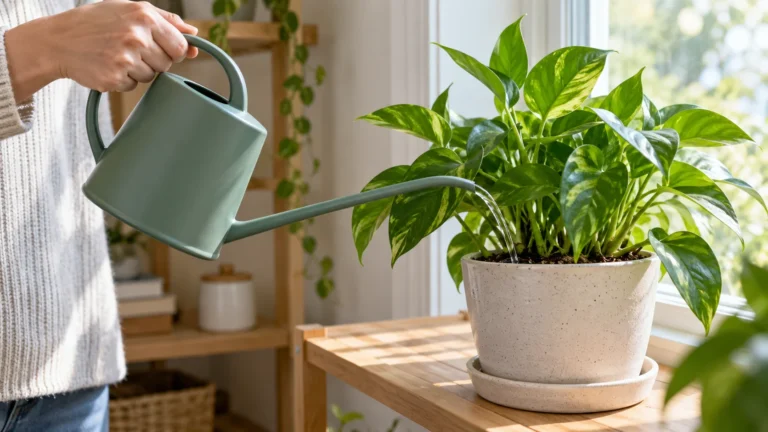
Water thoroughly before you leave. Not a top-up, the full method: pour until water runs from the drainage holes, let it finish draining, then empty the saucer. Our guide to how to water houseplants the right way covers this in full. A fully soaked root ball simply takes longer to dry out than a partially watered one, which buys every other method more margin.
Move plants out of direct sun and heat. Light and warmth are what drive a plant to use water in the first place. Pulling plants back from a hot south-facing window into bright, indirect light for the duration of the trip slows how fast they dry out, sometimes by several days, without you doing anything else. Group several plants close together while you're at it; plants release moisture as they transpire, and clustering them raises the humidity immediately around their leaves, which further slows water loss.
Do not change anything else right before you leave. Don't repot, don't fertilize, don't move a plant to a new spot with different light for the first time. Each of those is a small stress a plant normally recovers from with a few days of your attention. Stack two or three of them right before an unattended stretch and you're asking the plant to adjust to multiple changes at once with nobody watching how it responds.
The decision table, by trip length
| Trip length | What's usually enough | When to add more |
|---|---|---|
| Weekend (1-3 days) | Deep soak before leaving, move out of direct sun | Only for plants that already dry out in under 3 days |
| Short trip (4-7 days) | Deep soak, plus a pebble tray or a tested watering globe | If your home runs hot or dry while you're away |
| One to two weeks | Deep soak, plus a wicking setup or self-watering pot, or a trusted person checking once | Combine two methods rather than relying on one alone |
| Three weeks or more | A trusted person checking in, even if only briefly | Gadgets alone are not a reliable plan at this length |
The methods, and what each actually does
Pebble tray. Fill a shallow tray or saucer with pebbles, add water just below the top of the pebbles, and set the pot on top so its base sits above the waterline, not in it. This raises local humidity and gives you a small buffer, useful for a few extra days, not a substitute for a real soak.
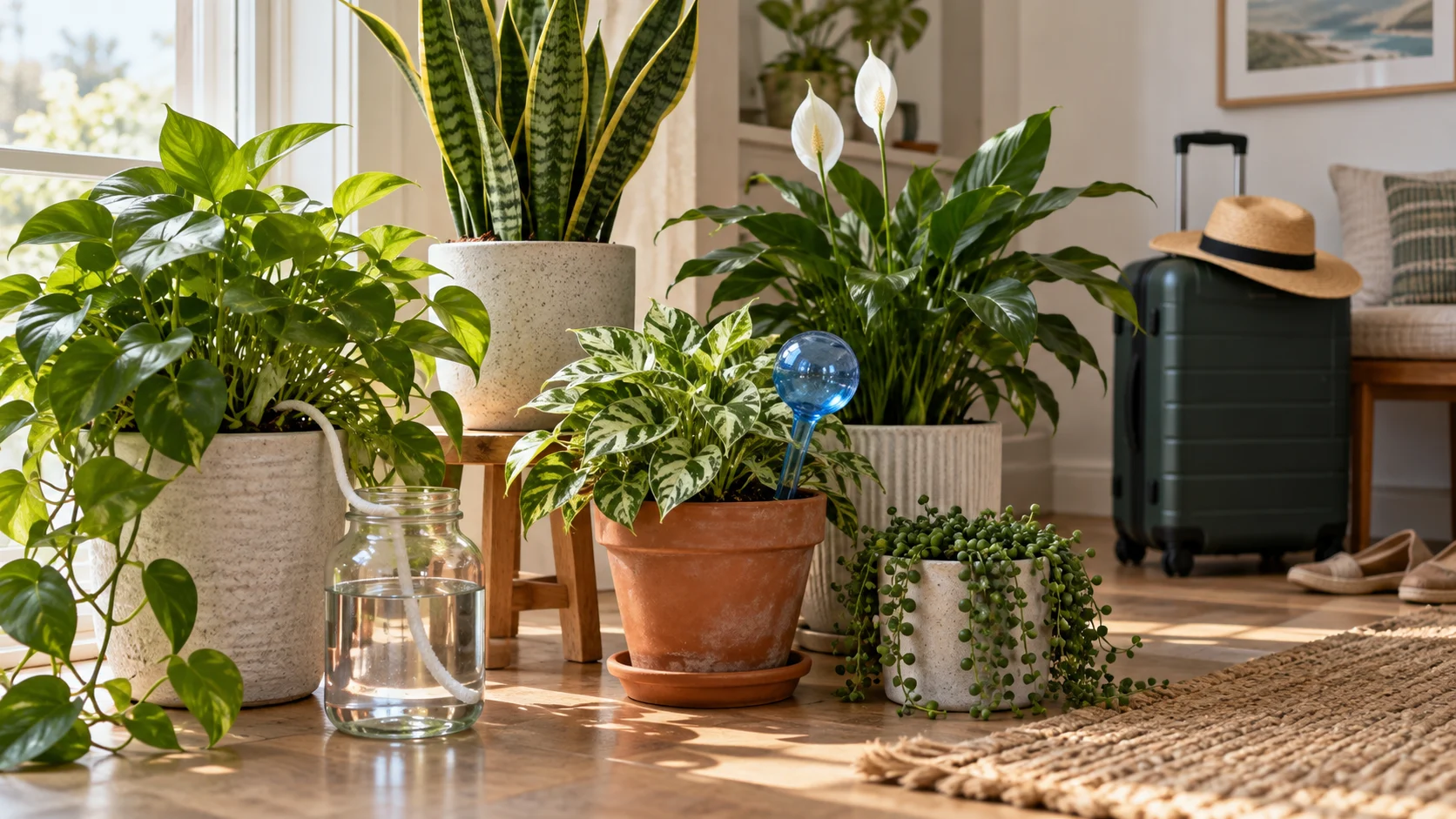
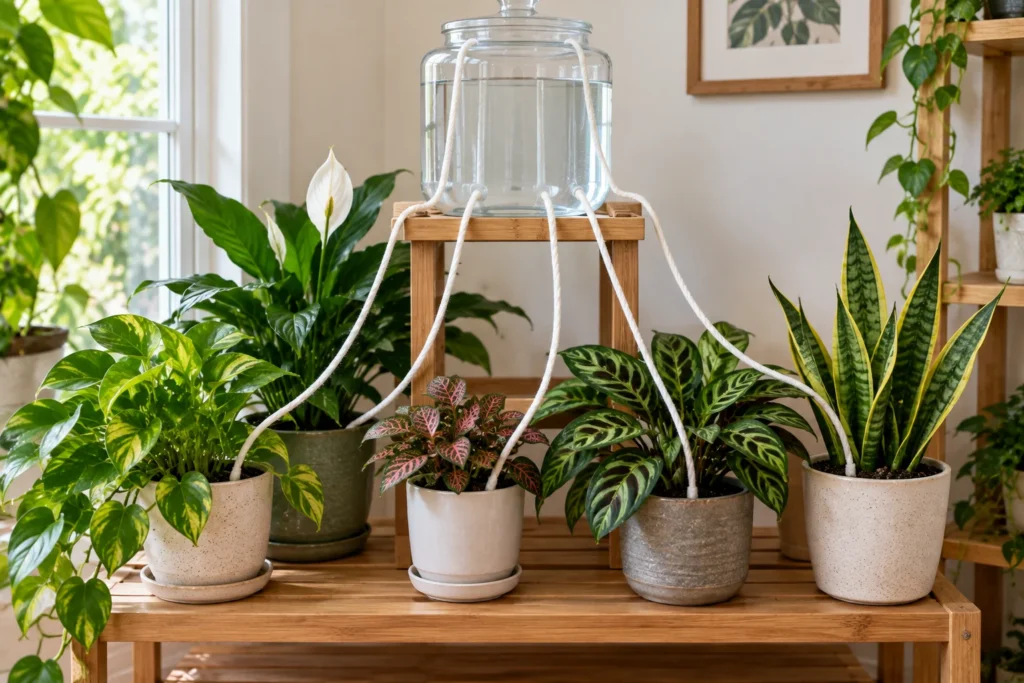
Wicking. Set a filled water reservoir, a bowl, a bucket, a large jar, above the level of your plants, and run a cotton cord from the water down into the soil of each pot. The cord draws water steadily by capillary action for as long as the reservoir lasts. This scales further than a pebble tray because the reservoir can be large, but it needs to be built and tested before you actually leave, not assembled the morning of your flight.
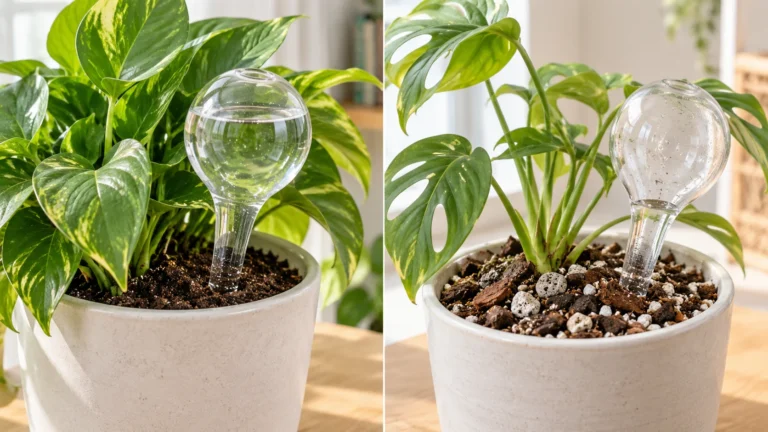
Watering globes. A glass globe releases water gradually as the soil around its neck dries out. It is a real option for the four-to-ten-day range, but it depends heavily on your soil type. Our separate breakdown of whether watering globes actually work covers the mechanism and, more importantly, how to test yours in your own pot before you trust it with a trip.
Bathtub or basin method. For several plants at once, lay down a couple of inches of water in a bathtub or large basin, set the pots on an elevated layer, upturned saucers or folded towels work, so the pot bases sit just above the waterline rather than soaking in it, and let the plants draw moisture as needed. This is one of the higher-capacity DIY options because the reservoir is large relative to the number of pots.
Self-watering pots. A reservoir built into the pot itself feeds the soil through a wick or a capillary mat, refilled from a visible tube rather than the topsoil. It solves the same problem as wicking without the setup, at the cost of repotting your plant into one ahead of time. Our honest breakdown of self-watering pots' pros and cons covers where they genuinely help and where they trap beginners into overwatering.
A trusted person. For anything past two weeks, this is still the most reliable option that exists. Leave clear, specific instructions, which plants, how much, using the amount you've actually measured with how much water a houseplant actually needs, rather than a vague "water them a bit," since a well-meaning helper without a number tends to either drown or ignore the plants.
The information gain nobody mentions: run a dry test
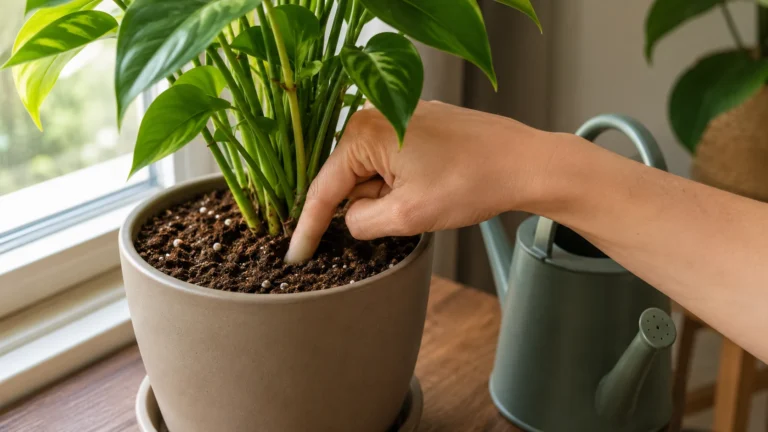
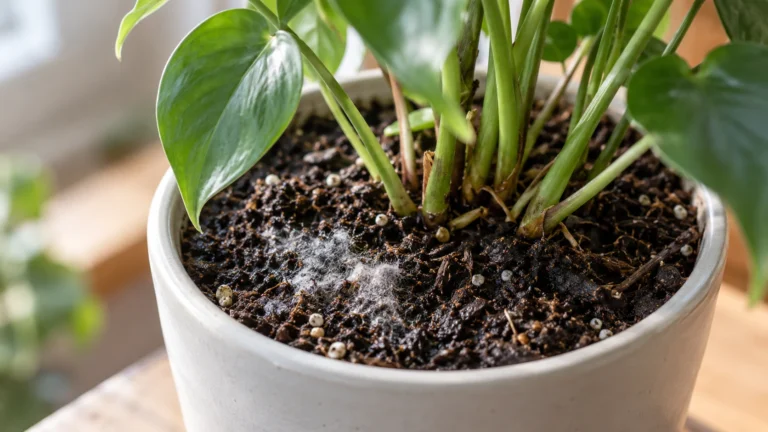
Every method above has a failure mode that only shows up under your specific conditions, your soil, your pot, your home's heat and light, and the only way to catch it before it matters is to test it while you're still home to notice. Set up your wicking cord, pebble tray, or watering globe three to five days before you actually leave, and watch it. If the soil is staying evenly moist and the reservoir is depleting at a sensible rate, you have a plan you can trust. If the pot is bone dry after two days or waterlogged after one, you have found the problem while you can still fix it, instead of finding it in a group chat with your neighbor from a different country.
FAQ
How long can a houseplant go without water? It depends heavily on the plant, the pot size, and the season, which is exactly why a single number isn't useful here. A thoroughly soaked plant in a larger pot, moved out of direct light, commonly holds for a week to ten days; a small pot in a bright, warm spot can dry out in half that time. Test your specific setup rather than relying on a generic figure.
Are watering globes or self-watering pots better for a two-week trip? Self-watering pots generally scale better for longer trips because the reservoir is larger and the delivery is more even, but they require repotting ahead of time and don't suit plants that prefer to dry out between waterings. Watering globes are simpler to set up but are more sensitive to your soil type; test one before you commit to it for two weeks.
Should I ask a neighbor to water even if I'm using a self-watering system? For trips past two weeks, yes, if you can. A brief check-in catches problems, a leak, a clogged wick, a plant that's drying faster than expected, that no unattended system will flag on its own.
Does grouping plants together really help while I'm away? Yes, modestly. Plants release moisture through their leaves, and clustering them raises the humidity in that immediate pocket of air, which slows how fast the whole group dries out. It's a small effect, worth doing since it costs nothing, but it supplements the other methods rather than replacing them.
Is it safe to fertilize right before I leave, to save a step? No, skip it. Fertilizing shortly before an unattended stretch adds a stress the plant would normally have your attention to handle if anything goes wrong, and it does nothing to help the plant survive the trip itself. Water thoroughly instead and fertilize on your normal schedule once you're back.