Do Watering Globes Actually Work? The Honest Mechanism
Yes, but only in the soil they were actually designed for, and that detail is where most reviews go wrong. A watering globe releases water through a narrow stem using a self-regulating vacuum: as the soil around the stem dries, it pulls air upward into the globe, and that air lets a small amount of water trickle out in exchange. In dense, moisture-retentive potting mix, that seal holds and the globe metes water out over one to two weeks. In loose, fast-draining or chunky mix, the seal around the stem never forms properly, air moves in and out too easily, and the same globe can empty in hours instead of days. The globe is not broken in that case. The soil is the wrong match for the tool.
The mechanism, in plain terms
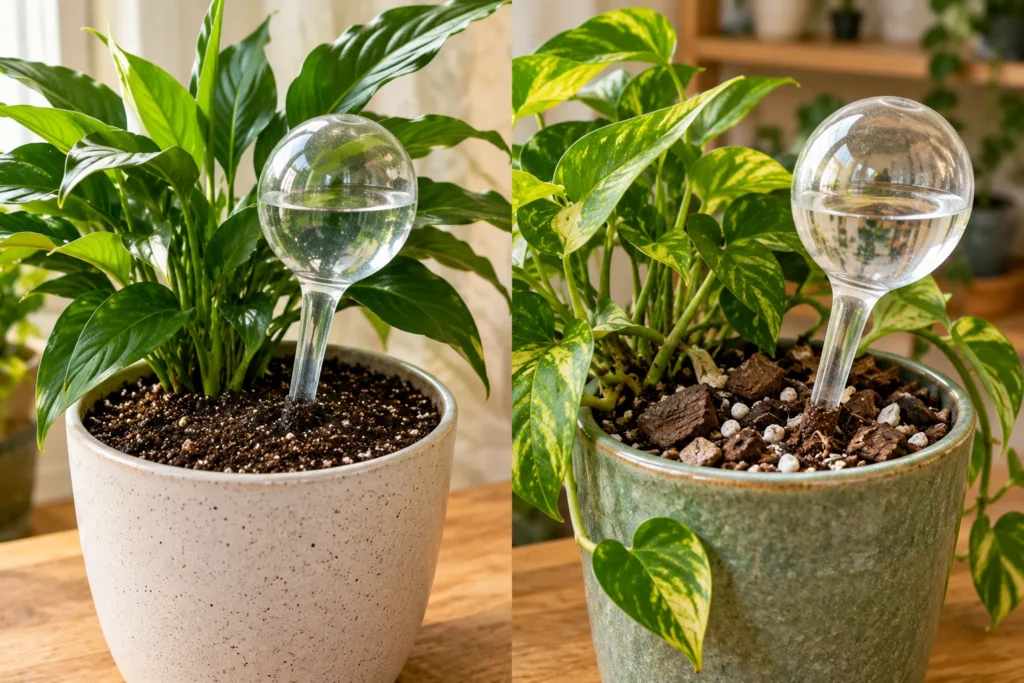
Picture the narrow neck of the globe pushed a few inches into the soil. As long as the soil right around that neck stays damp, it presses against the glass and blocks air from getting in, so gravity alone cannot pull water out; the globe just sits there, sealed. Once that immediate soil dries out even slightly, a gap opens between the soil and the glass. Air slips up through that gap into the globe, and to make room for it, a small volume of water drops out into the surrounding soil. That local patch gets damp again, the seal reforms, and the cycle pauses until it dries out once more.
That is the whole mechanism, and it explains both the good reviews and the bad ones:
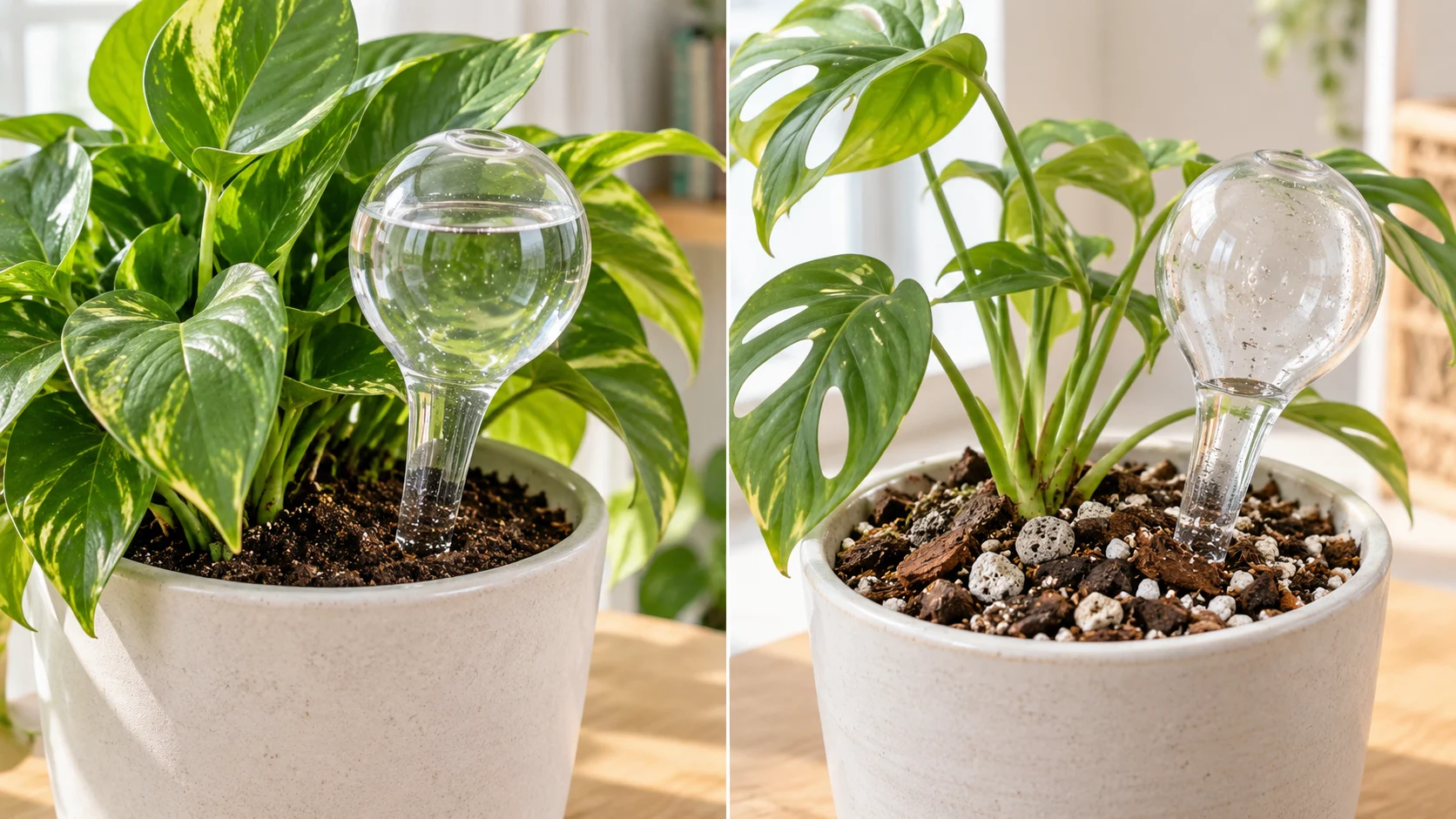
- Fine, retentive mix (standard potting soil, coco coir-heavy blends): particles pack tightly against the glass. The seal is reliable, drying happens gradually and evenly, and the globe releases water in small, spaced-out pulses, exactly what it is built to do.
- Coarse, fast-draining mix (chunky aroid blends with bark, perlite, pumice): the particles are large and irregular, so they cannot form a tight seal around the neck. Air moves in and out almost continuously instead of only when the soil is genuinely dry, and the globe drains close to its full volume in one uninterrupted go, sometimes within a day.
This is also why "always water the soil thoroughly before inserting the globe" is not just a courtesy step, it is load-bearing. Pushing a dry-mix globe into dry soil gives you the worst version of both problems at once: no seal at all, and no reserve moisture in the pot for the globe to slowly top up.
Do watering globes work: a decision table
| Your setup | What happens | Verdict |
|---|---|---|
| Standard potting mix, moisture-loving plant (pothos, peace lily, ferns) | Seal forms reliably, slow metered release | Genuinely useful, especially for trips |
| Standard potting mix, soil pre-moistened before inserting | Seal forms immediately, no dry-soil gulp | Best-case use |
| Chunky, well-draining mix (most aroids in bark blends, many succulents) | Poor seal, fast or uneven drain | Unreliable, do not count on it |
| Plant that prefers to dry out between waterings (succulents, cacti, snake plant) | Even a working globe keeps soil more consistently moist than the plant wants | Wrong tool regardless of mix |
| Globe inserted into already-dry soil | No moisture at the neck to hold a seal, empties fast | Always pre-water first |
The test nobody tells you to run before you travel
Reviews tend to give a blanket verdict, "they work" or "they're a gimmick," based on whatever plant the reviewer happened to try. The honest answer depends on your soil, so the useful move is to test it, not trust a stranger's plant.
- Water the plant thoroughly first, the normal soak-until-it-drains method described in how to water houseplants the right way.
- Fill the globe fully and mark or note the water level.
- Insert it into the moist soil, a few inches from the stem.
- Check the level after 24 hours, then again at 48 hours.
If it has barely dropped after two days, your mix holds a seal well and the globe is a fair bet for a week or two away. If it is already close to empty at 24 hours, your mix is too coarse for this tool to be trustworthy unattended, no matter what the packaging or a five-star review promised. That two-day dry run costs you nothing and tells you more than any general verdict can, because it uses your actual pot.
What globes cannot do
A watering globe delivers water to one point in the pot, near where the stem is inserted. It does not replicate a full soak that wets the entire root ball evenly the way pouring and letting it drain does. It also does nothing about light, temperature, or humidity while you are away. It solves exactly one problem, a slow, metered top-up of moisture at a single point, and it solves that problem well only in the right soil. If you are weighing globes against other unattended-watering options for an actual trip, how to water your plants while on vacation lays out the honest comparison by trip length, including where a globe fits and where it does not.
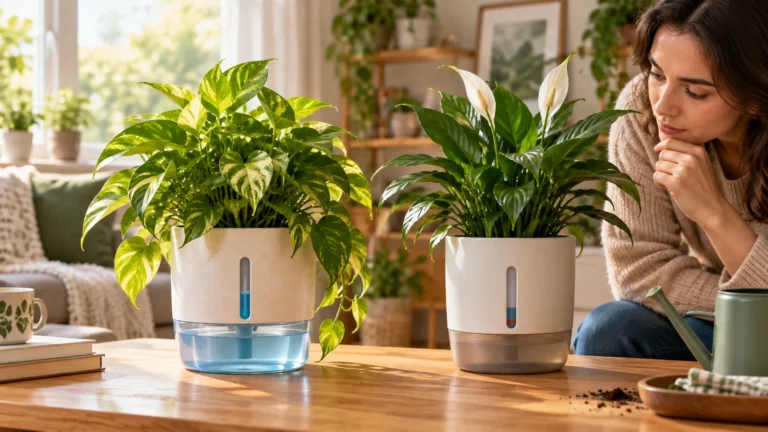
For plants that already sit in something more automated, self-watering pots: honest pros and cons covers the reservoir-based alternative, which does not depend on soil type the same way a globe does, though it comes with its own trade-offs. And if the appeal of a globe is really "something I can check without guessing," are moisture meters accurate and worth it covers a tool built for that reassurance directly, rather than for delivery.
The honest bottom line
Watering globes are not a myth and they are not magic. They work exactly as designed in soil that holds a seal, and they fail in soil that does not, which is precisely why opinions on them are so split online: everyone is describing their own pot, not the product. Run the 48-hour test in your actual soil before you trust one with a week-long trip, and treat a globe as a supplement to good watering technique, not a replacement for it.
FAQ
Do watering globes work for all houseplants? No. They work best for plants that like consistently moist soil in a fine, retentive mix. They are a poor match for succulents, cacti, and any plant that needs to dry out between waterings, and they are unreliable in chunky, fast-draining mixes even for moisture-loving plants.
Why did my watering globe empty in one day instead of two weeks? Almost always the soil, not the globe. Coarse or dry mix cannot form the seal the vacuum mechanism depends on, so air enters continuously and the water drains out close to all at once instead of in small metered pulses.
Should I water the soil before inserting the globe? Yes, always. Water thoroughly first, the same soak-and-drain method you would use anyway, then insert the globe into already-moist soil so the seal forms right away instead of dumping its full volume into dry mix.
Are glass globes and terracotta watering spikes the same thing? No. Glass globes rely on the vacuum-and-air-exchange mechanism described above and release water only through the neck opening. Terracotta spikes work by porosity, moisture seeps through the unglazed clay itself when the surrounding soil pulls at it, which behaves differently and is generally more forgiving of coarser mixes.
Can I leave a watering globe in permanently instead of watering normally? Not as a substitute for your regular routine. A globe delivers water to one localized spot and does not replace a full soak of the whole root ball. Use it as a short-term top-up for trips, not as your everyday watering method.