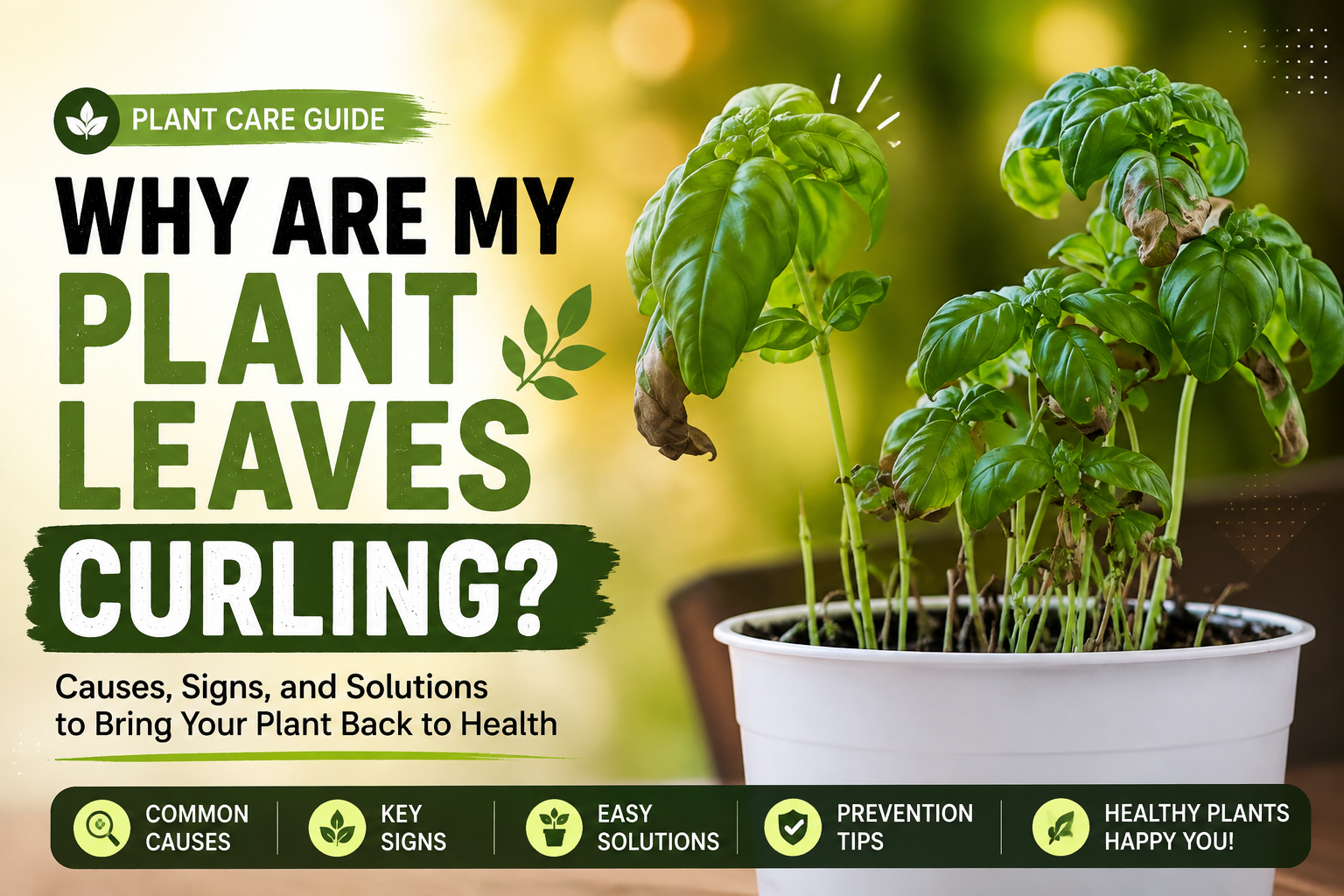
Why Are My Plant Leaves Curling?
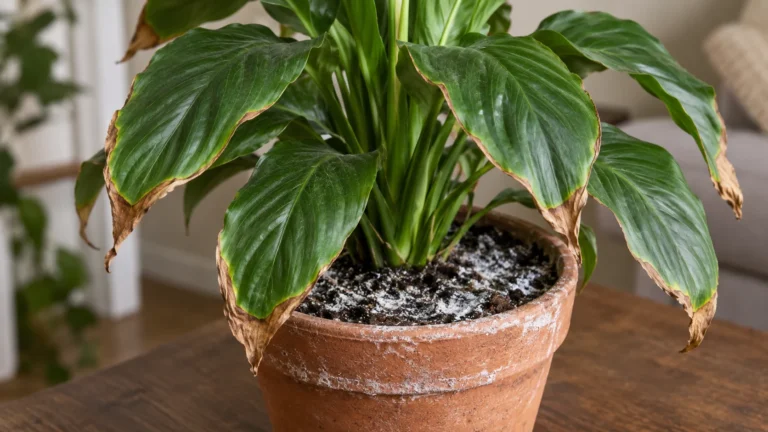
Leaves curl to protect themselves, and the direction of the curl points to the cause. Leaves rolling inward on themselves usually mean the plant is short of water or the air around it is too dry. Leaves curling downward with a soft, drooping look point to overwatering or root trouble. Leaves cupping upward and away from the light usually mean too much light or heat. New leaves emerging twisted and distorted point to pests at the growing tip.
The good news comes first: unlike browning, curling is usually reversible. A curled leaf is a living leaf that has changed shape. Fix the cause and it can flatten out again.
Why leaves curl at all
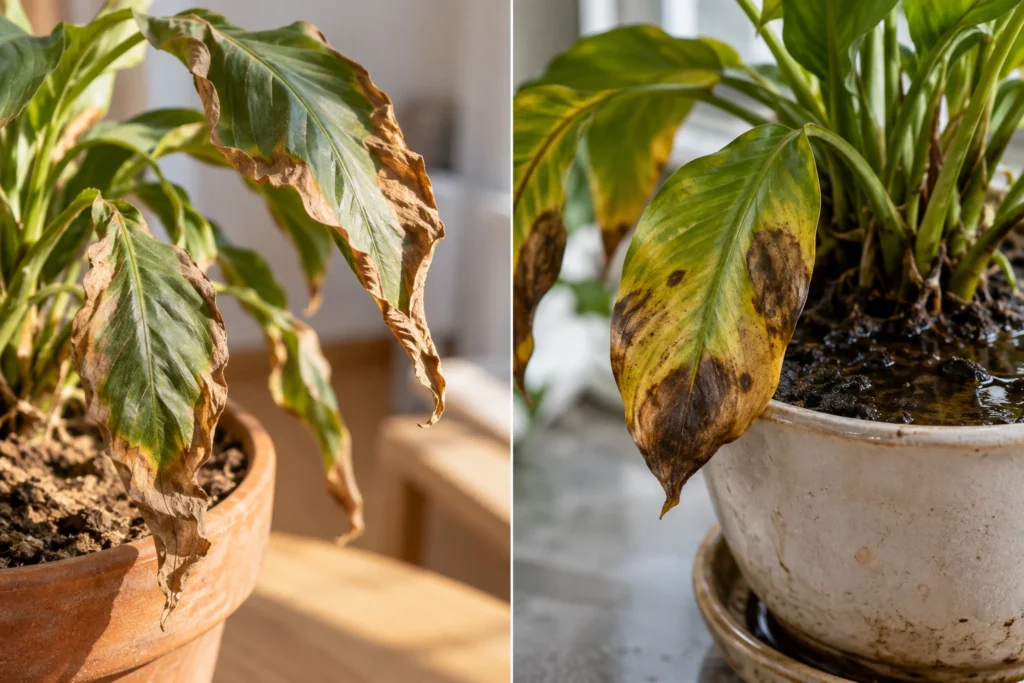
Curling is not damage. It is a response.
A leaf is a large flat surface designed to catch light, and that same flatness is what loses water to the air and absorbs heat from the sun. When a plant is under stress, rolling the leaf inward reduces the exposed surface area, which slows water loss. Cupping upward or turning away from a light source reduces how much of the leaf is being hit by it.
Understanding that changes what you are looking at. The plant is not falling apart; it is doing something deliberate to protect itself, and it will stop when the reason goes away. This is why curling deserves attention but not alarm, and why the useful question is not "how do I uncurl it" but "what is the leaf protecting itself from."
Curling inward: not enough water, or air that is too dry
This is the most common cause, and the shape is distinctive: leaves roll in along their edges, sometimes far enough to look like a tube or a taco. The leaf stays firm rather than going limp.
If the soil is dry two inches down, the plant is short of water and is reducing its surface area to conserve what it has. Water thoroughly until it runs out of the drainage holes, as the University of Maryland Extension recommends, let it drain, and empty the saucer. Leaves often begin to relax within a day.
If the soil is damp and the leaves are still rolling inward, look at the air rather than the pot. Iowa State University Extension notes that home humidity is often low, particularly in winter, and thin-leaved tropicals such as calatheas, prayer plants and ferns respond to dry air long before anything visible browns. A radiator, a heating vent or an air conditioning outlet blowing across a plant will do it even in a room that feels comfortable to you.
Either way, check the soil before you act. How to tell if your plant needs water covers the finger, lift and skewer tests.
Curling downward and soft: too much water, or root trouble
When leaves curl downward at the edges and the whole leaf feels soft rather than firm, the cause is usually at the other end of the plant. Roots that have been sitting in wet soil are damaged and cannot supply the foliage, so the leaf behaves as though it is short of water even though the pot is not.
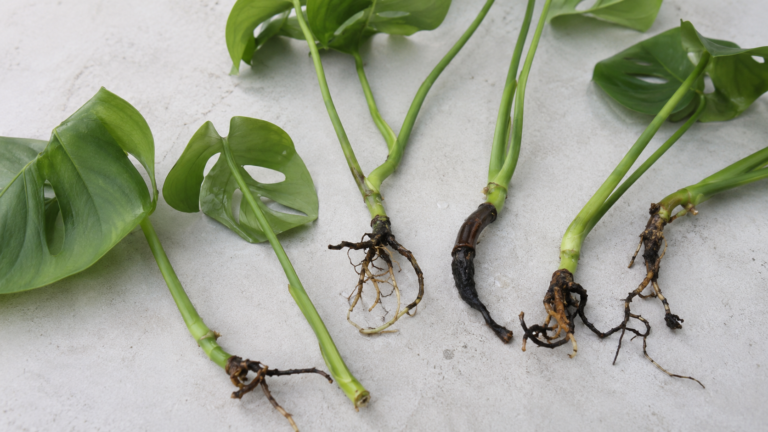
The University of Wisconsin-Madison Plant Disease Diagnostics Clinic describes the pattern for root rot as wilting even though the soil is wet, with roots turning soft and brown and often carrying a bad odor. Supporting signs: soil that never dries out, yellowing lower leaves, and a sour smell from the pot.
The response here is the opposite of the one above. Do not water. Let the pot dry out, check that it actually drains, and inspect the roots if the picture does not improve. Overwatered vs underwatered walks through telling the two conditions apart when the leaves alone will not say.
Cupping upward: too much light or heat
Leaves that curl upward at the edges, cup like a bowl, or angle themselves away from a window are usually reacting to light intensity or heat rather than to water. The pattern gives it away: it affects the leaves closest to the light source, and often only the side of the plant facing it.
Most common houseplants want bright indirect light rather than direct sun, and a plant moved from a shaded spot into a south or west-facing window can find that a lot to absorb. It curls to reduce what it is exposed to.
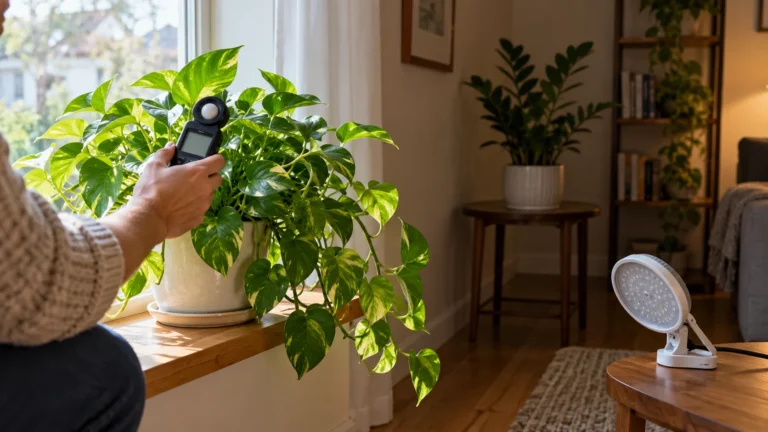
The fix is placement. Move the plant back from the glass, filter the light with a sheer curtain, or shift it to a window with gentler light. Bright indirect light explained covers the shadow test and what each window direction actually delivers, which is the reliable way to judge a spot rather than going by feel.
Heat produces the same reaction without the light. A plant near a radiator, a hot appliance or a sun-warmed pane can cup its leaves in a room that is otherwise well lit.
Twisted, distorted new growth: check for pests
There is one pattern that is not about water, light or heat, and it is worth checking for specifically because the response is different: new leaves emerging twisted, puckered or misshapen rather than mature leaves changing shape.
Sap-sucking insects feed on soft new tissue while it is still forming, and the leaf then grows out distorted. The usual suspects on houseplants are aphids, spider mites, mealybugs and scale. What to look for:
- Undersides of leaves and the joints where leaves meet stems. That is where they hide.
- Fine webbing and a stippled, speckled look to the leaf surface, which points to spider mites.
- White cottony spots in leaf joints, which point to mealybugs.
- A sticky residue on leaves or on the surface below the plant, which points to aphids or scale.
If you find any of these, the treatment is a topic of its own rather than something to improvise from a general care page. Start by isolating the plant from your others so nothing spreads while you work out what to do.
The direction table
| Curl direction and feel | Usual cause | First thing to check |
|---|---|---|
| Rolling inward, leaf firm | Short of water, or dry air | Soil at two inches |
| Rolling inward, soil damp, thin-leaved plant | Dry air | A heat source or vent nearby |
| Curling downward, leaf soft | Overwatering or root damage | Whether the pot drains, and whether the soil smells sour |
| Cupping upward, away from the window | Too much light | Distance from the glass and window direction |
| Cupping upward, near a heat source | Heat | What is warming that side of the plant |
| New leaves twisted or puckered | Pests at the growing tip | Undersides of leaves and stem joints |
| Leaves folding along the midrib, daily rhythm | Normal for some species | Whether it reopens later in the day |
The curl that is completely normal
Prayer plants and calatheas fold their leaves upward along the midrib in the evening and open them again in the morning. It is a daily rhythm, the plants are named for it, and it is not a symptom of anything. Beginners who catch it at night regularly conclude something is badly wrong.
The test is time. A curl that comes and goes on a daily cycle is normal behavior. A curl that is there all day, every day, is a signal.
A second normal case: brand new leaves on many plants emerge tightly rolled and unfurl over days. That is how the leaf is built, not a stress response.
Curling, drooping, browning: which one do you have
The three get confused constantly, and the causes only partly overlap.
- Curling means the leaf has changed shape while staying firm and alive. That is this page.
- Drooping means the leaf has gone limp and hangs down, with its shape intact. Different cause list, covered in why is my plant drooping.
- Browning means the tissue is dead and dry, and it does not come back. See brown tips on houseplant leaves for the milder version.
If a leaf is curling and browning at the same time, treat the browning as the more advanced symptom and start there. If it is curling and drooping at once, check the soil, because a watering problem sits under both.
How long recovery takes
Curling reverses more readily than most houseplant symptoms, but not instantly, and not always in the leaves that are already affected.
- Thirst: leaves usually begin relaxing within a day of a thorough soak, and are back to normal within a few days.
- Dry air: improvement is gradual over one to two weeks after conditions change, and is often clearest in new growth.
- Too much light or heat: move the plant and give it one to two weeks. Leaves that were badly affected may not fully flatten.
- Root problems: slowest of all, measured in weeks, and only if healthy root tissue remains.
- Pests: the leaves that grew distorted stay distorted. What you are watching for is clean new growth.
If nothing has changed after double the time above, the diagnosis was probably wrong. Go back to the soil check rather than stacking another change on top. For the underlying routine that prevents most of this, indoor plant care for complete beginners sets the decisions out in order.
Frequently asked questions
Why are my plant's leaves curling inward? Most often because the plant is short of water or the air is too dry. Rolling inward reduces the leaf's exposed surface area and slows water loss. Check the soil two inches down: dry means water thoroughly, damp means look at humidity and at any heat source blowing across the plant.
Do curled leaves uncurl again? Often yes, which makes curling different from browning. A curled leaf is still alive, so once the cause is removed it can flatten out over days to weeks. Leaves that grew distorted because of pest damage are the exception and stay misshapen.
Are curling leaves a sign of overwatering or underwatering? Both are possible, and the direction helps. Rolling inward while the leaf stays firm leans toward too little water or dry air. Curling downward while the leaf feels soft leans toward too much water and damaged roots. The soil check settles it.
Why are my new leaves coming out twisted? Distorted new growth usually means something fed on the tissue while it was forming, which points to sap-sucking pests such as aphids, spider mites, mealybugs or scale. Check leaf undersides and the joints where leaves meet stems, and isolate the plant from your others while you work out the treatment.
My prayer plant curls up every night. Is that a problem? No. Prayer plants and calatheas fold their leaves upward in the evening and open them in the morning as a daily rhythm. A curl that comes and goes on a daily cycle is normal. A curl that persists all day is the one worth diagnosing.