Do Ice Cubes Work for Watering Houseplants?
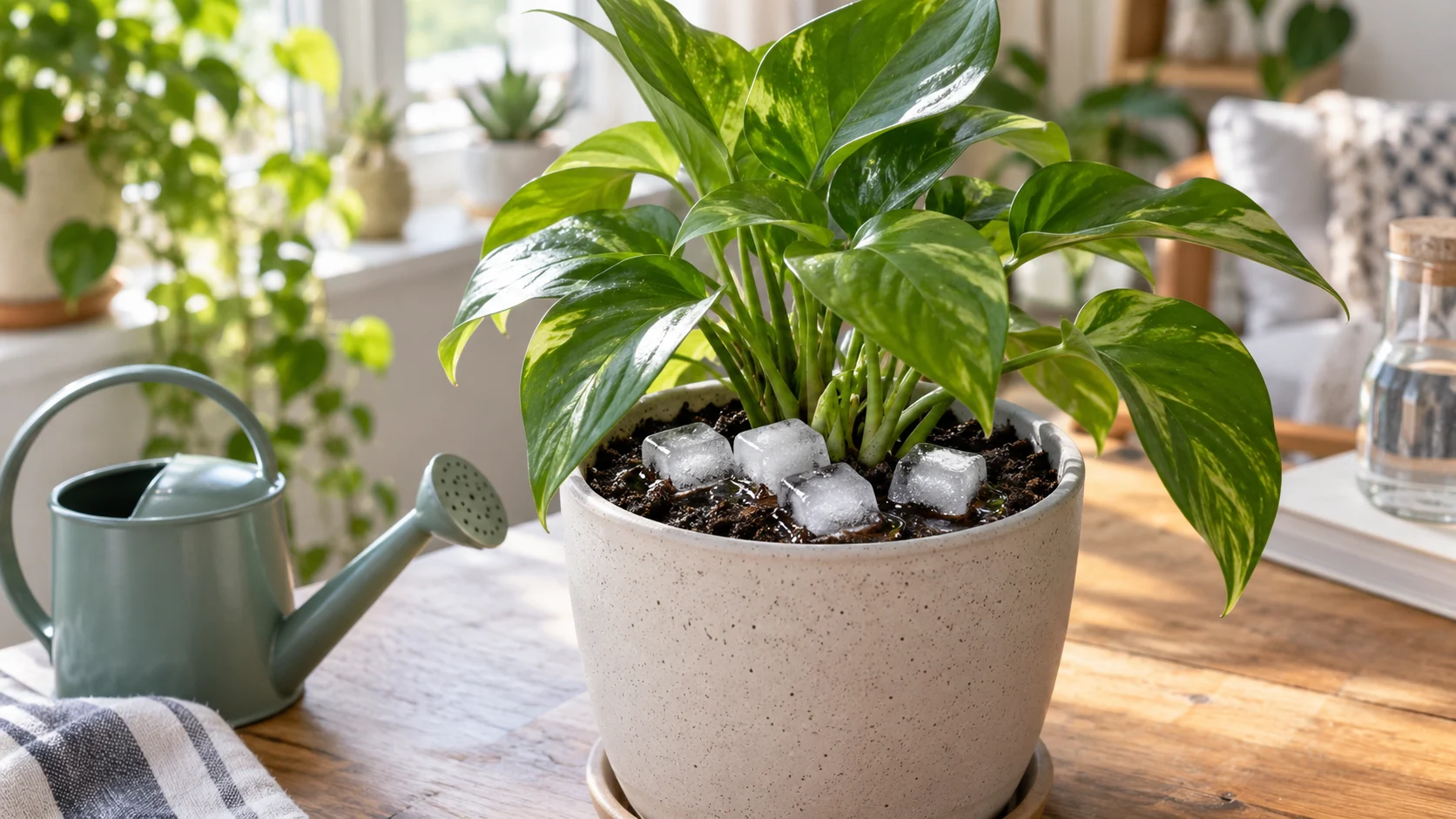
No, not as a regular watering method for most houseplants, though the reason is not what most articles claim. A single ice cube rarely melts into enough water to soak a normal-sized pot, so it under-waters more often than it helps. The bigger issue is where the cold meltwater lands. On a plant with roots close to the surface or a crown sitting right against the soil, like an orchid, the local cold contact at the melt point is a real stress. On a plant with a deep, dense root ball buried under a couple inches of mix, that same ice cube warms toward room temperature before it reaches the roots, so the risk is much smaller than the volume problem.
The two separate problems, and why they get lumped together
Most "ice cubes vs. plants" articles argue past each other because they are answering two different questions with one verdict. One is a temperature question. The other is a volume question. They do not have the same answer, and treating them as one is why the advice online is so inconsistent.
Temperature: an ice cube sitting on the soil surface, or worse, resting against a stem or exposed root, cools that exact contact point well below the temperature the rest of the root ball is used to. Most popular houseplants are tropical or subtropical species whose roots evolved in soil that never approaches freezing. Becky Brinkman, manager of the Atlanta Botanical Garden's Fuqua Orchid Center, has called the practice a reliable way to damage orchids specifically, because orchid roots are unusually exposed, wrapped in a thin absorbent layer (velamen) with much less insulating soil between the ice and the living tissue than a plant buried in a full pot of potting mix.
Volume: a standard ice cube is roughly 20 to 30 milliliters of water once it melts. Our guide to how much water a houseplant actually needs works out that a proper soak, water running from the drainage holes, is several times that for anything bigger than a 4-inch pot. One or two cubes look like watering happened because the surface gets damp, but the bottom two-thirds of the root ball never sees a drop. That is a slower, quieter version of underwatering, not a shortcut around it.
Why the mechanism matters more than the verdict
Treat these as two separate dials instead of one yes-or-no answer, and the confusing advice online starts to make sense.
| Factor | Higher risk | Lower risk |
|---|---|---|
| Root depth | Shallow, surface-hugging (orchids, African violets, many succulents) | Deep, buried in several inches of mix (pothos, snake plant, ZZ plant) |
| Contact point | Ice touching stem, crown, or exposed roots directly | Ice placed on soil surface, several inches from the stem |
| Pot size vs. cube count | Small pot, one cube treated as "done" | Large pot where cubes are clearly a top-up between full waterings |
| Plant origin | Tropical epiphytes and rainforest-floor species used to stable warmth | Hardier houseplants that already tolerate some temperature swing |
A plant that scores "lower risk" on all four still is not gaining anything over a normal pour with room-temperature water. The mechanism explains why ice cubes are not dangerous for every plant, not why they are a good method for any of them.
Where the ice cube idea actually came from
The habit did not start as a myth invented on social media. Some growers have historically put "water with three ice cubes weekly" instructions on tags for gift orchids, aimed at recipients who are not gardeners and just need a fixed, unmissable, low-risk-of-drowning-the-plant instruction. It functions less like good horticulture and more like a childproof dosing instruction: a small, repeatable amount that is hard to get wildly wrong in either direction. That is a reasonable goal for a gift tag aimed at someone who has never owned a houseplant. It is a poor foundation for how you actually water plants you intend to keep alive long-term, because a fixed small dose ignores everything that changes how much water a plant needs week to week: light, pot size, season, and the plant itself.
What to do instead
If the appeal of ice cubes is really about portion control, not the cold, you can get the same "I won't overdo it" reassurance without the temperature risk or the underwatering risk:
- Water at room temperature, but measure the amount once. Fill your watering can, pour until it drains from the bottom, and note how much the can held. That is your plant's real number, and it stays accurate trip after trip. Our guide to watering can features that actually matter covers what makes measuring easy versus fussy.
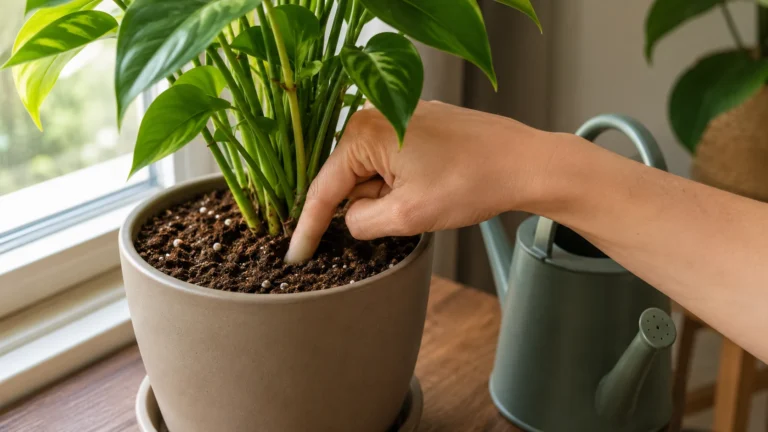
- Check before you pour, rather than dosing on a schedule. How to water houseplants the right way covers the finger-check-then-soak method that replaces both the schedule and the cube-counting habit.
- If the anxiety is really about doing too much, not too little, a slow, deliberate gadget verdict can help more than a folk remedy. Do watering globes actually work covers a tool built for exactly this kind of metered, low-effort watering, with the same honesty about where it does and does not help.
The honest bottom line
Ice cubes are not a poison and they are not a secret trick. For a plant with deep roots and a decent amount of soil insulation, an occasional cube placed away from the stem is unlikely to do real harm, it is just an inefficient, imprecise way to deliver too little water too slowly. For a plant with shallow or exposed roots, particularly orchids, skip it entirely and water at room temperature instead. Neither case is an argument for making ice cubes part of your regular routine.
FAQ
Will one ice cube kill my houseplant?
Unlikely on its own. A single cube is far more likely to under-water a normal-sized pot than to cause cold damage, since the volume is small and, for most plants with roots buried in mix, the meltwater warms up before it reaches the root zone.
Is the ice cube method ever actually recommended by growers?
Some retail orchid tags use a fixed "a few ice cubes a week" instruction, aimed at giving a gift recipient a foolproof, low-risk dose rather than teaching proper watering. It is a portion-control shortcut for beginners, not a technique horticulturists recommend for long-term care.
What about ice specifically for orchids?
This is the one case worth avoiding outright. Orchid roots are close to the surface and thinly covered, so cold contact reaches living tissue directly instead of warming up through several inches of soil first. Water orchids at room temperature.
Does using filtered or distilled ice change anything?
It removes one variable, mineral content, but does not change the temperature or volume problems described above. If mineral buildup is your actual concern, hard water and mineral buildup on houseplant soil covers what to watch for and how to manage it directly.
Is there any houseplant where ice cubes are a genuinely good idea?
Not as a default choice. Room-temperature water measured to the right volume outperforms ice cubes for every houseplant on both the temperature and the volume problem. Ice cubes are, at best, a neutral trick for a narrow set of plants, never an upgrade.