Root Rot in Houseplants: Signs and How to Save It
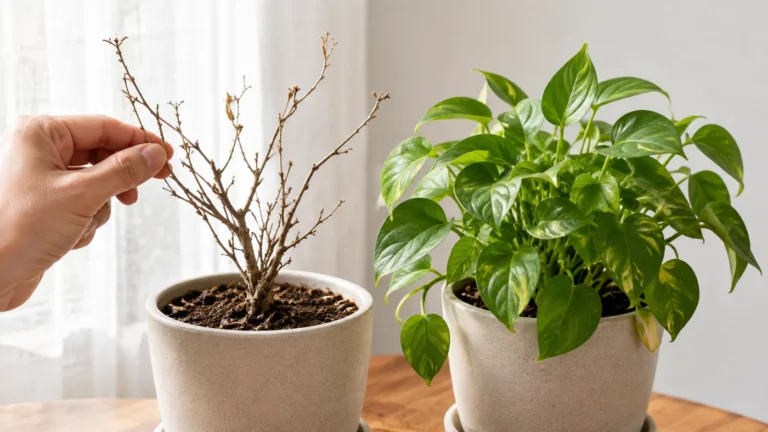
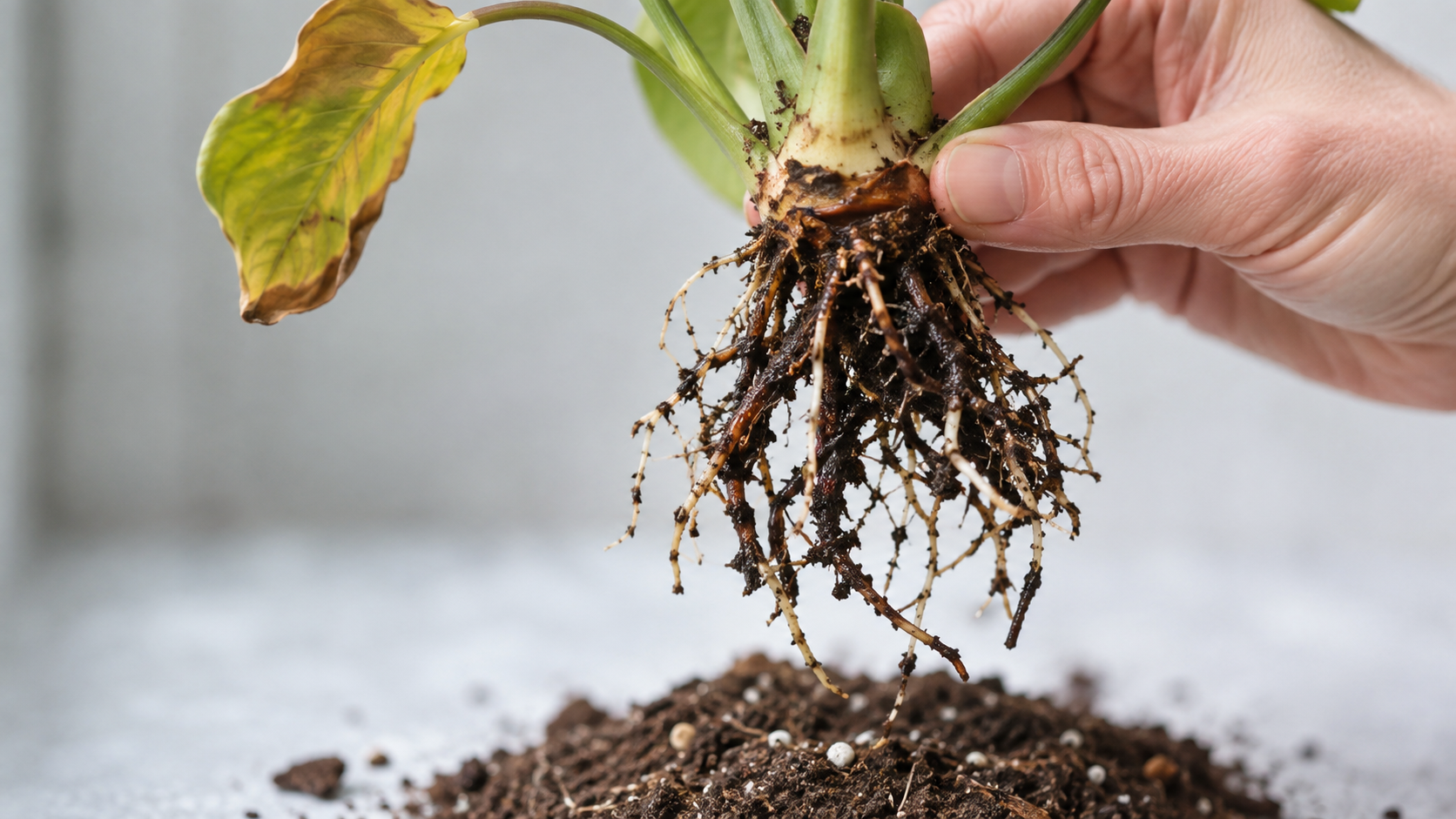
The signature of root rot is a plant that wilts even though the soil is wet. That single contradiction is worth more than any other symptom, because a thirsty plant and a rotting plant look identical from across the room and completely different from the pot. Supporting signs are yellowing lower leaves, growth that has stalled, soil that never seems to dry out, and a sour or swampy smell. To confirm it, slide the plant out of its pot: healthy roots are firm and resist a gentle tug, while rotted roots are soft and slide apart between your fingers, often with a bad odor.
If firm root remains, a rescue is worth attempting. If nothing firm is left, it is not, and knowing that saves you weeks of hoping.
The signs above the soil
Root rot is a below-ground problem that announces itself above ground, usually after the damage has started. The University of Wisconsin-Madison Plant Disease Diagnostics Clinic describes plants affected by root rot fungi as wilting even though the soil is wet, along with stunted growth, and notes that foliage may take on a yellow or red color that resembles a nutrient problem.
In a home, that translates into a recognizable picture:
- Wilting or drooping that does not respond to watering. This is the key one. The plant looks thirsty, you water it, and nothing improves, because the roots cannot take the water up.
- Lower leaves yellowing, often several at once rather than the occasional old leaf.
- Growth that has stopped. No new leaves for weeks or months during the growing season.
- Soil that stays damp for a very long time. A pot that is still wet ten days or two weeks after watering is telling you something.
- A sour, swampy or sulfurous smell from the soil surface or the drainage holes.
- A soft feel at the very base of the stem, where it meets the soil.
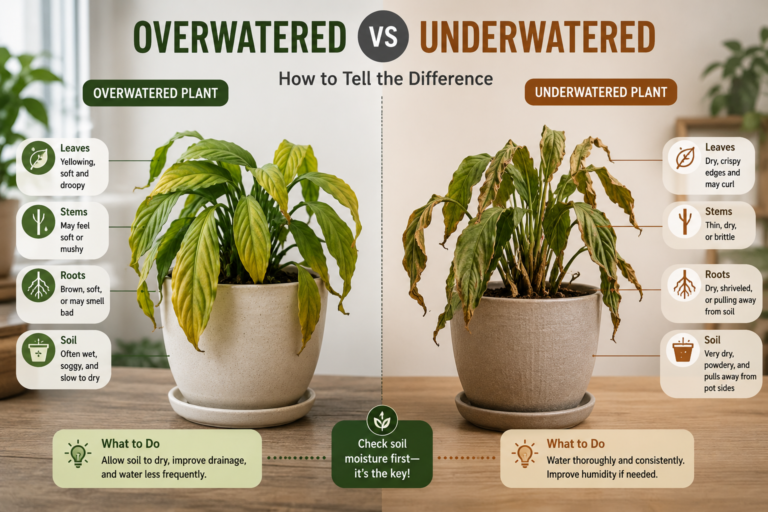
Any one of these on its own has other explanations. Wilting plus wet soil, together, narrows it sharply. If you are not sure which watering problem you have, overwatered vs underwatered compares them directly, and why is my plant drooping covers the wider list of causes for a limp plant.
Confirm it: take the plant out of the pot
You cannot diagnose root rot from the leaves. You have to look, and unpotting a houseplant is far less risky than it sounds.
Support the base of the stem between your fingers, tip the pot on its side, and ease the plant out. If it will not come, run a blunt knife around the inside edge of the pot first. Once it is out, gently crumble away enough soil to expose the outer roots. You do not need to bare the whole root ball to see what is going on.
Then use three senses:
- Look. Rotted roots are dark and often blackened. Healthy roots on most houseplants are pale: white, cream or tan.
- Feel. This is the reliable test. Squeeze a root lightly between finger and thumb. A healthy root is firm and springy. A rotted root is soft and mushy, and the outer layer often slips off, leaving a thin thread behind.
- Smell. The Wisconsin clinic notes that rotted roots often carry a bad odor. Healthy potting mix smells earthy. Rot smells sour, stagnant or like a drain.
What a healthy root actually looks like
Almost every guide tells you to look for brown mushy roots and none tells you what you are comparing against, which leaves beginners staring at a root ball with no baseline.
Healthy roots are firm, and firmness matters more than color. They hold their shape when you press them, they resist a gentle pull, and they feel like thin cord rather than wet string. Most are white or cream when young and go tan or light brown with age. Some plants naturally have darker roots, and a few, like older orchid or dracaena roots, look brown while being perfectly sound.
So do not diagnose on color alone. The test that never misleads is this: pinch it. If it holds firm, it is alive. If it collapses, slides apart, or the outer sheath strips away between your fingers, it is rotted.
It is also normal to find a few dead roots on any established plant. Roots die and are replaced as a matter of course. A handful of soft roots in an otherwise firm root ball is not root rot; a root ball that is soft throughout is.
Is it worth saving? An honest triage
Most pages on this subject are relentlessly optimistic. The honest version depends on how much living root is left.
| What you find | Realistic outlook | What to do |
|---|---|---|
| Mostly firm roots, a few soft ones | Good. This is early and very recoverable | Trim the soft roots, repot, water less |
| Roughly half firm, half soft | Fair. Worth attempting, expect leaf loss | Full rescue, then patience |
| A small amount of firm root, most of it soft | Poor but not hopeless | Attempt it, and consider taking cuttings as a backup |
| No firm root left, base of stem soft | Not recoverable | If any stem is still firm and green, a cutting is the only route |
Two things worth saying plainly. First, a plant that survives root rot will usually lose leaves during recovery, because a reduced root system cannot support the foliage it had. That leaf loss is part of the process, not evidence the rescue failed. Second, if there is genuinely nothing firm left, no amount of repotting will change it, and the kindest thing is to take a healthy cutting if one exists and start again.
The rescue, step by step
Work over newspaper or outside. Have fresh potting mix and a clean pot ready before you start, because the plant should not sit around with bare roots.
- Remove the plant and clear the old soil away. Loosen it by hand and rinse the root ball gently under a slow tap if it is heavily caked, so you can actually see what you are working with.
- Cut away every soft root. Use clean, sharp scissors or secateurs and cut back into firm tissue. Be thorough. Leaving rotted material behind leaves the problem in the pot.
- Disinfect your tools before and after. The Wisconsin clinic recommends disinfecting with a 10% bleach or detergent solution, or alcohol. This matters because the fungi involved spread, and the same scissors will be used on your other plants.
- Do not reuse the old soil, and do not reuse the old pot without cleaning it. The clinic advises against reusing potting mix or drainage water, and notes that some of these fungi produce spores that survive long periods in soil or plant debris. Throw the old mix out.
- Reduce the foliage if you removed a lot of root. A plant cannot support more leaves than its roots can supply. Trimming some growth back gives the remaining roots a fighting chance.
- Repot into fresh mix in a pot that drains. The clinic is specific: use a pot with drainage holes and a pasteurized commercial potting mix rather than soil from a garden, which can bring these organisms in. Choose a pot sized to the root system you have left, which may well be smaller than the one it came out of.
- Water it in lightly, once, and then stop. The mix should be barely damp, not soaked.
Aftercare: the four weeks that decide it
The rescue is the easy part. What happens next is where most attempts are lost.
- Water far less than before. With a reduced root system, the plant uses much less water, and the same routine that caused the problem will cause it again. Check with a finger and only water when the top of the mix is genuinely dry. How to tell if your plant needs water covers the checks.
- Never let it stand in water. The Wisconsin clinic is explicit about not allowing plants to sit in drainage water. Empty the saucer every single time.
- Put it somewhere with moderate light, out of direct sun. Bright direct light asks the plant to support more growth than it currently can.
- Do not feed it. More on that below.
- Expect it to look worse before better. Leaf loss over the first two to three weeks is normal. What you are watching for is new growth, and that can take a month or more.
- Leave it alone otherwise. No moving it around, no second repot, no experiments.
What not to do
Three common instincts all make things worse.
Do not reach for a fungicide. The Wisconsin clinic states that fungicide use is not recommended for root rots on houseplants, because of the limited availability of products for use by homeowners. This is the one thing commercial guides almost never say. Cultural control, meaning drainage and watering habits, is the actual treatment.
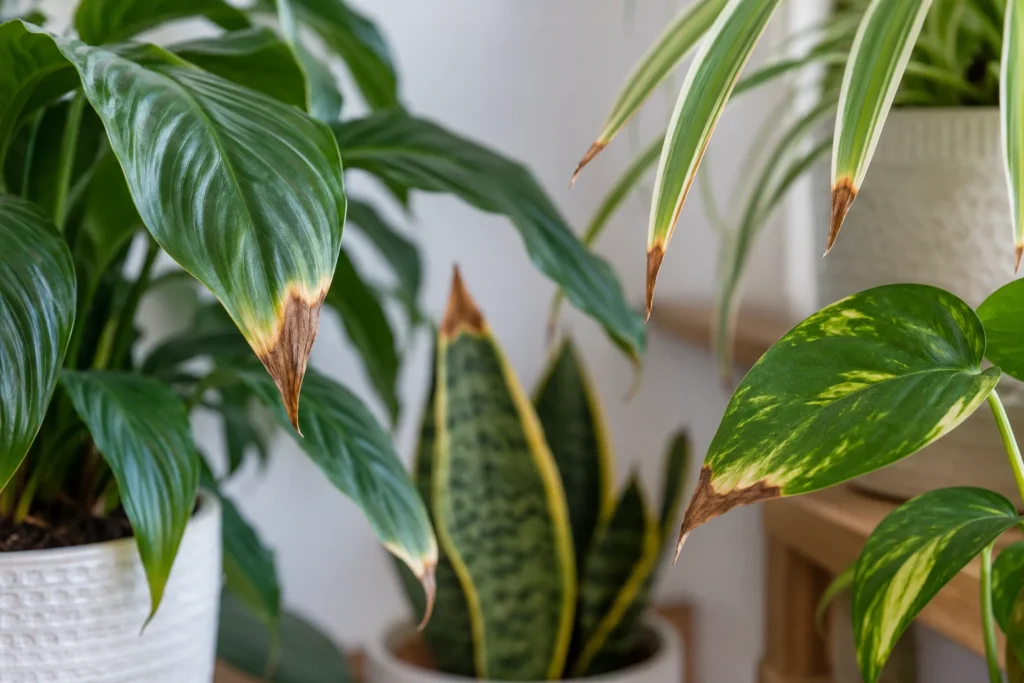
Do not fertilize a recovering plant. It is the most common post-rescue error. A plant with damaged roots is not growing and cannot use the nutrients, and unused fertilizer accumulates in the soil as salts, which Iowa State University Extension identifies as a cause of brown leaf tips. So you would be adding a second problem to a plant that already has one. Wait until you see genuine new growth, and even then, feed at the strength stated on the product label and no more. This and the rest of the common traps are covered in 7 beginner houseplant mistakes.
Do not move it into a bigger pot. The instinct to give a struggling plant more room is exactly backwards. A large pot holds more soil than a reduced root system can draw from, that surplus stays wet, and wet soil is what the Wisconsin clinic identifies as the condition these fungi prefer.
Wet soil is not always root rot
Worth checking before you unpot anything. A plant that was recently overwatered but has not yet developed rot needs one thing: time to dry out. It does not need surgery, and repotting it would be a shock for no reason.
Tell them apart like this. Recent overwatering: the soil is wet, the leaves may be yellowing or limp, but the roots are firm when you check them and there is no smell. The fix is to stop watering, move the pot somewhere with decent air movement, make sure it can drain, and wait. Established rot: soft roots, a bad smell, soil that has been wet for a long time, and a plant that does not recover as the soil dries.
Yellowing leaves on their own have several other explanations too, and why houseplant leaves turn yellow works through them by where the yellowing appears.
Preventing it from happening again
Root rot is a condition you create rather than one that arrives. The Wisconsin clinic's own management advice is almost entirely about water and containers, and it maps onto four habits:
- Use pots with drainage holes, always. A decorative pot with no hole is fine as an outer sleeve if the plant stays in a nursery pot inside it.
- Empty saucers and cachepots after every watering. Standing water is the single most avoidable cause.
- Check before you water. The University of Maryland Extension advises watering when a plant needs it rather than on a schedule, and Iowa State University Extension adds that if you question whether the soil is dry, you should wait at least one more day. Both are in the routine set out in how often to water indoor plants.
- Use fresh, pasteurized commercial potting mix rather than garden soil, and do not reuse mix from a plant that had rot.
If you are building the whole routine from scratch, indoor plant care for complete beginners puts drainage and watering in the order that prevents this from ever starting.
Frequently asked questions
What are the first signs of root rot in a houseplant? The most telling sign is wilting even though the soil is wet, which the University of Wisconsin-Madison Plant Disease Diagnostics Clinic lists alongside stunted growth and foliage that may turn yellow or red. In practice you will also notice soil that never dries out and often a sour smell from the pot.
Can a plant recover from root rot? It can, if firm, living root remains. Trim away all soft roots, repot in fresh mix in a pot that drains, reduce watering sharply, and expect some leaf loss during recovery. If the entire root system is soft and the base of the stem has gone soft too, the plant is unlikely to recover, and a cutting from firm stem tissue is the better option.
What does a healthy root look like? Firm and springy, and usually white, cream or tan. Firmness is the reliable test rather than color, because some plants naturally have darker roots. A root that collapses when pinched, or whose outer layer slips off leaving a thread behind, is rotted.
Should I use a fungicide on root rot? The University of Wisconsin-Madison Plant Disease Diagnostics Clinic does not recommend fungicides for root rots on houseplants, citing the limited availability of products for home use. The effective treatment is cultural: drainage, correct watering, and fresh mix.
How long does it take a plant to recover after treating root rot? Plan on weeks rather than days. Leaf loss over the first two to three weeks is normal, and visible new growth commonly takes a month or more. Keep the plant in moderate light, water only when the mix is genuinely dry, and do not fertilize until it is clearly growing again.