Best Low-Light Indoor Plants for Beginners: Honest Guide
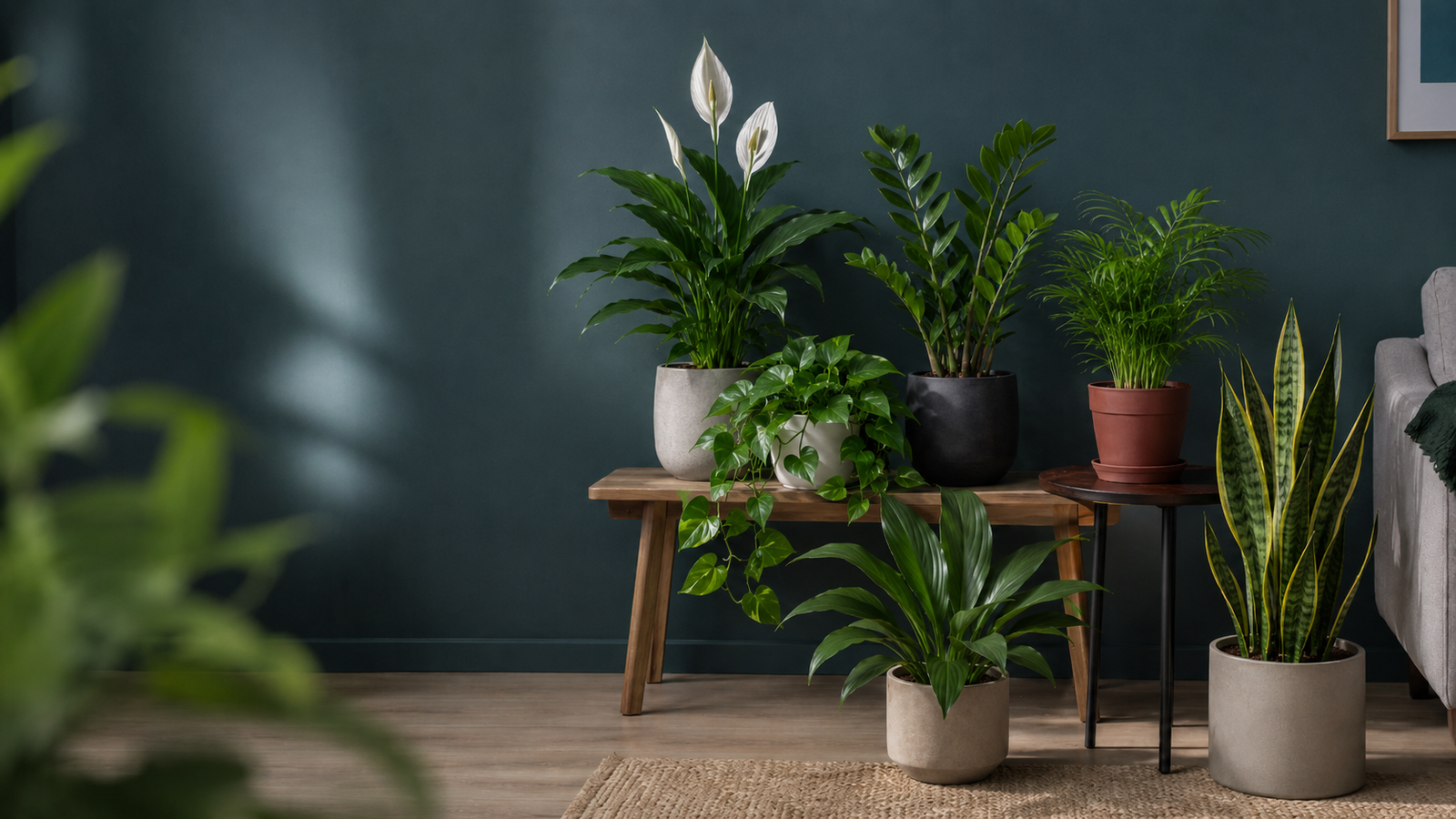
The most forgiving low-light houseplants for beginners are the snake plant, ZZ plant, pothos, cast iron plant, and peace lily. All of them tolerate a dim spot and irregular watering, which is exactly what a nervous first-time plant owner needs. One honest thing before the list: no houseplant truly thrives in a dark corner. These plants tolerate low light and stay alive there, but they grow slower and can get leggy without more light. And the most common way beginners kill even these tough plants is overwatering, not darkness. So pick a forgiving plant, then water it less than you think.
What "low light" actually means (tolerate is not the same as thrive)
Here is the honesty most plant lists skip. "Low-light tolerant" does not mean "low-light loving." Almost every houseplant on this page would be happier with more light. What makes these plants special is that they survive in dim rooms, north-facing windows, and spots several feet back from a window, without dropping dead or dropping all their leaves.
If your plant in a dark corner grows slowly, reaches toward the window, or spaces its leaves far apart (leggy growth), that is not you failing. That is a normal reaction to low light. Move it closer to a window and the growth usually tightens up again. It also helps to understand what bright indirect light actually means, because most "low-light" plants actually do their best growing in bright indirect light and merely put up with less.
The other honest point: forgiving is not the same as neglect-proof. These plants survive a missed watering far better than a fussy calathea, but you still have to water them eventually, and you still have to avoid drowning them. More on that under each plant.
The 6 most forgiving low-light plants for beginners
For each plant below you get the same three things: why it is beginner-friendly, its real light tolerance, and the single most likely way a beginner kills it. Pet owners, read the toxicity line for each one carefully. It matters, and most lists bury it.
Snake plant (Dracaena trifasciata, formerly Sansevieria)
The snake plant is close to indestructible, which is why it tops almost every beginner list. Its stiff, upright leaves store water, so it copes with irregular watering and forgives a busy week when you forget it exists.
- Light tolerance: Excellent. It handles low light and brighter indirect light equally well. It grows faster in more light but survives happily in a dim room.
- Care basics: Let the soil dry out completely between waterings. In a low-light spot that can mean watering only every two to three weeks, sometimes less in winter. Use a pot with a drainage hole.
- How beginners kill it: Overwatering. A snake plant sitting in wet soil rots at the base. When unsure, wait.
- Pet safety: Toxic to dogs and cats, per the ASPCA. The toxic principle is saponins, and signs include nausea, vomiting, and diarrhea. Keep it out of reach of pets that chew leaves.
ZZ plant (Zamioculcas zamiifolia)
The ZZ plant has glossy, dark green leaves and a reputation for surviving almost total neglect. It stores water in thick underground rhizomes, so it is one of the most drought-tolerant houseplants you can buy.
- Light tolerance: Very good. It tolerates low light well and does not need a bright window. Direct sun can scorch it.
- Care basics: Water only when the soil is dry all the way down. In low light, this plant wants water surprisingly rarely. Err on the dry side.
- How beginners kill it: Overwatering, again. Because it needs so little water, a well-meaning weekly watering schedule will rot it.
- Pet safety: Toxic to dogs and cats, per the ASPCA. The toxic principle is insoluble calcium oxalates, which cause oral irritation, drooling, and vomiting if chewed.
Pothos (Epipremnum aureum, also called Devil's Ivy)
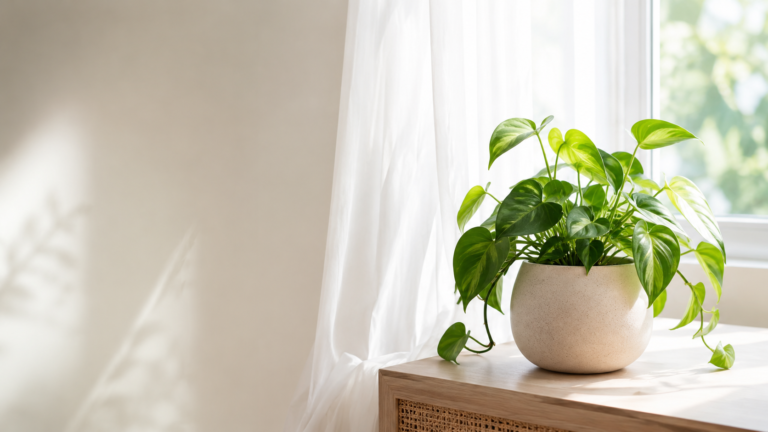
Pothos is often called the easiest houseplant there is. It is a trailing vine with heart-shaped leaves, it grows fast in decent light, and it tells you clearly when it is thirsty by drooping slightly and then perking back up after watering.
- Light tolerance: Good. It survives low light, but its variegation (the yellow or white marbling) fades toward plain green in dim spots. For the best color, give it bright indirect light.
- Care basics: Water when the top inch or two of soil feels dry. Pothos is easy to propagate from cuttings in water, which makes it a confidence-building first plant.
- How beginners kill it: Overwatering, though pothos is more forgiving here than most. Soggy soil still leads to yellow leaves and root rot.
- Pet safety: Toxic to dogs and cats, per the ASPCA. The toxic principle is insoluble calcium oxalates, causing mouth irritation, drooling, and vomiting. Trailing vines are easy for cats to reach, so hang it high.
Cast iron plant (Aspidistra elatior)
The cast iron plant earned its name honestly: it shrugs off conditions that kill other plants, including deep shade. If you have a genuinely dark spot and a pet who chews, this is often the best single choice on this list.
- Light tolerance: Excellent, and this is the standout. It is one of the most shade-tolerant houseplants there is. Direct sun actually scorches its leaves, so a dim corner suits it.
- Care basics: Water when the top of the soil is dry, then leave it alone. It grows slowly, so do not expect fast, lush results.
- How beginners kill it: Impatience and overwatering. Its slow growth is normal, not a problem to fix by feeding or watering more.
- Pet safety: Non-toxic to dogs and cats, per the ASPCA. This is the pet-safe pick on this list, which is worth a lot if you own a curious cat.
Peace lily (Spathiphyllum)
The peace lily is the one flowering plant here, with glossy leaves and white blooms. Beginners love it for one very practical reason: it wilts dramatically when thirsty and recovers within hours of watering, so it basically tells you what it needs.
- Light tolerance: Good. It tolerates low light, but it blooms far less, or not at all, in a dim spot. If you want the white flowers, give it brighter indirect light. Green leaves in low light are normal and healthy.
- Care basics: Water when the top inch of soil is dry, or when the leaves start to droop. It is more thirsty than the snake plant or ZZ plant, so it suits people who like to check in on their plants.
- How beginners kill it: Letting it wilt repeatedly, or the opposite, keeping it constantly soggy. Aim for evenly moist but never waterlogged.
- Pet safety: Toxic to dogs and cats, per the ASPCA. The toxic principle is insoluble calcium oxalates, causing intense mouth and tongue irritation, drooling, and difficulty swallowing.
Heartleaf philodendron (Philodendron hederaceum)
A close cousin to pothos in looks and ease, the heartleaf philodendron is a trailing vine with softer, heart-shaped leaves. It is forgiving, fast to root from cuttings, and comfortable in average indoor conditions.
- Light tolerance: Good. It tolerates low light and does well in bright indirect light. Like pothos, it gets leggy and sparse if the room is too dark.
- Care basics: Water when the top inch or two of soil is dry. Pinch back long, bare vines to keep it full.
- How beginners kill it: Overwatering and cold drafts. Keep it away from cold windows in winter.
- Pet safety: Toxic to dogs and cats, per the ASPCA. The toxic principle is insoluble calcium oxalates, with the same mouth-irritation signs as pothos and peace lily.
Quick-pick table: light, difficulty, and pet safety
| Plant | Low-light tolerance | Beginner difficulty | Pet safe (ASPCA)? |
|---|---|---|---|
| Snake plant | Excellent | Easiest | No, toxic to cats and dogs |
| ZZ plant | Very good | Easiest | No, toxic to cats and dogs |
| Cast iron plant | Excellent | Easy (slow) | Yes, non-toxic |
| Pothos | Good | Easy | No, toxic to cats and dogs |
| Heartleaf philodendron | Good | Easy | No, toxic to cats and dogs |
| Peace lily | Good | Easy-moderate | No, toxic to cats and dogs |
If you have pets that chew plants, the cast iron plant is the safe choice here. For the toxic ones, placement out of reach (high shelves, hanging pots) is the practical answer, since none of them is dangerous to touch or keep in the home, only to eat.
The part nobody tells low-light beginners
Two honest points to save you weeks of worry.
First, slow growth in a dark corner is not a care mistake. It is the plant reacting to a real light limit. If you want faster, fuller growth, the answer is more light, not more water or fertilizer. A north window, a spot closer to a bright window, or a simple grow light all help.
Second, and this is the big one: the biggest threat to every plant on this list is overwatering, not low light. Tough plants are tough partly because they store water and need little of it, so the standard beginner instinct, watering on a fixed weekly schedule, is exactly what rots them. Check the soil instead of the calendar. Our guide on how often to water indoor plants walks through the finger test, and if your plant already looks unwell, how to tell overwatering from underwatering helps you read the leaves before you act.
Forgiving does not mean neglect-proof. It means these plants give you a wide margin for error. Use that margin to learn, not to ignore them completely.
FAQ
What is the best low-light plant for a total beginner?
The snake plant and the ZZ plant are the two most forgiving, because they store water and tolerate both low light and irregular watering. If you own a pet that chews leaves, the cast iron plant is the safest pick, since the ASPCA lists it as non-toxic.
Can any houseplant grow in a room with no windows?
Not for long. Every plant needs some light to survive. A windowless room means relying on artificial light, and even the toughest low-light plants slowly decline in true darkness. A dim room with any natural light is fine; a room with none is not.
Why is my low-light plant growing so slowly?
Slow, stretched growth in a dim spot is normal, not a mistake. Low light limits how fast a plant can grow. Moving it closer to a window or adding a grow light will speed things up. More water will not.
Are low-light houseplants safe for cats and dogs?
Many popular ones are not. Snake plant, ZZ plant, pothos, heartleaf philodendron, and peace lily are all listed as toxic to cats and dogs by the ASPCA if eaten. The cast iron plant is the pet-safe exception. For the toxic plants, keep them out of a chewing pet's reach.
How often should I water a low-light plant?
Less often than you would guess. In a dim spot, plants use water slowly, so many go two to three weeks between waterings. Always check that the soil is dry first rather than watering on a fixed schedule.
Care and light information reflects horticulture consensus from university extension services and the Royal Horticultural Society (RHS). Pet-toxicity status for each plant is reported from the ASPCA's toxic and non-toxic plants database. If you suspect your pet has eaten any part of a plant, contact your veterinarian or the ASPCA Animal Poison Control Center at (888) 426-4435.