Repot Plant From Nursery Pot: Right Away or Wait?
You usually do not need to repot a plant from its nursery pot right away. A healthy new houseplant is better off settling into its new spot for a few weeks first, still in the plastic pot it came in. That thin plastic pot has drainage holes and does its job well. Repot sooner only when something is actually wrong: roots packed so tight that water runs straight through, soil that stays soggy for days, a smell of rot, or a succulent sitting in heavy, wet mix. If none of those apply, wait, watch, and repot in the growing season when the plant shows it needs more room.
The Short Rule You Can Follow
Here is the whole decision in one line: healthy plant, wait; problem plant, act.
Most people feel an urge to get a new plant out of its cheap-looking plastic pot and into something nicer on day one. That urge is about how the pot looks, not about what the plant needs. The plastic grower pot is not a temporary holding cell. It is a real pot with holes in the bottom, and many plants live happily in one for a long time.
So the useful question is not "how soon should I repot?" It is "is there a reason this plant cannot stay where it is for now?" If you cannot name a reason, you have your answer. The table further down lists the reasons that count.
Why Waiting Usually Helps
A plant you just brought home is already dealing with one big change. It left a greenhouse or store, where light, watering and air were set up for plants, and landed in a home where all of those are different. Leaves may yellow or drop a little in the first weeks as the plant adjusts. That is normal.
Repotting adds a second, separate stress. Pulling a rootball out and moving it into new soil disturbs the fine roots that do most of the water uptake. If you do both on the same day, the plant is coping with a new environment while also rebuilding roots, and if it declines you cannot tell which change caused it.
Waiting separates the two. You let the plant get used to the light and your watering first. Then, once it looks stable, you repot, and any droop after that is easy to read. That is the real advantage: not that repotting is dangerous, but that doing one change at a time keeps problems diagnosable.
There is a second reason to wait, and it has nothing to do with roots. New plants are the most common way pests get into a home collection, and a few weeks of watching is how you catch them. More on that below.
The Plastic Nursery Pot Is Not the Problem
It helps to know what you are looking at. A standard plastic nursery pot is lightweight, has several drainage holes, and holds moisture a bit longer than unglazed clay would. For a beginner, those are mostly good traits. Water drains out the bottom, and you can lift the pot to feel how heavy (wet) or light (dry) it is.
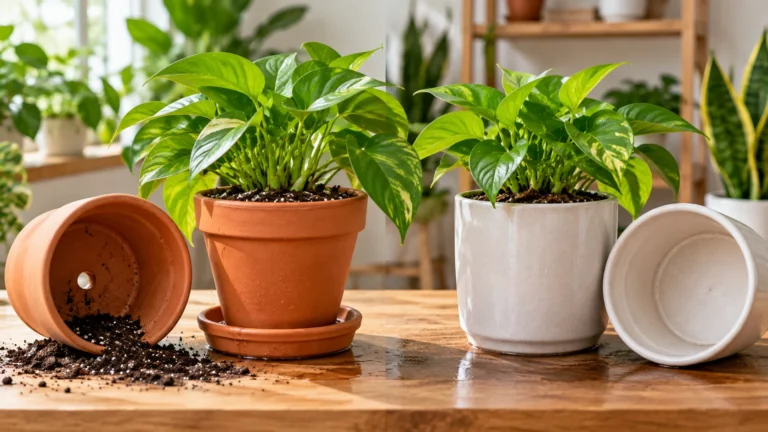
If the look bothers you, you do not have to repot to fix it. Set the plastic pot inside a slightly larger decorative pot, often called a cachepot. You get the nice look, and the plant keeps its drainage. The one habit that makes this work: after watering, lift the inner pot out, let it drain, and empty any water that collects in the outer pot. A plant standing in a puddle inside a pretty pot is how many beginners end up with root rot.
This trick is also why "should I repot right away?" is often the wrong question. Many people repot early only to use a decorative pot, and the cachepot gets them there without touching the roots.
When to Repot Plant From Nursery Pot Right Away
Some situations do justify repotting in the first week or two. Use this table to sort your plant. The left column is what you see, the right column is what to do.
| What you notice | What it usually means | What to do |
|---|---|---|
| Plant looks healthy, roots not visible, soil dries in a normal few days | Nothing is wrong | Wait. Let it settle, repot later only if it needs room |
| Thick roots circling the outside of the rootball, very little soil visible | Root bound | Repot soon, loosening circling roots |
| Water pours straight through and the soil is dry again very quickly | Roots have filled the pot | Repot soon, one size up |
| Soil still soggy days after watering, sour or rotten smell | Poor drainage or root rot starting | Check roots now. Trim anything brown and mushy, repot into fresh mix |
| Succulent or cactus in dense, moisture-holding mix | Mix holds too much water for this plant | Repot into a gritty, fast-draining mix fairly soon |
| Plant in full bloom | Flowering uses a lot of energy | Wait until flowering ends unless roots are rotting |
| Pot tipping over because the plant is top-heavy | Stability problem, not a root problem | Set it in a heavier outer pot first; repot later if needed |
| Pests you can see on leaves or in the soil | Infested plant | Isolate it first; deal with the pests before or while repotting |
Notice how few of these rows say "repot today." Root rot is the only one that is truly urgent, because it keeps getting worse in wet soil. Everything else is "soon," which gives you time to settle the plant and gather what you need.
For a fuller checklist of what a crowded pot looks like, and which signs are false alarms, see our guide to the signs your plant needs repotting.
The Quick Root Peek (No Repotting Needed)
This is the step most guides skip, and it removes the guesswork. You can look at the roots of a plant in a plastic nursery pot without repotting it at all.
- Wait until the soil is fairly dry. A dry rootball holds together better and weighs less.
- Tip the plant on its side, supporting the base of the stems with your hand spread across the soil.
- Squeeze the sides of the flexible plastic pot gently, or press up through a drainage hole, and slide the rootball partway out.
- Look at the outside of the rootball. Then slide it straight back in.
What you want to see: light-colored, firm roots with soil still visible between them. That plant can stay put. What says "repot soon": a solid mat of roots wrapped around the outside, roots spiraling at the bottom, or roots growing out through the holes. What says "act now": dark, soft, mushy roots or a bad smell, which point to rot.
This peek is gentle because the roots never leave their soil. It is the main advantage of flexible plastic pots, and it means you can decide from evidence instead of from a calendar.
Use the Waiting Weeks Well
Waiting does not mean ignoring the plant. The first weeks are when you learn how it behaves in your home.
Keep it apart from your other plants. Colorado State University Extension's fact sheet on managing houseplant pests (W.S. Cranshaw, reviewed August 2025, read September 23, 2026) recommends placing new plants in quarantine in a separate area of the home for at least three weeks, then inspecting them carefully at the end. It notes that infestations of scale, mealybugs and whiteflies are almost always started by plants recently bought or received as gifts. That quarantine window lines up neatly with the settling-in period, so one wait covers both.
Put it where it will live. Place the plant in the spot you plan to keep it, with the light it is meant to have. Moving it around during the first weeks restarts the adjustment each time.
Water by checking, not by schedule. Push a finger into the soil or lift the pot to feel its weight, and water when the plant's usual dryness point is reached. You are learning how fast this pot dries in your home, which is exactly the information you will want before choosing a new pot and mix.
Look at the leaves and the soil surface every few days. Check leaf undersides and stems for pests. Watch for soil that never seems to dry. Both tell you more than the pot's appearance does.
When You Do Repot: The Short Version
When the plant has settled and shows it needs more room, or when the growing season comes around, repotting is simple. Illinois Extension's page on repotting houseplants (read September 23, 2026) says repotting is best done while the plant is actively growing, typically in spring or early summer. It lists roots growing through the drainage holes, roots on the soil surface, a soil mass filled with roots, smaller new leaves and wilting between normal waterings as signs it is time. The same page advises cutting or unwinding circling roots on root-bound plants, repotting at the same depth the plant grew in the old pot, pressing the soil gently around the roots and watering right away.
Two choices matter most on the day:
- Pot size. Go up only modestly. A pot that is much bigger than the rootball holds extra wet soil the roots cannot reach, which is a common path to rot. Our guide on what size pot to use when repotting walks through the up-potting rule.
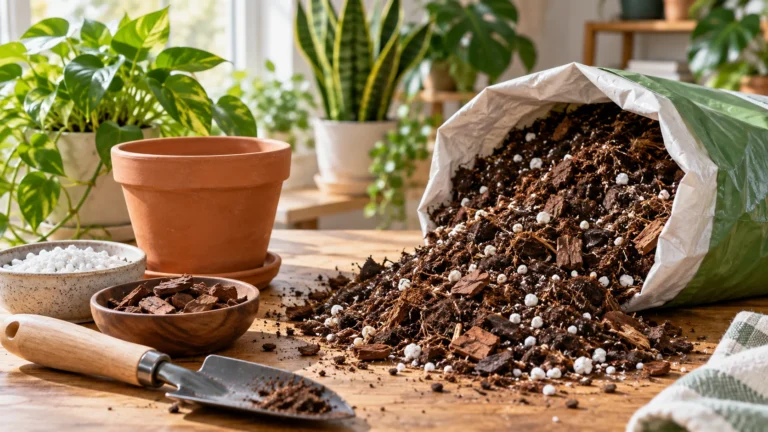
- Mix. Match the mix to the plant. Tropical foliage plants and succulents want quite different soils.
For the full step-by-step, including timing through the year, see when to repot a plant and how to do it right.
A note if you are repotting a plant straight out of the nursery pot because the soil is soggy or smells bad: shake off as much of the old mix as the roots allow, trim any roots that are brown and mushy, and use fresh mix and a clean pot. Do not reuse the soil that caused the problem.
What to Expect Afterward
Even a careful repot can make a plant droop for a few days, because some fine roots are always disturbed. Mild droop that steadies and then improves is normal. Keep it out of harsh direct sun for a bit, and resist the urge to water again just because it looks sad; check the soil first, since soggy soil after a repot causes more trouble than a short droop does.
If the drooping gets worse instead of better, the cause is usually something in the repot itself, such as a dry rootball inside wet new soil, a pot that is too large, or a stem buried deeper than before. Our guide to plant wilting after repotting helps you tell those apart and fix each one.
This is the payoff of waiting before you repot. Because the plant had already adjusted to your home, a droop after repotting points to the repot, not to the move. You know what to check.
Frequently Asked Questions
How long can a plant stay in its nursery pot?
As long as it is healthy and has room. There is no set deadline, and many houseplants can stay in their plastic grower pots for a long time. Repot when the plant shows it needs to, such as roots filling the pot, roots coming through the holes, or soil that dries out much faster than it used to.
Should I repot a new plant the day I bring it home?
Usually no. A healthy plant does better settling into its new spot first, and new plants should be kept apart from your collection for a few weeks anyway to check for pests. Repot on day one only if you find root rot, soggy soil that will not dry, or a plant badly root bound.
Can I put the plastic nursery pot inside a decorative pot?
Yes. This is the easiest way to get the look you want without disturbing roots. Keep the plastic pot inside a slightly larger decorative pot, and empty any water that collects in the outer pot after watering so the roots never sit in it.
Is it bad to repot a plant while it is flowering?
It is better to wait until blooming finishes, because the plant is putting a lot of energy into flowers. The exception is root rot or badly waterlogged soil, which should be dealt with right away whether the plant is in bloom or not.
Do plants from big stores need repotting sooner?
Not automatically. Where you bought the plant matters less than what you find when you check it. Do the quick root peek and look at how the soil drains. If the roots and soil look fine, the plant can settle in first like any other.