Does Pot Material Matter for Plant Roots? The Real Answer
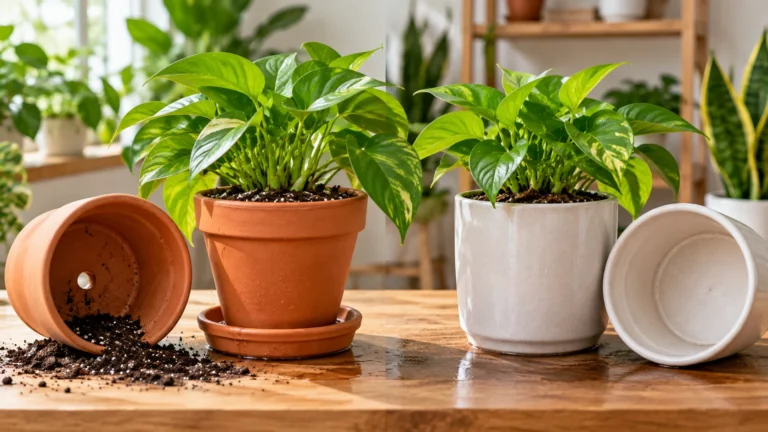
Does pot material matter for plant roots? Yes, but mostly through water, not heat. Unglazed terracotta lets moisture evaporate through its walls, so the mix dries faster and air gets back into the root zone sooner. Plastic and glazed ceramic hold moisture longer. Material also shifts soil temperature by a few degrees, which counts when a pot sits in hot direct sun or a cold room, and matters very little on an ordinary shelf.
So the useful question is not "which material is best?" It is "which of the three effects is affecting my plant right now?" This guide walks through all three, shows what the research on root temperature actually measured, and gives you two simple ways to check your own pot.
How Pot Material Reaches the Roots
A pot wall affects roots in three ways. They are not equally important.
1. Water. This is the big one. Virginia Cooperative Extension's guide to properly watering container houseplants (read September 24, 2026) explains that terracotta is fired at low heat and left unglazed, so moisture can evaporate through the walls, and that terracotta pots tend to dry out the root zone more quickly whatever potting mix you use. Plastic and glazed clay are nonporous. They lose water only through the drainage holes and the surface of the mix.
2. Air. Roots need oxygen. The spaces between particles in the mix hold either water or air, and as the mix dries, air moves back in. In "Healthy Roots, Healthy Houseplants" from University of Wisconsin-Madison Extension (read September 24, 2026), Bruce Spangenberg notes that perlite helps keep the pore space roots need for oxygen, and that roots suffer in waterlogged soil. A pot that dries faster gives roots their air back sooner.
3. Heat. The wall can absorb heat from sunlight or shed heat through evaporation. This is the effect people wonder about most, and for most houseplants it is the one that matters least.
Because water and air move together, the first two are really one dial. Temperature is a second, smaller dial.
Pot Materials Compared for Root Health
| Material | Does water pass through the wall? | Effect on the mix | Effect on root temperature | Root risk to watch |
|---|---|---|---|---|
| Unglazed terracotta | Yes | Dries fastest | Runs slightly cooler as water evaporates from the wall | Drying out too fast for thirsty plants |
| Plastic | No | Stays moist longer | Dark plastic absorbs heat in direct sun | Staying wet too long; a hot wall in direct sun |
| Glazed ceramic | No, the glaze seals it | Stays moist longer, like plastic | No evaporative cooling; color matters in sun | Same as plastic, and many decorative pots have no hole |
| Fiber pots | Yes | Lets excess water escape | Absorbs less heat than plastic | Drying out faster than you expect |
Metal, concrete and wood planters come up in most pot guides too. The extension sources we checked do not measure how they affect houseplant roots, so judge them with the same two questions: does the wall let water through, and is the pot dark and sitting in direct sun?
What the Root Temperature Research Actually Found
Three sources are worth knowing, and all three were measured outdoors or in greenhouses.
Black nursery pots in full sun. In a UConn Extension greenhouse pest message dated August 4, 2022 (read September 24, 2026), Leanne Pundt writes that plant roots are generally less tolerant of temperature extremes than leaves and stems. When plants grow in black plastic containers in full sun, heat absorbed by the side walls can stress the roots, and root zone temperatures from 104°F up to 120°F have been reported in container nurseries. The same message says the inside of white or green containers may be 9 to 18°F cooler than the inside of black ones. It lists the indirect damage from heat stress as reduced vigor, nutritional disorders and greater susceptibility to root rot diseases.
Clay versus plastic in a greenhouse. A 1970 study in the journal Plant and Soil by A. C. Bunt and Z. J. Kulwiec (abstract read September 24, 2026) compared clay and plastic pots for propagating tomatoes across six experiments. Soil in the clay pots ran cooler, by about 1°C (roughly 2°F) at night in winter up to about 4°C (roughly 7°F) under strong summer sun. When the researchers coated clay pots with bitumen to stop evaporation, night soil temperatures were no different from plastic. The practical twist: plants in plastic did significantly better in winter, when the soil was often cooler than ideal, and clay did better in summer, when it was often too warm.
Porous fiber pots. A 1997 University of Georgia news report on horticulturist John Ruter's work (read September 24, 2026) described a porous fiber pot as creating its own evaporative cooling system, much like sweating, while black plastic pots absorb solar energy and can heat the soil enough to kill tender young roots.
Does Pot Material Matter for Plant Roots Indoors?
Notice what those studies share: full sun, nursery rows or greenhouse benches. A pot on a bookshelf or a side table rarely gets that kind of heat on its walls, so the temperature effect indoors is usually small. The water effect is not. It applies every day, in every spot in your home.
Temperature starts to matter in two situations:
- Direct sun on the pot wall. A dark plastic or dark glazed pot sitting in strong afternoon sun can warm the mix on that side. UConn's figures show how much color alone can change inside a container when the sun is on it.
- A cold room in winter. Bunt and Kulwiec found that clay's extra cooling worked against growth in winter, when soil was already cooler than ideal. Indoors, though, a pot pressed against cold window glass has a bigger problem than its material, and moving it to a warmer spot helps far more than repotting it.
Everywhere else, choose the material for what it does to water.
Two Ways to Check Your Own Pot
You do not need to guess. Two simple checks tell you which dial matters for your plant.
The temperature check. Push a probe thermometer (a soil thermometer or a clean kitchen thermometer) into the mix near the wall, at root depth, on the side that faces the light. Take the reading in mid-afternoon. Then take one on the shaded side of the same pot, and one of the room air. If the sunny side reads clearly warmer than the room, the wall is collecting heat, and a lighter pot or a little shade on the pot wall will help. If all three readings are close, temperature is not your problem.
The drying check. After a thorough watering, note how many days pass before the top of the mix feels dry to your finger, and lift the pot each day to feel it get lighter. In the same room, terracotta usually gets there first. If the mix stays wet for many days while the plant looks worse, or dries out almost as fast as you can water it, the pot is worth changing, and so is your watering rhythm.
Match the Dial to the Problem
| What you see | The dial that matters | What to change first |
|---|---|---|
| Mix stays wet for days and lower leaves yellow | Water and air | Terracotta, a smaller pot or an airier mix; confirm there is a drainage hole |
| Mix dries almost as fast as you water and leaf edges crisp | Water | Plastic or glazed ceramic |
| Dark pot in direct sun, with the sunny side hot to the touch | Heat | A lighter-colored pot, an outer pot that shades the wall, or less direct sun on the pot |
| Plant sulks in a cold room in winter | Cold | A warmer spot away from cold glass; the pot material is secondary |
| Soft, dark roots and a sour smell | Water, and it has gone too far | A new material alone will not fix it; follow the rescue steps for rot |
If you are in that last row, our guide to root rot signs in houseplants and how to save the plant covers what to cut, what to keep and what to repot into.
What Matters More Than the Pot Material
Here is the honest part most pot guides skip: material is rarely the whole story, and sometimes it is the smallest part of it.
The drainage hole. Virginia Cooperative Extension warns that containers without drainage holes can create saturated, waterlogged conditions that lead to root rot. A breathable terracotta pot with no hole is still a risk. Our guide to whether plant pots really need drainage holes covers the safe workarounds for a pot you love.
Pot size and shape. The same Virginia Cooperative Extension guide notes that shorter containers drain less, leaving less air space for roots, and that moving a plant into a pot that is too large can leave roots growing in a zone that stays too wet. Size often matters more than material, which is why the up-potting rule for choosing pot size is worth reading before you buy anything.
Your watering habit. Terracotta gives a generous waterer some margin. Plastic gives a forgetful waterer more time. If that is the choice you are weighing, terracotta vs plastic vs ceramic pots walks through matching pot, plant and habit.
The mix inside. A dense, soggy mix can still starve roots of air in a terracotta pot. The Wisconsin point about perlite and pore space applies in any container.
A Simple Rule You Can Follow
- Choose the material for water first: terracotta for plants that like to dry out or for a heavy hand with the watering can, plastic or glazed ceramic for plants that like steady moisture or for a light hand.
- Make sure there is a drainage hole, whatever the material.
- If a pot sits in direct sun, prefer a lighter color or shade the pot wall.
- In winter, a warmer spot away from cold glass helps more than a new pot.
- If a plant struggles and you are unsure why, run the two checks above before you buy anything.
Frequently Asked Questions
Does terracotta keep plant roots cooler?
Slightly. Water evaporating through the unglazed wall carries heat away. In Bunt and Kulwiec's 1970 greenhouse study, soil in clay pots ran about 1°C to 4°C cooler than in plastic, with the biggest gap under strong summer sun. Away from direct sun, expect a smaller gap.
Is plastic bad for plant roots?
No. Plastic holds moisture longer, which suits plants that like steady moisture and people who water sparingly. The risks are overwatering, because the mix stays wet longest, and heat when a dark plastic pot sits in direct sun.
Do black pots hurt houseplant roots?
They can in strong direct sun. UConn Extension reports that the inside of white or green containers may be 9 to 18°F cooler than black ones. On a shelf out of direct sun, pot color matters far less, because there is little sunlight for the wall to absorb.
Does a glazed ceramic pot let roots breathe?
Not through its walls. Virginia Cooperative Extension notes that glazed clay is nonporous, so the mix holds water longer, much like plastic. Roots still get air from the pore spaces in the mix, which is why a drainage hole and an airy mix matter in every pot.
Should I switch to terracotta to prevent root rot?
It can help if a plant stays wet too long, because terracotta dries the mix faster. It will not fix rot that has already started, and a pot with no drainage hole, or one that is much too big, can still keep roots too wet.