Rocks at the Bottom of a Pot for Drainage? The Truth
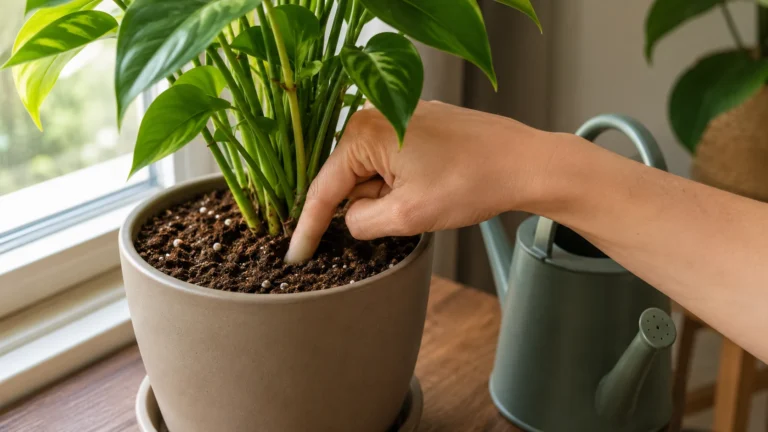
No. Putting rocks, gravel, or broken pot shards at the bottom of a pot for drainage does not work, and university extension research shows it makes things worse, not better. Water does not move from fine potting mix into coarse material until the mix above is fully saturated, so the wet layer that would normally sit at the very base of the pot gets pushed higher, closer to the roots. Skip the rock layer. What your plant actually needs is a pot with a working drainage hole and a potting mix that drains on its own.
Where This Rule Came From
The rocks-under-the-soil habit is old enough that most people learned it from a parent or a garden center employee, not from a source they could check. It probably started with clay pots, where a shard placed over the drainage hole kept the mix from spilling out. Somewhere along the way that turned into "add a whole layer of gravel," which is a different claim entirely, and one that soil scientists have tested and rejected for close to a century.
Why Rocks at the Bottom of a Pot Don't Improve Drainage
The mechanism is called a perched water table, and it is worth understanding because it explains almost every overwatering mystery in container gardening.
Water moving down through potting mix does not fall freely once it hits a layer of coarser material like gravel or pebbles. Instead it stalls at the boundary. Linda Chalker-Scott, Extension Horticulturist at Washington State University, reviewed the underlying soil science in her Washington State University Extension paper on drainage material in container plantings (read 2026-09-18) and found that gravitational water will not move from a fine-textured material into a coarser one until the finer layer is completely saturated. In plain terms: the potting mix has to fill up with water first, all the way down, before any of it drains into the rocks below.
That is the opposite of what most people expect. The stated goal of a rock layer is to keep the soil from getting waterlogged, and Chalker-Scott's conclusion is blunt: adding coarse material at the bottom of a container induces the very waterlogging it was meant to prevent.
University of Illinois Extension (read 2026-09-18) describes the same effect from the plant's point of view: instead of extra water draining immediately into the gravel, the water perches, or gathers, in the soil just above it. Every pot has some version of this saturated zone near its base, gravel or no gravel. Adding rocks does not remove that zone. It just takes up space at the bottom of the pot, which pushes the same amount of saturated soil higher up, closer to where the roots actually are.
What a Rock Layer Actually Does to Your Plant
Roots need oxygen as much as they need water, and a saturated zone that sits right against the root ball is exactly where they cannot get it. When that zone moves up toward the roots instead of staying at the bottom of the pot, out of the way, the plant spends more of its time with roots sitting in oxygen-starved, waterlogged mix, which is the direct setup for root rot.
There is a real, smaller version of the appeal: a coarse layer does give surplus water somewhere to collect below the mix instead of directly in it. But it is a small buffer, not drainage, because none of that water is actually leaving the pot. If the container has no hole at all, a rock layer does nothing for the underlying problem, and do plant pots really need drainage holes walks through why a hole is not optional no matter what sits above it.
The soil itself matters just as much as anything you put underneath it. A mix that is already dense or moisture-retentive saturates faster and holds that saturation longer, rocks or no rocks, which is why getting the right soil for your plant does more for drainage than any layer at the bottom ever will.
Myth vs. Reality, Side by Side
| Claim | What actually happens |
|---|---|
| "Rocks let excess water drain away from the roots." | Water stays in the potting mix until it is fully saturated; the rocks do not pull water out of the mix above them. |
| "A gravel layer keeps the pot from getting waterlogged." | It reduces the usable soil depth and pushes the saturated zone higher, closer to the roots. |
| "It's just an extra layer of safety, it can't hurt." | It adds no benefit in a pot with a drainage hole, and adds real risk in a pot without one. |
| "A drainage hole plus a working potting mix is enough." | Correct. This is what university extension sources actually recommend. |
What to Do Instead of a Rock Layer
Two things do the actual work of drainage, and neither one is gravel.
A container with a functioning drainage hole. This is non-negotiable for anything that is not a specialist bog or bottle-garden setup. The hole is what lets the saturated layer actually leave the pot instead of accumulating inside it.
A potting mix built to drain. Ordinary potting mix, not garden soil, with enough perlite, bark, or coarse material blended through the whole thing rather than layered at the bottom. Mixing the coarse material into the mix itself changes how the whole column of soil handles water. Dumping it below the mix as a separate layer does not.
If you are repotting a plant into a new container anyway, this is also the moment to check the container size itself, since a pot that is too large for the root ball holds far more unused, slow-to-dry mix around the roots than a rock layer ever could. When to repot a plant covers how to judge the right size and timing so you are not solving one drainage problem while creating another.
If You Have a Huge Planter and Not Enough Soil to Fill It
Large outdoor planters raise a different, legitimate question: filling the whole thing with potting mix can be expensive and heavy, and people reach for gravel here for a real reason, not just habit.
The extension guidance still holds, but the fix is different from a drainage layer. Instead of gravel, use a lightweight, non-soil filler in the lower third of the container, something like inverted empty nursery pots or a similar rigid filler, then top it with a barrier so soil does not sift down into the gaps, and fill the rest with mix. This reduces weight and the amount of mix you need without creating the fine-over-coarse boundary that causes the perched water table in the first place. The plant's roots still only ever sit in real potting mix, above a drainage hole.
The One Place Rocks Still Make Sense
Rocks are not useless around houseplants, they are just useless underneath the soil. A layer of decorative stone on top of the soil surface is fine, and does not interfere with drainage because it sits above the root zone, not below it. Rocks in the saucer under a pot, with the pot resting on top of them rather than in standing water, can also help by keeping the base of the pot out of any water that does drain through, and by adding a little humidity around the plant as that water evaporates. Both of those are cosmetic and humidity roles. Neither one is drainage, and neither one belongs inside the pot under the soil.
If You're Reconsidering Other Watering Habits Too
The rock layer is one of several plant-care habits that sound sensible and turn out not to survive a look at the actual mechanism. If you are already questioning inherited rules, do watering globes actually work applies the same honest-mechanism approach to another popular gadget, and is worth the same five minutes.
Frequently Asked Questions
Do plants need rocks at the bottom of the pot for drainage?
No. University extension research shows that water does not drain from potting mix into a coarser layer like gravel until the mix above is fully saturated, so the rocks trap moisture near the roots instead of removing it.
What happens if I already have rocks under the soil in my pots?
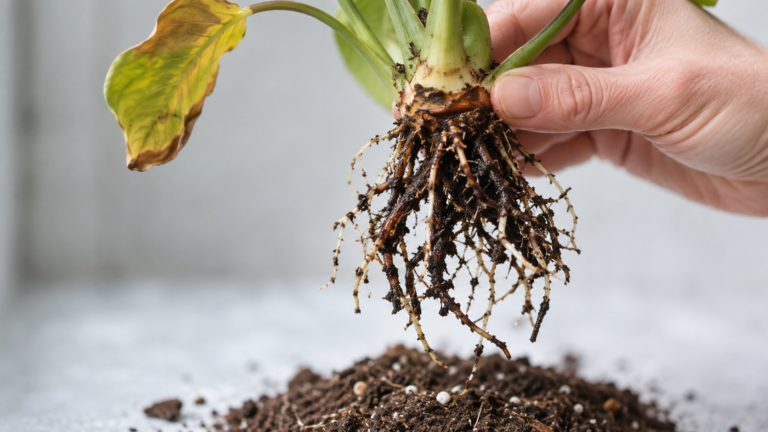
It is not an emergency, but at the next repot, remove the rock layer and use potting mix all the way to the bottom of the pot instead. If the plant has been showing signs of overwatering or root rot, check the roots while you have it out of the pot.
Does gravel help a pot with no drainage hole at all?
No. A hole is what lets excess water leave the container. Gravel only redistributes where the water sits inside a sealed pot; it does not create an exit for it.
Is it fine to put decorative rocks on top of the soil?
Yes. A layer of stone or pebbles on the soil surface sits above the root zone and does not create the fine-over-coarse drainage problem that a layer underneath the soil does.
What should I use instead of rocks for a very large planter?
A lightweight, non-soil filler such as inverted nursery pots in the bottom third, topped with a barrier so mix does not sift down, reduces weight and the amount of potting mix needed without creating a drainage-blocking layer.