Hard Water & Mineral Buildup on Houseplant Soil: What to Do
That white, crusty layer on top of your potting soil is almost always mineral salts left behind after water evaporates, either dissolved minerals from hard tap water, leftover fertilizer, or both. On its own, a thin crust is mostly cosmetic. It becomes a real problem when it builds up enough to raise the soil's pH and block the plant from absorbing iron and other nutrients it needs, which shows up as brown, crispy leaf edges or yellowing between green veins. The fix in both cases is the same: flush the soil with plain water every few months to wash the built-up salts back out before they concentrate further.
What's actually happening in the pot
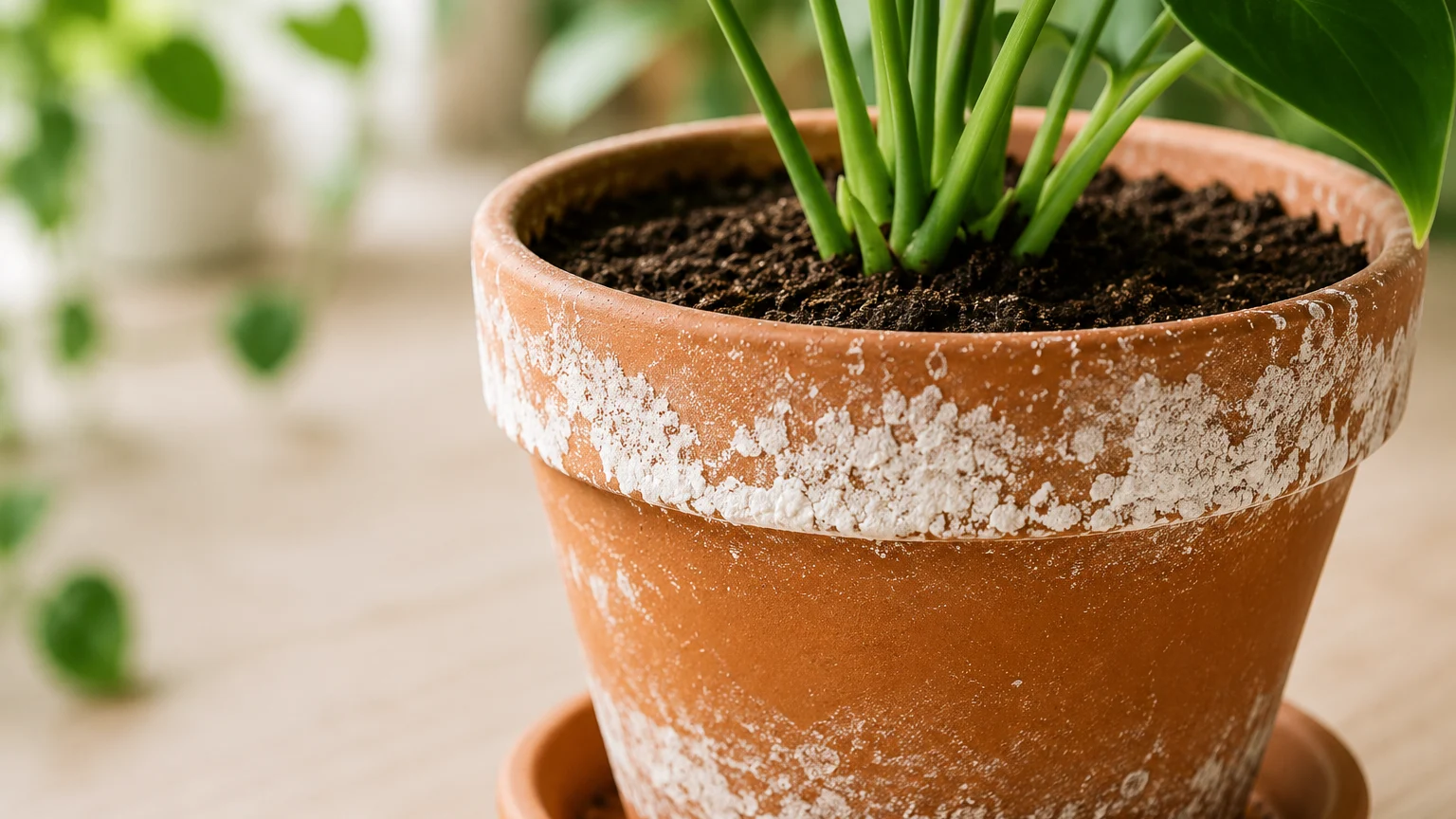
Hard water carries more dissolved calcium and magnesium than soft water. Every time you water and the excess evaporates from the soil surface or wicks out through an unglazed terracotta pot, the water leaves, but the minerals it was carrying do not. They stay behind and slowly concentrate, watering after watering, as a visible white or grayish crust on the topsoil or around the rim.
According to the University of Maryland Extension, these mineral and fertilizer salt deposits typically appear either as a white crust on the soil surface and pot, or as crystallized coatings directly on leaves where hard water has splashed and dried. Oregon State University Extension explains why this matters beyond appearance: as salts concentrate in the soil, it becomes harder for the plant to take up water at all, and in severe, unaddressed cases the plant can actually lose water from its own root tips into the increasingly salty soil around them, the reverse of normal absorption.
The pH effect compounds the problem. Calcium-heavy deposits raise the soil's pH over time, and at a higher pH, nutrients like iron and manganese become chemically locked up, present in the soil but not in a form roots can absorb. That is why hard-water damage often looks like a nutrient deficiency (pale, yellowing new growth) even though there is technically no shortage of that nutrient in the pot.
Reading your soil for hard water damage instead of guessing
You don't need a lab test to act on this. The plant and the pot tell you what you need to know.
| What you see | What it means | What to do |
|---|---|---|
| Thin white crust on soil surface, plant otherwise healthy | Normal mineral deposit, cosmetic stage | Wipe or scrape off the top layer occasionally; flush on your normal schedule |
| Thick, crusty buildup around the rim or on a terracotta pot's outer wall | Salts wicking through the clay as it dries, a sign hardness is on the higher end | Flush more often; consider switching to filtered water for this plant |
| Crust plus brown, crispy leaf tips and edges | Salts have concentrated enough to affect water uptake or cause direct leaf burn from mineral splash | Flush thoroughly now, then move to a regular flushing schedule |
| Yellowing between green leaf veins, especially on new growth, with visible crust | Likely pH-driven nutrient lockout (commonly iron) | Flush the soil; if it doesn't resolve over a few weeks, the mix itself may need refreshing |
| Crust with no other symptoms on a known sensitive plant (ferns, peace lilies, orchids) | These species show stress from mineral buildup sooner than most houseplants | Treat proactively rather than waiting for leaf symptoms |
If you want an actual number for your own tap water rather than reading the soil, most public water utilities in the US are required to publish an annual water quality report, sometimes called a Consumer Confidence Report, that lists hardness and mineral content. Checking that report is a more reliable path to a real figure than any general "average hardness" number, since hardness varies enormously by location and even by neighborhood.
The flush: the one routine that actually works
Leaching, running a large volume of plain water through the pot to wash accumulated salts back out, is the standard fix recommended across university extension guidance. The University of Maryland Extension recommends leaching houseplants every four to six months, using at least three times the pot's volume in clean water, poured through slowly and allowed to drain completely. The first pass dissolves the built-up salts sitting in the soil; the additional volume is what actually carries them out through the drainage holes rather than just redistributing them.
Two details matter for doing this properly:
- Let it drain fully and empty the saucer. If the pot sits in the water it just drained, the dissolved salts get pulled right back up into the soil as it re-absorbs that water, undoing the flush. Our guide to how to water houseplants the right way covers the drain-and-empty step in more detail, and it applies here exactly the same way.
- Use lower-mineral water for the flush itself if you have hard tap water. Filtered, distilled, or collected rainwater carries far fewer dissolved minerals to begin with, so it dilutes and carries away existing salts instead of adding more. Tap water vs. filtered or distilled water for houseplants covers when switching your everyday water source is worth the extra effort and when it isn't.
Reducing how fast hard water buildup comes back
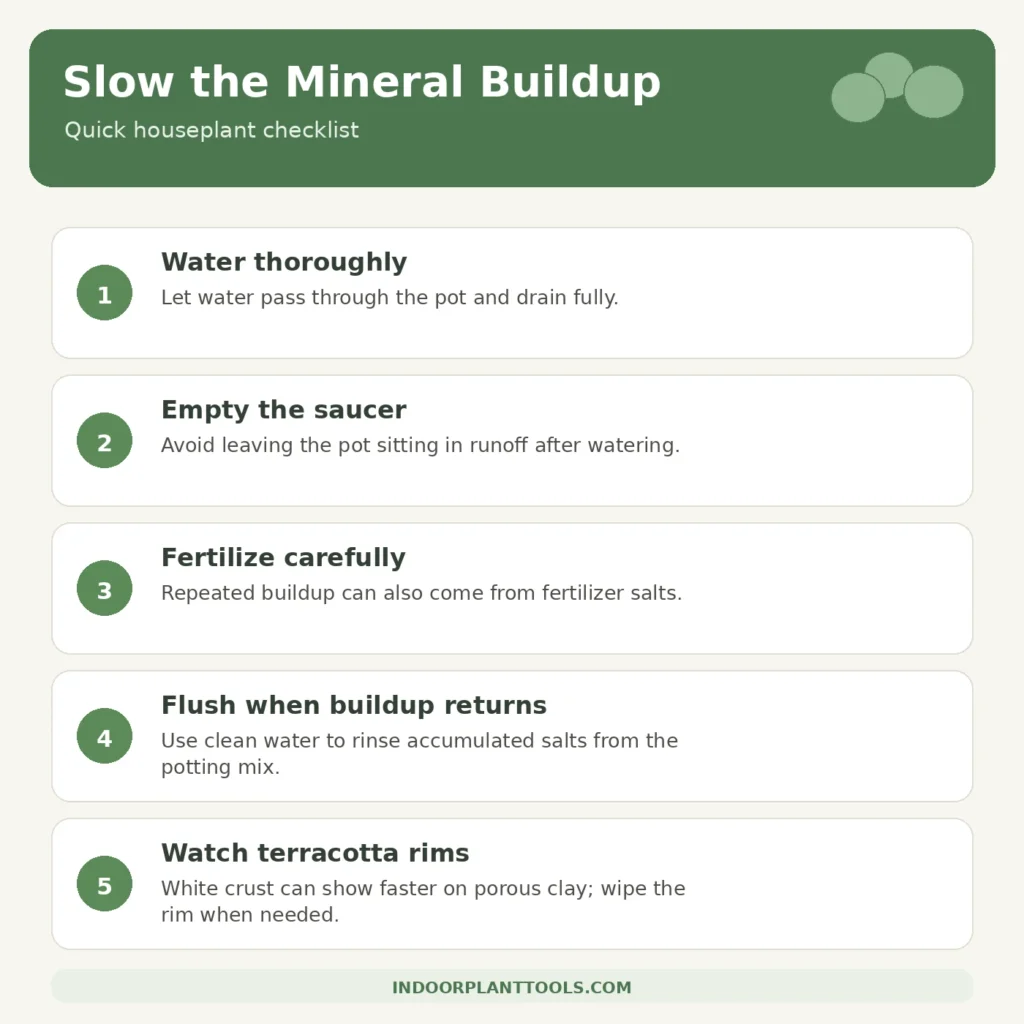
You don't need to overhaul your entire watering routine to slow this down:
- Water thoroughly rather than in small sips. A proper soak that runs from the drainage holes, described in how much water a houseplant actually needs, naturally carries some dissolved salts out with the runoff each time, rather than letting every watering add to the pile with nothing leaving.
- Watch fertilizer as closely as water. Fertilizer salts stack directly on top of mineral salts from hard water, and the two sources are additive, not separate problems. If you fertilize regularly and also have hard tap water, flush a little more often than the general four-to-six-month guidance.
- Terracotta pots show buildup sooner, and that's expected. Because unglazed clay is porous, it wicks moisture, and the minerals it carries, out through the pot wall as it dries, which is exactly why terracotta pots often develop a visible white crust on their outside even when the plant inside looks fine. That's the pot doing what terracotta does, not a sign something has gone wrong.
The honest bottom line
A little white crust is not an emergency and does not mean you've been doing anything wrong. It's a normal byproduct of watering with real tap water in a pot that dries out between waterings. It becomes worth actively managing once it's paired with leaf symptoms, brown tips, crispy edges, or yellowing between veins, and the fix at that point is not a new product, it's a thorough flush with clean water, repeated every few months, using more water than you'd think you need.
FAQ
Is white crust on my soil dangerous to my plant? Not by itself. A thin surface crust with no other symptoms is mostly cosmetic. It becomes worth addressing once you also see brown, crispy leaf tips or yellowing between leaf veins, which suggests the buildup has started affecting nutrient uptake.
How often should I flush my houseplant's soil? University of Maryland Extension guidance recommends leaching every four to six months for typical houseplant care, using at least three times the pot's volume in clean water and letting it drain completely. Water heavily and fertilize often, flush somewhat more frequently.
Does switching to distilled or filtered water stop mineral buildup completely? It significantly slows it, since distilled and filtered water carry far fewer dissolved minerals than most hard tap water, but it does not address fertilizer salts, which build up the same way regardless of your water source. See tap water vs. filtered water for houseplants for the full comparison.
Why does my terracotta pot have white crust on the outside, not just the soil? Unglazed terracotta is porous, so as it dries out it wicks moisture, and the minerals dissolved in that moisture, straight through the clay wall. A crusty exterior is normal for terracotta with hard tap water and isn't a sign of a problem inside the pot.
Which houseplants are most sensitive to hard water and mineral buildup? Ferns, peace lilies, and orchids tend to show stress from mineral buildup sooner and more visibly than sturdier houseplants like pothos or snake plant. If you own any of these and have notably hard tap water, it's worth flushing proactively rather than waiting for leaf symptoms to appear.