
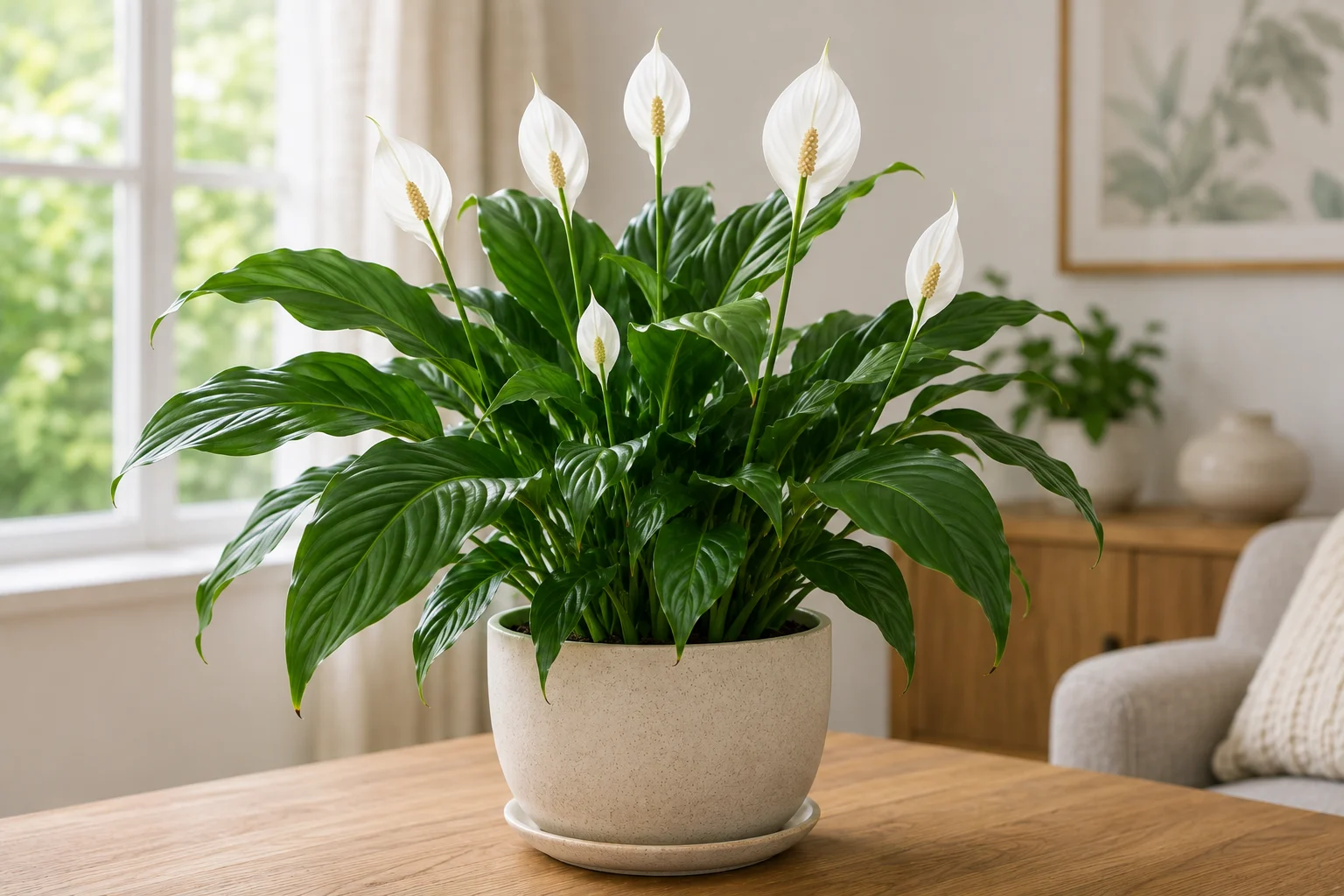
Peace Lily Care for Beginners: The Full Routine
Peace lily (Spathiphyllum) is one of the most forgiving houseplants for a nervous beginner, mainly because it tells you exactly what it needs: the leaves droop dramatically when the plant is thirsty, then stand back up within hours of a proper watering. Give it medium to bright indirect light (it tolerates low light too, just with fewer of its white blooms), and water when the soil actually feels dry a couple of inches down, never on a fixed weekly schedule. The one catch beginners run into is that drooping can also mean the opposite problem, overwatering and early root rot, and the two look identical from across the room. Checking the soil before you respond is what separates the two.
This routine sits inside the broader four-decision framework in indoor plant care for beginners. If you're weighing a peace lily against a lower-maintenance option, our best low-light indoor plants for beginners roundup covers where it ranks against sturdier picks.
Light: tolerant, but blooms need brighter conditions
Peace lily tolerates low light better than most flowering houseplants, which is why it's so often recommended for offices and dim hallways. It will survive there. What changes with light is the flowers: the white "flowers" are actually a modified leaf called a spathe, and a peace lily kept in dim light for long stretches typically produces fewer of them, or none, even while the foliage stays healthy.
Medium to bright indirect light is where peace lily is most reliably attractive, both in leaf growth and in flowering. As with most houseplants, avoid hours of direct, unfiltered sun, since the leaves can scorch. If you're still learning to judge a spot's real light level rather than guessing, our guide to bright indirect light walks through how to read it properly.
Water: the plant that tells you, if you check the right thing first
Peace lily earns its reputation as a great beginner plant here. When the soil dries out, the leaves droop into an unmistakable, all-over wilt, not a slight tired lean, but a dramatic slump. Water it thoroughly, and in most cases the leaves are firm again within a few hours. That feedback loop is genuinely useful for a beginner still learning to read a plant.
The problem is that drooping is not a reliable signal on its own, because a peace lily sitting in soil that's been kept too wet for too long will also droop. Its roots have been damaged and can no longer take up water properly, even though the pot is full of it. From across the room, thirst-droop and rot-droop look the same. The fix is the same every time: check the soil before you respond, not after.
Push a finger about two inches into the soil. Dry at that depth, plus drooping, means genuine thirst: water it and expect recovery within hours. Damp or wet at that depth, plus drooping, means the problem is a root issue, not thirst, and adding more water will make it worse. Our guide on how to tell if your plant needs water covers the finger, lift and skewer tests in full if you want the complete method. There's no fixed number of days that applies to every home. Light, pot size, humidity and season all shift the timing, which is exactly why the soil check, not a calendar, has to make the call.
Soil, humidity and potting

Peace lily wants a well-draining potting mix and a pot with a drainage hole, the same non-negotiable that applies to almost every common houseplant. Without somewhere for excess water to escape, the bottom of the root ball stays saturated even when the surface looks dry, which is exactly the condition that leads to root rot.
Peace lily also appreciates higher humidity than a lot of common houseplants, and dry winter air with the heat running can show up as browned leaf tips even when watering is correct. That's a humidity issue, not a watering one, and it's worth knowing the difference before you reach for the watering can to fix browning tips.
One placement note worth knowing before you buy if pets or small children are in the house: the ASPCA lists peace lily as toxic to cats and dogs, due to insoluble calcium oxalate crystals in the plant tissue. If a pet or child has chewed on any part of it, contact a veterinarian, pediatrician or a poison-control service right away. That's a call to make immediately, not something to wait out.
The one mistake that actually harms most peace lilies
Because the plant droops so visibly and so reliably from thirst, beginners learn to associate any drooping with "needs water," and then keep watering a plant that's already sitting in wet soil, because the leaves are telling them to. That's the trap. Chronic overwatering is the more damaging failure mode here, not the occasional missed watering, because rotted roots take far longer to recover than a leaf that wilted for a day.
If you've checked the soil and it's wet, stop watering and let it dry out before you do anything else. Overwatered vs underwatered walks through how to confirm which one you're dealing with, and if the soil has stayed soggy for a while, root rot signs and rescue covers what comes next.
What normal growth looks like
A healthy peace lily puts out new leaves through spring and summer and slows down, sometimes almost stopping, over winter. That seasonal pause is expected and not a sign of a problem. An occasional yellowing older leaf near the base of the plant is normal aging. Several leaves yellowing at once, especially newer growth, more often points to overwatering than to light or feeding.
Flower spathes typically start pale green and mature to white before eventually fading and greening again as they age. That fade is a normal part of the bloom's life cycle, not a sign the plant is unwell. Spent blooms can be trimmed off at the base of their stem once they've fully faded.
Peace lily: droop-response cheat sheet
| Soil condition | What the drooping means | What to do |
|---|---|---|
| Dry a couple of inches down | Genuine thirst | Water thoroughly; expect recovery within a few hours |
| Damp or wet a couple of inches down | Root stress, likely from overwatering | Stop watering; let it dry out; check for rot if it doesn't recover |
| Consistently dry, plant still droops after watering | Possible root damage from a past overwatering episode | Check roots for rot; see our root rot guide |
Frequently asked questions
Why does my peace lily droop so dramatically? Peace lily wilts more visibly than most houseplants when the soil dries out, and it typically recovers within hours of a thorough watering. That said, drooping can also mean overwatering and root stress, which looks identical from the leaves alone, so always check the soil before responding.
How often should I water a peace lily? There's no fixed schedule that works for every home. Water when the top couple of inches of soil feel dry to a finger check, and let the drooping-then-recovering cycle confirm it, rather than counting days.
Can a peace lily survive in low light with no direct sun? Yes, it tolerates low light better than most flowering houseplants, though it will produce fewer or no blooms there. It still needs some indirect light; a windowless space isn't enough for any houseplant long term.
Is a peace lily safe to keep if I have pets? The ASPCA lists peace lily as toxic to cats and dogs. If your pets are curious chewers, keep the plant out of reach, and if you think a pet has chewed on it, contact a veterinarian or a pet poison-control service right away.
Why are the tips of my peace lily's leaves turning brown? Brown leaf tips on a peace lily are more often a sign of low humidity or mineral buildup from tap water than a watering-frequency problem, especially in winter with heating running. Check that your watering routine is correct before assuming you need to water more.