White Mold on Houseplant Soil: What It Means
The white fuzzy patch on top of your potting soil is almost always a saprophytic fungus, an organism that feeds on decaying organic matter already present in the potting mix. It is not a plant disease and it is not attacking your plant's roots. It shows up when the soil stays consistently moist with limited airflow, which is common with overwatering, a shallow saucer holding water, or a low-light spot that dries slowly. The fix is the condition, not the fungus itself: scrape off the visible patch, let the surface dry out between waterings, and improve airflow around the pot.
The short answer: it's not a disease and it's not attacking your plant
The instinct when a plant suddenly grows something white and fuzzy is to assume the worst, and for once that instinct is wrong more often than it is right. This particular growth, a thin white or off-white fuzz sitting on top of the soil rather than on the plant itself, is a soil organism doing what soil organisms do: breaking down organic material. It is not spreading into the plant's tissue and it is not a sign the plant is sick.
That does not mean it is meaningless. It is telling you something real about the conditions in that pot, and the useful move is to read that signal rather than panic at the sight of it.
What it actually is: a saprophytic fungus feeding on the soil, not the plant
According to the University of Wisconsin-Madison Plant Disease Diagnostics Clinic and University of Minnesota Extension, the common white, fuzzy growth on the surface of potting mix is typically a saprophytic fungus, an organism that breaks down decaying organic matter already present in the potting mix, rather than a disease affecting the living plant. Potting mixes are made largely from organic ingredients like bark, peat, or compost, and that organic content is exactly what this kind of fungus feeds on. It is not drawing anything from the plant's roots or leaves.
This growth is favored by moist, organic-rich potting media and poor airflow, and it does not harm a mature, otherwise healthy plant's roots. Ask Extension, the multi-university Cooperative Extension System's public question-and-answer service, notes that this is one of the most frequently asked questions its educators field, and the consistent answer is the same across sources: a soil-surface fungus, not a plant disease requiring treatment.
Confirm it's this, not root rot (disambiguation, information gain)
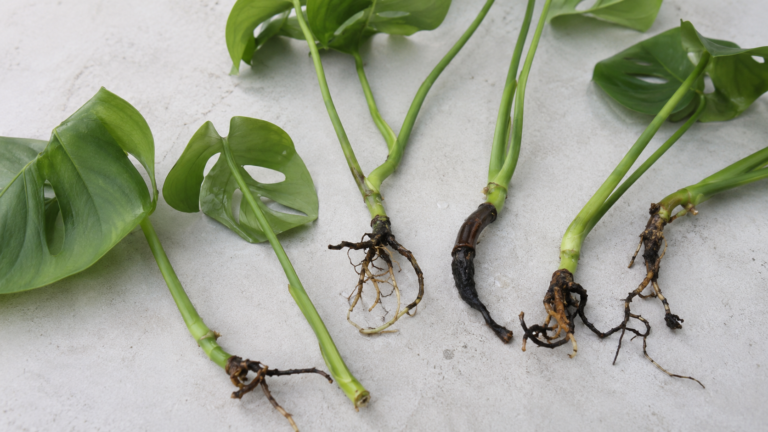
It is worth being precise about where this problem lives, because a different soil-related problem gets confused with it constantly, and the two need completely different responses. White fuzz on the soil surface is a growth on top of the mix. Root rot is a condition of the roots themselves, below the surface, and it is caused by different organisms behaving in a different way.
| White soil mold | Root rot | |
|---|---|---|
| Where it is | On top of the potting mix, visible without digging | Below the surface, on the roots themselves |
| What it affects | Organic matter in the mix | Living root tissue |
| What you see above ground | Usually nothing; the plant often looks fine | Wilting despite wet soil, yellowing, stalled growth |
| What confirms it | A visible white or off-white patch on the surface | Soft, dark roots when you check them by hand |
| The fix | Dry the surface out, improve airflow, scrape it off | A full root check and, if needed, a rescue repot |
If your plant looks and behaves normally aside from the visible patch on the soil, this is very likely the harmless surface fungus. If the plant is also wilting even though the soil is wet, or leaves are yellowing and growth has stalled, that combination points toward something happening at the roots instead, and root rot signs in houseplants walks through how to check the roots directly and tell the two apart with certainty.
Why it showed up: the real causes
The fungus is opportunistic. It shows up where the conditions favor it, and those conditions are almost always about water and air rather than anything else. The common contributors:
- Soil that stays wet between waterings. Whether from overwatering or a schedule that does not match the plant's actual needs, consistently damp soil is the single biggest driver.
- A saucer or cachepot holding standing water. Water sitting under the pot keeps the whole root zone and the mix above it wetter for longer than the plant needs.
- Poor drainage. A pot without drainage holes, or a mix that has compacted and stopped draining well, holds moisture near the surface for longer.
- Low airflow around the pot. A plant tucked into a corner or crowded against others has still air around the soil surface, which lets moisture linger there.
- A low-light spot. Less light generally means slower evaporation, so the soil surface stays damp longer after each watering even if the amount of water was normal.
None of these are unusual mistakes. They are the same handful of conditions that show up across most beginner houseplant problems, which is exactly why 7 beginner houseplant mistakes and overwatered vs. underwatered are worth reading alongside this one if the mold keeps returning.
What to do about it
The fix targets the conditions, not the fungus itself, since there is no plant tissue to treat.
- Scrape off the visible patch. A spoon or the edge of a plant label works fine. This is mostly cosmetic and does not require sterilizing anything.
- Let the soil surface dry out fully between waterings. Check with a finger before watering again rather than watering on a fixed schedule; how often to water indoor plants covers the actual check to use.
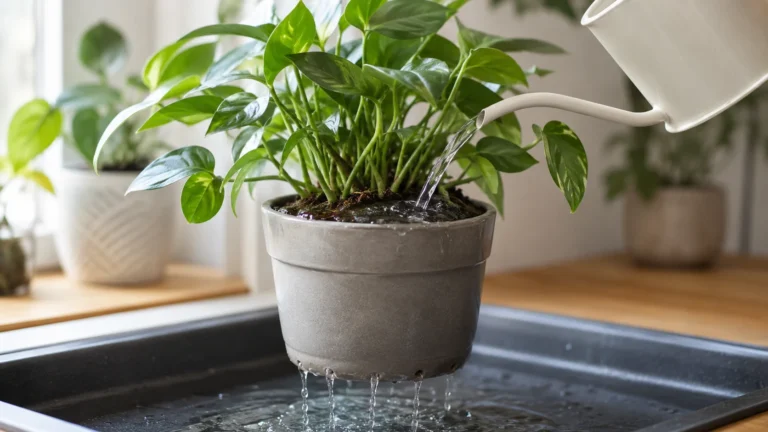
- Empty any standing water from saucers or cachepots after every watering, so the pot is never sitting in its own runoff.
- Improve airflow around the pot. Space plants apart rather than clustering them tightly, and avoid tucking pots into closed corners with no air movement.
- Consider a fresh top layer of potting mix if the mold keeps recurring despite the steps above. Replacing the top inch or two removes the organic material the fungus is currently feeding on at the surface.
Give it a watering cycle or two after making these changes before judging whether it worked. A single scrape without changing the underlying moisture and airflow pattern usually means the fungus comes back.
If you have respiratory or allergy concerns
If you or someone in your household has respiratory or allergy concerns about mold exposure in the home, that is a question for a doctor, not something this article is positioned to answer. A physician or allergist can assess your specific situation in a way a plant care guide cannot. If this is a concern for you, that conversation is the right next step.
Frequently asked questions
Is white mold on houseplant soil dangerous to my plant?
No, according to the University of Wisconsin-Madison Plant Disease Diagnostics Clinic and University of Minnesota Extension, it is typically a saprophytic fungus feeding on organic matter in the potting mix, not a disease affecting the living plant, and it does not harm a mature, otherwise healthy plant's roots.
Do I need to repot my plant if I see white mold on the soil?
Not necessarily. Scraping off the visible patch, letting the surface dry between waterings, and improving airflow resolves most cases. A full repot is worth considering only if the mold keeps recurring despite those changes.
How is white soil mold different from root rot?
White soil mold sits on top of the potting mix and the plant usually looks otherwise normal. Root rot is a below-surface condition affecting the roots themselves, and it typically comes with wilting despite wet soil, yellowing, and stalled growth. Root rot signs in houseplants covers how to check the roots directly.
Should I use a fungicide to get rid of it?
No fungicide is needed. The growth is a response to surface conditions, mainly moisture and airflow, and addressing those conditions directly is the actual fix.
Is it safe to breathe in or touch this mold?
This article does not make a health claim about mold exposure in either direction. If you have respiratory or allergy concerns, that is a question for a doctor.