How to Tell If Your Plant Needs Water
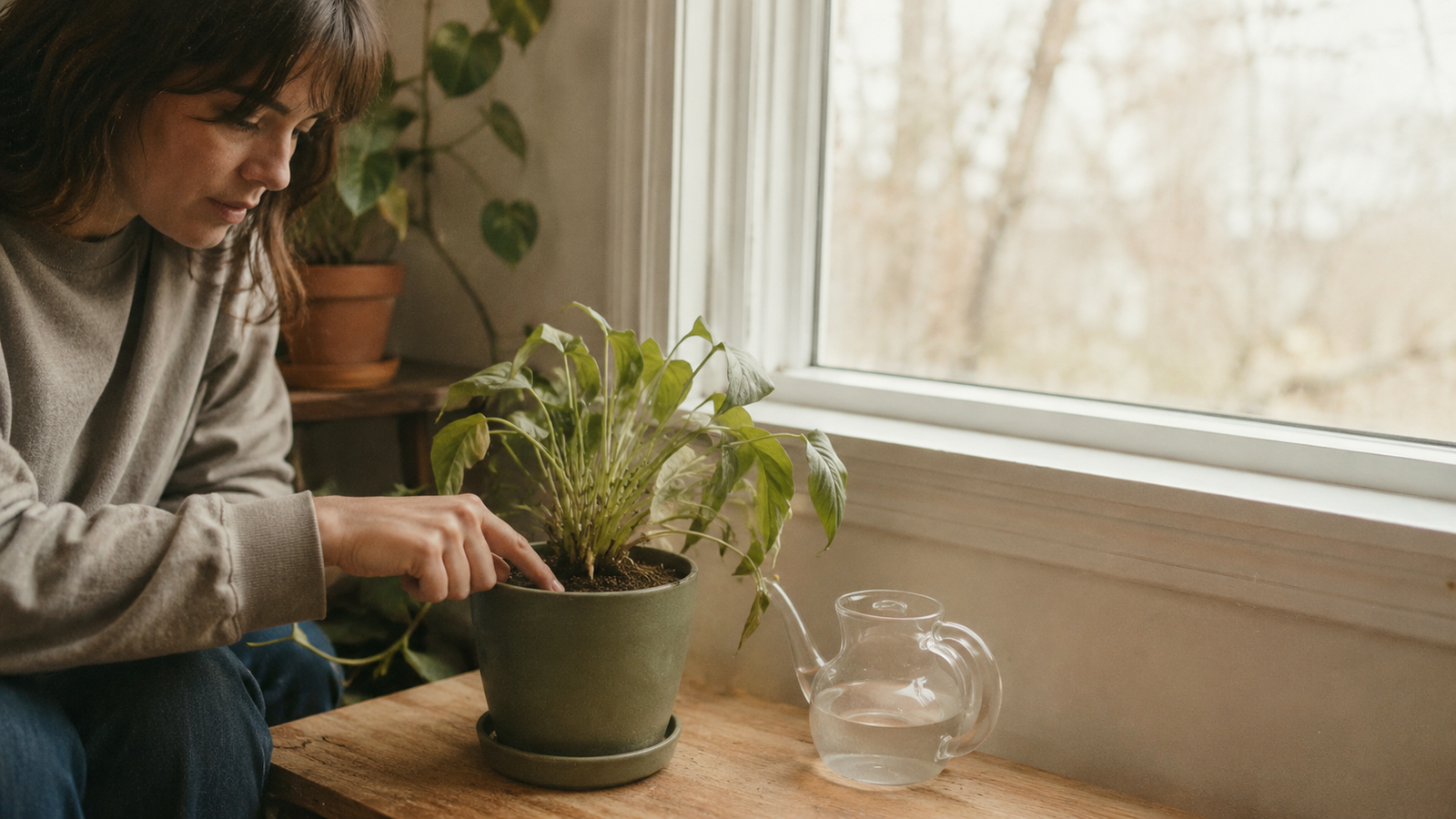
Push a finger about two inches into the soil. If it comes out dry at that depth, water the plant. If the soil feels cool, damp or clingy, wait and check again in a day or two. Which test works best depends on the pot: lift small pots and judge by weight, use a finger in medium pots, and push a wooden skewer to the bottom of large or deep ones. Whatever you do, do not use drooping leaves as your signal, because plants droop from too much water as well as too little.
That last point is where most beginner advice goes wrong. Drooping is listed everywhere as a way to tell your plant is thirsty. It is not a reliable one, and acting on it is how a plant with rotting roots gets watered again.
The finger test, done properly
This is the standard check and the one horticultural sources point beginners toward. It works because it reads moisture where the roots actually are, not at the surface.
- Go two inches deep, not one. For most adult hands that is roughly to the second knuckle. The top half inch of potting mix dries within a day of watering in almost any home, so a shallow poke tells you almost nothing.
- Go in straight, and slowly. Push down rather than digging sideways, so you displace as little root as possible.
- Pay attention to feel, not just to whether soil sticks. Damp soil feels distinctly cool and slightly clingy. Dry soil feels room temperature and crumbles off your finger.
- Check away from the very edge of the pot. Soil at the rim dries faster than soil in the middle, so a rim reading runs dry.
Dry at two inches means water. Anything damp means wait. That is the whole test.
The lift test, and how to calibrate it in a week
The lift test is faster than the finger test, does not disturb roots at all, and works even on plants with dense surface roots. The catch is that it needs one week of calibration before it means anything.
Here is how to build the reference. The next time you water a plant thoroughly, pick the pot up immediately afterward and pay attention to how heavy it feels. That is the "full" weight. Then pick it up again at the point where the finger test says it is dry. That is the "empty" weight. The difference between the two is surprisingly large, because water makes up a lot of the weight of a pot of soil.
After a couple of cycles you can tell a plant needs water just by tipping the pot slightly, which takes about two seconds. This is the check that turns watering from a chore into a habit, and it is the one experienced plant owners actually use day to day.
The lift test is at its best on small and medium plastic pots. It is less useful on heavy ceramic or concrete pots, where the pot itself outweighs the soil, and impractical on anything too large to move.
The skewer test for pots too deep for a finger
A finger reaches two inches. A large floor pot may hold twelve inches of soil, and the bottom two thirds of it can still be saturated while the top is bone dry. This is exactly the situation where the finger test misleads people into overwatering a large plant.
Take a long wooden skewer, a chopstick or a thin dowel, and push it slowly down toward the bottom of the pot. Leave it for a few seconds, then pull it out and look at it. Wood darkens where it has been in damp soil, and damp soil particles cling to it. A skewer that comes out clean and pale along its whole length means the pot is genuinely dry. A skewer that comes out dark and gritty at the lower end means there is still water down there, whatever the surface says.
Use an unfinished, untreated stick so it can actually take up moisture, and go in at a slight angle away from the main stem to avoid the thickest roots.
Pick your test by pot size
| Pot | Best test | Why |
|---|---|---|
| Small (under about 4 inches) | Lift test | A finger disturbs a large share of a small root system |
| Medium (roughly 4 to 8 inches) | Finger test | Two inches reaches a meaningful part of the root zone |
| Large or deep (over about 8 inches) | Skewer test | A finger cannot reach where the water actually sits |
| Heavy ceramic or concrete | Finger or skewer | Pot weight swamps the soil weight, so lifting tells you little |
| Hanging pots | Lift test | Easiest to feel, and reaching in overhead is awkward |
What the soil surface tells you, and what it does not
Surface color is worth a glance but should never be the deciding factor. Potting mix goes from dark brown to pale grey-brown as it dries, and that change is easy to read across a shelf of plants. The problem is that it happens at the surface hours or days before it happens at the roots.
Two surface signs are more meaningful than color:
- Soil pulling away from the sides of the pot. A gap between the soil and the pot wall means the root ball has shrunk as it dried, which is a sign of significant dryness, not borderline dryness. It also means the next watering may run straight down the gap without wetting the middle, so water slowly and in stages.
- Water sitting on top instead of soaking in. Very dry peat-based mixes repel water at first. If water pools on the surface, that is a sign the mix is unusually dry, not that it is full.
Neither of these replaces a depth check.
When the tests disagree, trust the root zone
It happens often, and the resolution is simple: trust whichever test reads deepest into the pot.
If the surface looks dry and the finger says damp, the plant does not need water. If the finger says dry but a skewer comes out dark from the bottom half of a deep pot, the plant does not need water. If the pot feels light but the finger says damp, the pot is probably just a light plastic one and the finger wins.
The reason is straightforward. Roots draw water from the whole root ball, and rot starts at the bottom of the pot where water collects. The deeper reading is the one that reflects what the roots are living in. The University of Wisconsin-Madison Plant Disease Diagnostics Clinic notes that root-rot fungi prefer wet soil conditions and advises never letting plants sit in drainage water, which is exactly the zone the surface never reports on.
Why drooping leaves are a bad watering signal
Almost every "how to tell if your plant needs water" list includes drooping. Treat that entry with suspicion, because drooping is not specific to thirst.
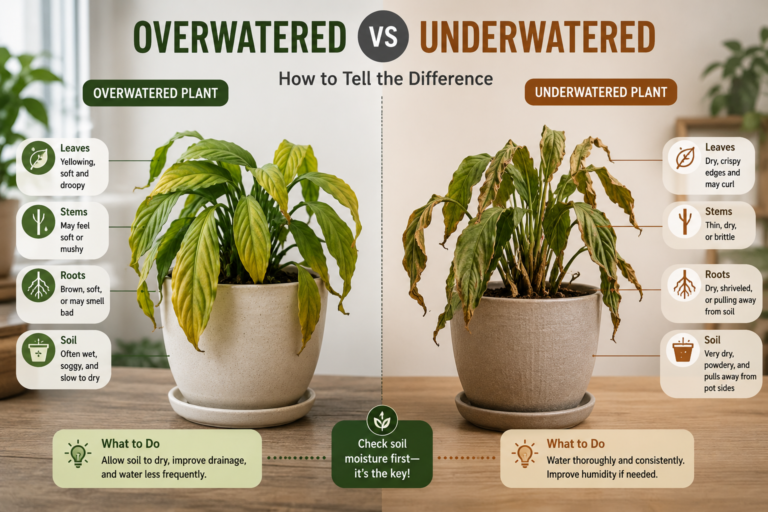
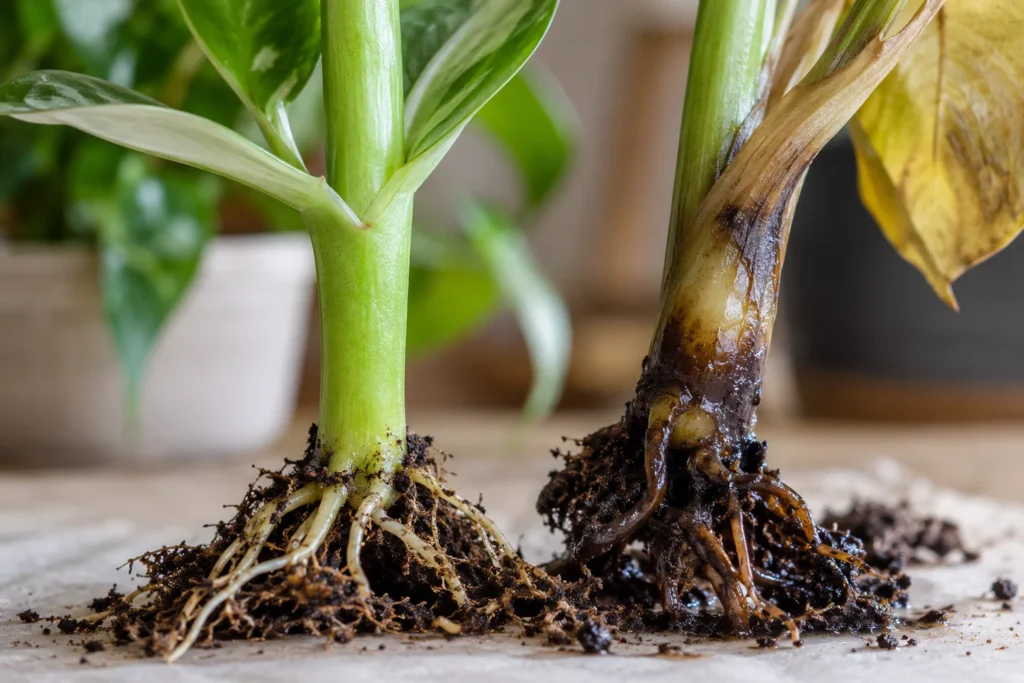
A thirsty plant droops because there is no water available to hold its cells firm. A plant with rotting roots droops for a different reason with an identical appearance: the roots are damaged and cannot take water up even though the pot is full of it. From across the room the two look the same. From the soil, they are opposites.
That is why the soil check has to come before the response, every time. Wet soil and a drooping plant is not a thirst problem, and adding water makes it worse. Dry soil and a drooping plant is genuine thirst and usually recovers within hours of a proper soak. Why is my plant drooping works through the full set of causes, and overwatered vs underwatered covers how to tell the two apart when the leaves alone will not say.
Wilting is also a late signal. By the time a plant visibly droops from thirst it has already been dry for a while. The point of a regular check is to catch it before that.
What about moisture meters
Probe-style moisture meters exist and are widely sold. Whether they are accurate enough to be worth relying on is a separate question that deserves its own honest answer rather than a passing recommendation, so this guide does not make one. The three physical checks above cost nothing, need no calibration beyond one week of paying attention, and are what the extension services point beginners toward.
When in doubt, wait a day
If the check is ambiguous, that ambiguity is itself an answer. Iowa State University Extension advises that if you question whether the soil is dry, wait at least one more day. A healthy plant is not harmed by a day of thirst. A pot that is watered slightly too often, week after week, is how root rot starts.
And when the check does say water, water properly: soak the whole root ball until water runs out of the drainage holes, as the University of Maryland Extension recommends, let it finish draining, and empty the saucer. The full watering method and the factors that change your timing are in how often to water indoor plants, and if you are still assembling the basics, indoor plant care for complete beginners puts this step in sequence with the others.
Frequently asked questions
How deep should I put my finger in the soil to check? About two inches, which is roughly to the second knuckle for most people. The top half inch dries out within a day of watering in almost any home, so a shallower check will tell you to water when the roots are still perfectly damp.
How can I check a plant in a very large pot? Use a wooden skewer or chopstick pushed down toward the bottom of the pot. Pull it out after a few seconds and look at it: dark and gritty at the lower end means moisture is still there, clean and pale along its whole length means the pot is genuinely dry. A finger only reaches the top couple of inches, which in a deep pot is not where the water sits.
Is drooping a sign my plant needs water? Not reliably. Plants droop from overwatering as well as underwatering, because rotting roots cannot take up water even when the pot is wet. Always check the soil before responding. Wet soil plus drooping points to a root problem, not to thirst.
How do I know if the soil is damp or just cool? Damp soil clings slightly to your finger and leaves a mark; cool but dry soil crumbles away cleanly. If you genuinely cannot tell, treat it as damp and check again the next day. Waiting is the lower-risk choice.
Should I check every plant on the same day? Checking on a fixed day is a good habit; watering on a fixed day is not. Run the check on all your plants at the same time each week, then water only the ones that pass the dryness test. Some weeks that will be most of them and some weeks none.