Overwatered vs Underwatered Plant: How to Tell
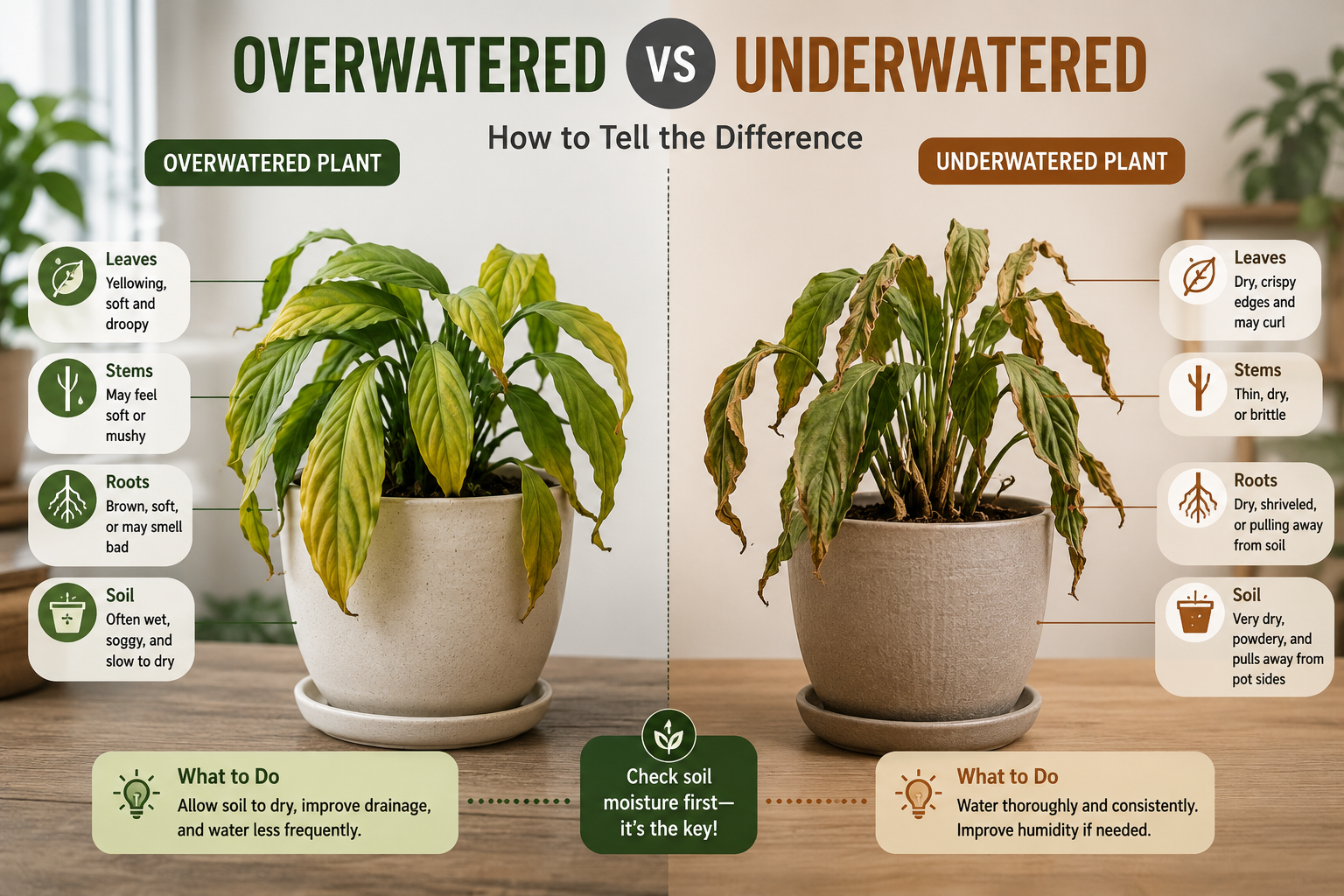
The fastest way to tell an overwatered plant from an underwatered one is to check the soil, not the leaves. If the soil is soggy and the plant is still wilting, or the lower leaves are yellow and soft, it is overwatered. If the soil is bone-dry and pulling away from the sides of the pot, and the leaf edges are crispy and brown, it is underwatered. The leaves alone will fool you, because drooping and yellowing happen in both cases. A wilting plant sitting in wet soil is usually overwatered, not thirsty, so the instinct to grab the watering can is exactly the wrong move.
That one habit, watering a droopy plant that is already too wet, is the single most common way beginners lose a houseplant. This guide gives you a soil-first test that actually works, a symptom-by-symptom comparison, and separate rescue steps for each direction.
Why the leaves alone cannot tell you
Here is the confusing truth that most articles skip: the headline symptoms overlap almost completely. Both an overwatered and an underwatered plant can droop. Both can turn yellow. Both can drop leaves. If you diagnose from the leaves, you have a coin flip, and the wrong call makes things worse.
The reason is that both problems end in the same place: the plant cannot get water to its leaves. When soil stays waterlogged, it runs out of oxygen. The University of Maryland Extension explains that excess water reduces the oxygen in the soil, which damages the fine roots and leaves the plant unable to take up water, even though it is standing in moisture. So an overwatered plant wilts from thirst at the leaf, while drowning at the root. That is why adding more water feels right and does real harm.
An underwatered plant wilts for the plain reason you would expect: there is no water in the soil to draw up. Same wilt, opposite cause. The tiebreaker is the soil.
The soil-first test that settles it
Before you do anything else, feel the soil. Push a finger in up to the second knuckle, about one to two inches down, or lift the pot to judge its weight.
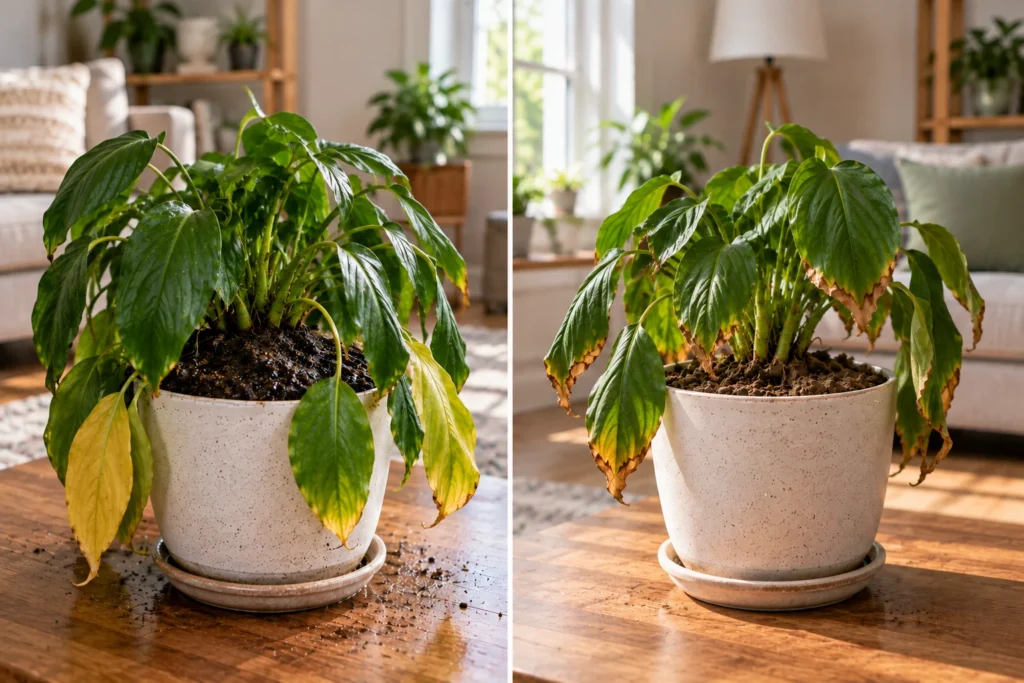
- Soggy, heavy, or damp two inches down, and the plant looks bad? Lean overwatered.
- Dry, light, and crumbling or pulling away from the pot wall? Lean underwatered.
Iowa State Extension puts the rule simply: check the soil before you water, do not water on a schedule. If the top inch or two is still wet or damp to the touch, wait. If it is dry down an inch or two, water. This single check prevents most watering mistakes in the first place, which is why we build our whole guide to how often to water indoor plants around it instead of a fixed calendar.
Overwatered vs underwatered plant: the comparison table
Use the leaf clue to notice a problem, then use the soil and roots to confirm which one it is.
| What you check | Overwatered plant | Underwatered plant |
|---|---|---|
| Soil feel | Wet or damp for days, slow to dry | Bone-dry, may pull away from the pot sides |
| Pot weight | Heavy | Light |
| Wilting | Droops while the soil is still wet | Droops when the soil is dry, perks up after watering |
| Leaf color | Yellowing, often lower and inner leaves first | Yellowing with browning, often overall |
| Leaf texture | Soft, limp, sometimes mushy or blistered | Crispy, dry, brown and brittle at the edges and tips |
| Leaf drop | Sheds soft green or yellow leaves | Sheds dry, crunchy leaves |
| Smell and pests | Musty or sour soil, fungus gnats hovering | No musty smell, no gnats |
| Roots (if you check) | Brown, black, soft, mushy, may smell foul | Pale to tan, firm, dry but intact |
| The right fix | Stop watering, dry out, check roots | Rehydrate slowly, then resume the soil check |
The single most reliable line in that table is the wilting-plus-soil combination. Wilting in wet soil points to overwatering. Wilting in dry soil that recovers after a drink points to underwatering. Iowa State Extension notes the trap plainly: wilting from root rot prompts more watering, which worsens the very root damage that caused the wilting. If you remember one thing, remember to look down at the soil before you reach for water.
Signs of an overwatered plant
Overwatering is the quieter problem because the plant still looks watered. Watch for:
- Soft, yellowing leaves, usually starting with the lower and inner ones. The University of Maryland Extension lists wilting or yellowing of lower and inner leaves as the primary symptom of excess moisture.
- Wilting while the soil is still wet. This is the signature. A thirsty-looking plant in damp soil is the classic overwatering picture.
- Soil that stays wet for many days, or a pot that feels heavy long after watering.
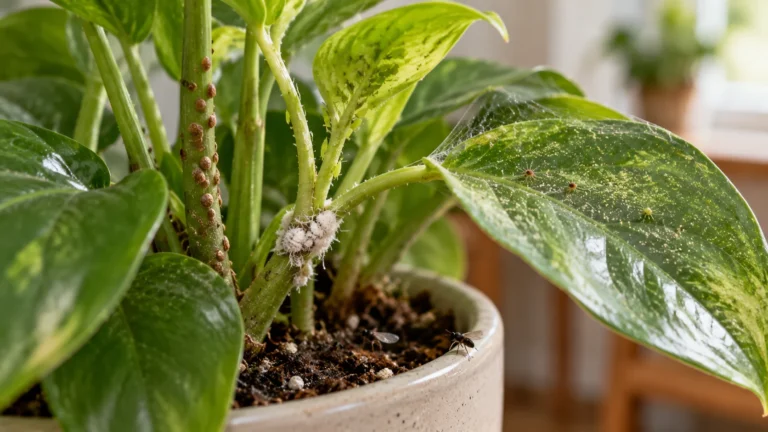
- Musty or sour soil smell, and fungus gnats hovering near the surface, which Iowa State Extension flags as a reliable sign of chronically wet soil.
- Mushy stems or a soft base, and in advanced cases, brown or black roots that fall apart when you touch them.
Because yellow leaves are the loudest signal here and the most searched, it is worth understanding all the causes at once. We break those down in our guide to why houseplant leaves turn yellow.
Signs of an underwatered plant
Underwatering is easier to read because everything is dry:
- Crispy, brown leaf edges and tips. The texture is the tell: dry and brittle, not soft.
- Dry soil pulling away from the pot walls, leaving a gap around the edge. Water poured in at this stage can run straight down that gap and out the bottom without wetting the root ball.
- A light pot. Lift it. A thirsty plant weighs noticeably less than a watered one.
- Wilting that reverses. Give it a proper drink and a truly thirsty plant often perks up within hours. That recovery is itself a diagnosis.
- Slow, uniform yellowing or leaf drop in longer-neglected plants, as the University of Maryland Extension notes that prolonged water stress can bring on scorch and leaf drop.
How to fix an overwatered plant
Move carefully here, because this is the harder rescue.
- Stop watering. Do not add any more until the soil has dried out. This feels wrong when the plant is drooping. Do it anyway.
- Move it out of standing water. Empty the saucer, sleeve, or decorative outer pot. Iowa State Extension warns against letting a plant sit in a saucer or cover pot full of water.
- Check the roots. Slide the plant out of the pot. Healthy roots are pale and firm. Rotten roots are brown or black, soft, and often smell foul. If you find rot, trim off the mushy roots with clean scissors down to firm, living tissue.
- Repot into fresh, well-draining mix in a container with a drainage hole, sized so it is not much larger than the root ball. An oversized pot holds too much wet soil around the roots.
- Improve the conditions that caused it. Better light and airflow help the soil dry on a healthy cycle. A spot with steady bright, indirect light helps a recovering plant use water at a normal rate instead of leaving it to sit.
- Then resume the soil-first check, watering only when the top inch or two has dried.
How to fix an underwatered plant
This one is usually a quick recovery.
- Water slowly and thoroughly until it runs from the drainage hole, so the whole root ball is wetted, not just the surface.
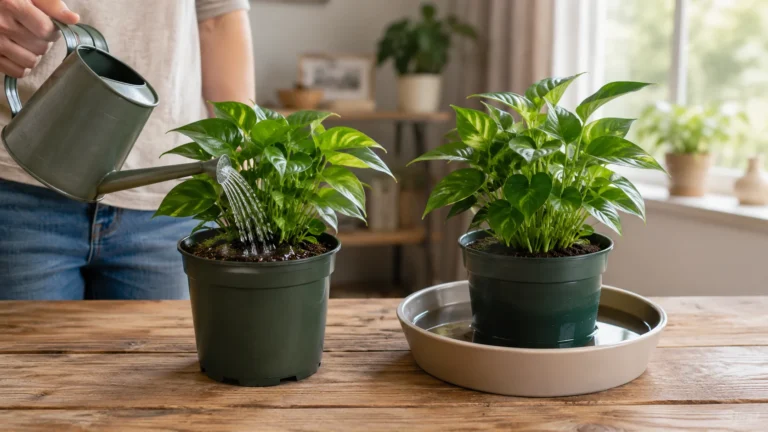
- If the soil has pulled away from the pot, bottom-water instead. Set the pot in a basin of water for twenty to thirty minutes and let the soil soak up moisture from below until the surface feels damp. This rehydrates dry mix that surface water would just run off.
- Let it drain fully, then return it to its spot and empty any saucer.
- Do not overcorrect. One good soak is enough. Then go back to checking the soil before each future watering rather than dousing it daily out of guilt.
A truly underwatered plant often looks much better within a day. That fast rebound is the reassuring part of this problem.
The honest part: overwatering is the deadlier mistake
Most comparison articles present the two problems as equal opposites. They are not. Underwatering is usually recoverable, because a thirsty plant with intact roots bounces back once you rehydrate it. Advanced overwatering is often not recoverable, because root rot destroys the very tissue the plant needs to drink. The University of Maryland Extension notes that if excess water continues, plants can decline all the way to death.
Overwatering is also the more common beginner mistake, precisely because it does not look like a mistake. A wet plant looks cared for. The reflex to water a drooping plant feels like kindness. But in soggy soil, that kindness accelerates the rot, and Iowa State Extension describes exactly this loop: wilting triggers more watering, which deepens the damage.
So if you are ever genuinely unsure which problem you have, the safer default is to wait and check the soil rather than to water. You can almost always fix a dry plant. You often cannot fix a drowned one. That is the honest asymmetry no one selling you a fixed watering schedule tends to mention.
FAQ
Should I water a wilting plant? Only after you check the soil. If the soil is dry, yes, water it. If the soil is still wet, no. A plant wilting in wet soil is usually overwatered, and more water makes it worse.
Can a plant be overwatered and underwatered at the same time? Sort of, and it trips people up. Root rot from overwatering damages the roots so badly that the plant cannot drink, so it shows thirst-like wilting even in wet soil. The cure is still to dry out and treat the roots, not to add water.
Do yellow leaves mean too much water or too little? Either. Yellowing happens in both cases, which is why you cannot diagnose from color alone. Soft yellow lower leaves in wet soil point to overwatering. Yellowing with dry, crispy edges in dry soil points to underwatering.
How long does it take an overwatered plant to recover? It varies. A mildly overwatered plant may stabilize in a week or two once the soil dries and conditions improve. A plant with advanced root rot may not recover at all, which is why catching it early matters.
What is the single best way to avoid both problems? Stop watering on a schedule and start checking the soil first. Iowa State Extension recommends letting the root ball wet thoroughly and then dry out before watering again, so the plant cycles between moist and dry instead of staying soggy.
Care claims in this article are drawn from public guidance from the University of Maryland Extension and Iowa State University Extension and Outreach. When in doubt about a valuable or struggling plant, consult your local extension service.