LECA Propagation for Beginners: How It Works
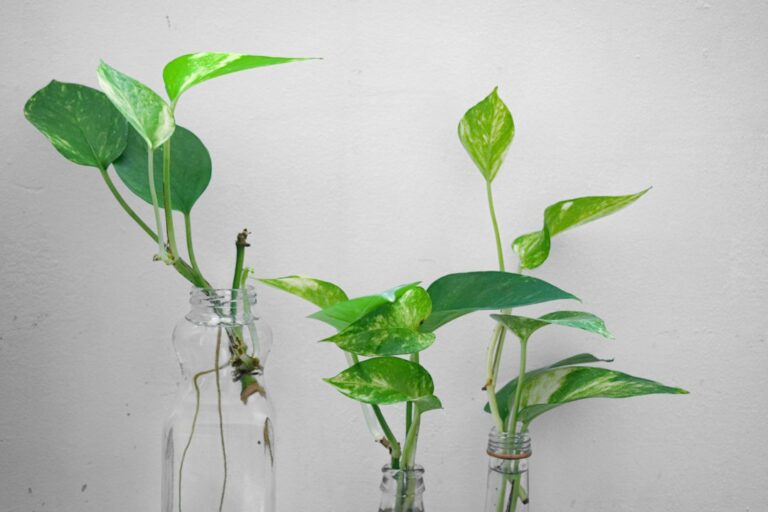
LECA propagation for beginners comes down to one idea: instead of standing a cutting in a jar of water, you stand it in a jar of baked clay pebbles with a shallow pool of water in the bottom. The pebbles soak up water and wick it upward, so the base of the cutting stays damp while air still moves between the pebbles. That mix of moisture and air is what roots need. It is not magic and it is not required, but for cuttings that tend to rot in plain water, LECA can be a gentler middle ground.
This guide explains what LECA is, how to set up your first cutting, what can still go wrong, and how to decide whether it is worth trying at all.
What LECA Actually Is
LECA stands for lightweight expanded clay aggregate. It is clay that has been fired in a kiln until it puffs up into small, round, porous pebbles. You will also see it sold as clay pebbles, clay balls or hydroton.
For plants, the important properties are simple:
- It is porous. Each pebble holds some water inside and lets it move from pebble to pebble by capillary action.
- It leaves gaps. Round pebbles never pack tightly, so there are always air pockets between them.
- It has no food in it. LECA is inert. It holds the cutting up and moves water, but it supplies no nutrients.
- It is reusable. Because it does not break down like soil, it can be cleaned and used again.
That point about nutrients matters later, so keep it in mind.
Why Roots Care About Air, Not Just Water
Roots need oxygen. University of New Hampshire Extension, in its Hydroponics at Home guide (Jonathan Ebba, August 2023, read October 2, 2026), explains that plants need oxygen predominantly at their roots, and that any water-based growing system has to deliver oxygen to the root zone.
This is the whole case for LECA. Virginia Cooperative Extension, in Propagation by Cuttings, Layering and Division (Relf, Ball and Olsen, last reviewed March 2025, read October 2, 2026), notes that plain water works well for species that root easily, but warns that water not changed weekly becomes stagnant, oxygen deficient and inhibitory to rooting.
LECA tries to solve that problem a different way. The cutting sits above the water, in damp clay, surrounded by air pockets. Water reaches it by wicking, and air reaches it through the gaps. The principle is close to a self-watering pot: a reservoir below, a wicking material in between, and roots that drink without sitting in a puddle.
LECA vs Water vs Soil: A Quick Comparison
Here is how the three common rooting methods compare for a beginner.
| Plain water | LECA | Soil or soilless mix | |
|---|---|---|---|
| Can you see roots form? | Yes | Yes, in a clear container | No |
| Main risk | Stagnant water and stem rot | Water level set too high, so the stem sits wet | Mix kept too wet or allowed to dry out |
| Maintenance | Change water once or twice a week | Top up the reservoir, refresh it now and then | Check moisture by touch |
| Setup effort | Lowest | Rinse and soak the pebbles first | Moisten the mix first |
| Moving to a pot later | Roots adjust from water to soil | Roots adjust from clay to soil | No transition needed |
The honest summary: LECA is easier on the stem than water, but it is not easier than water to set up, and it still involves a transition if your final plant will live in soil.
What You Need
You probably have most of this already:
- LECA pebbles. Smaller pebbles hold a thin cutting more steadily than large ones.
- A clear container without a drainage hole. A drinking glass or wide jar works. Clear lets you watch both roots and the water level.
- A healthy cutting with at least one node. The node is the bump on the stem where a leaf joins. Roots on most common houseplants form at or near it.
- Clean scissors or pruners.
- Room-temperature water.
A wide opening matters more than it seems. Roots tend to grip the pebbles, and pulling a rooted cutting back through a narrow neck can tear the roots you waited weeks to grow.
LECA Propagation for Beginners, Step by Step
1. Rinse and soak the pebbles
New LECA is dusty. Rinse it in a sieve until the water runs mostly clear, then soak it for several hours or overnight so the pebbles are fully saturated before they go in the jar. Do the rinsing outside or over a bucket, since clay grit is not something you want in a sink drain.
2. Take a good cutting
Virginia Cooperative Extension describes a stem cutting as a 2 to 6 inch piece of stem including the terminal bud. Iowa State University Extension, in How to Propagate Houseplants by Stem Tip Cuttings (Aaron Steil, last reviewed January 2025, read October 2, 2026), suggests 3 to 6 inch cuttings with at least two nodes, and removing the lower leaves before you insert the cutting. Leaves buried in damp media tend to break down, which is the opposite of what you want.
3. Set the cutting in the pebbles
Put a layer of pebbles in the bottom of the jar, hold the cutting upright, and fill in around it so at least one node sits down inside the clay. Tap the jar gently on the counter so the pebbles settle and support the stem.
4. Add water to the bottom only
This is the step that decides whether LECA helps you. Pour in water so it forms a shallow reservoir in the lower part of the jar, below the base of the cutting. The pebbles above the waterline wick moisture up to the node. If the waterline reaches the stem, you have recreated water propagation with extra steps, and the rot risk comes back.
5. Put it somewhere bright but not sunny
Virginia Cooperative Extension recommends bright but not direct light for rooting cuttings: an east window is fine, a south window is too bright, a west window too warm and a north window too dim. It also recommends keeping cuttings warm, at 70 to 75°F. Iowa State University Extension suggests 4 to 6 hours of bright indirect light for root and shoot growth.
6. Top up, do not flood
Check the jar every few days. When the reservoir gets low, top it back up to the same low line. Every so often, pour the old water out and refill with fresh water so it does not sit stale.
The Fertilizer Question (Where Guides Disagree)
Many LECA guides tell you to add hydroponic fertilizer to the water right away, because LECA has no nutrients of its own. That makes sense for an established plant living in LECA long term. It is less clear for a cutting that has no roots yet.
Virginia Cooperative Extension states that rooting media should be low in fertilizer, and that excessive fertility will damage or inhibit new roots. A cutting without roots also has little way to take up food in the first place.
A cautious rule you can actually follow:
- Use plain water while the cutting is rooting.
- Once roots are established and growing, if you plan to keep the plant in LECA rather than moving it to soil, start a fertilizer made for soilless or hydroponic growing, mixed weaker than full strength, and follow that product's label.
- If you plan to move the cutting to soil, you can skip fertilizer in the jar altogether. The potting mix and your normal feeding routine take over from there.
Algae, White Crust and Other Things You Will Notice
Green film on the pebbles or glass. That is algae. University of New Hampshire Extension notes that algae thrive on sunlight, moisture and fertilizer, and recommends keeping light off the water wherever possible. Move the jar out of direct sun, rinse the pebbles, or wrap the lower part of the jar in paper.
White crust on the pebbles. As water evaporates from the top of the clay, minerals from tap water can be left behind, the same thing that happens on the rim of a pot. Our guide to hard water and mineral buildup on houseplants explains when it matters. Rinsing the pebbles between uses is usually enough.
A dark, soft stem. LECA lowers the rot risk. It does not remove it. If the base of the cutting turns brown, soft or smelly, check that the waterline is not touching the stem, then use our guide to a plant stem that is soft and mushy to confirm rot and recut above it.
Which Cuttings Are Good First Tries in LECA?
The simplest rule: a plant that roots easily in water is a good first LECA cutting. Pothos, philodendron and tradescantia are common choices because they root readily and their nodes are easy to spot. Our pothos care routine for beginners covers how to grow the plant on once it has roots.
Thick, fleshy cuttings and plants grown from corms or tubers are less forgiving in constantly damp media, so save them for after you have had a few easy wins. Start with a cutting you would not mind losing.
How Long Does It Take?
Iowa State University Extension says most houseplant stem cuttings form roots in 3 to 6 weeks. That timeline is for stem cuttings generally, not LECA specifically, and the species, the season and the warmth of your room all shift it. Do not pull the cutting up to check. In a clear jar, you can watch for white root tips appearing between the pebbles.
Moving a LECA Cutting Into Soil
You do not have to keep a LECA cutting in LECA. Iowa State University Extension suggests potting a rooted cutting into regular potting soil once the roots are about 1 inch long or more.
When you move it:
- Lift gently. Roots grip the pebbles. Tip the jar sideways and ease the pebbles away rather than pulling the stem.
- Remove clinging pebbles carefully. A few left on the roots are not a disaster. Tearing roots to get them off is worse.
- Water the new pot well, then let the top layer start to dry before watering again. Roots that grew in a damp, airy medium need time to adjust to soil, much like water roots do.
- Expect a short pause. A new transplant may sit still or droop a little while it settles. Our guide to a plant wilting after repotting covers what is normal and what is not.
When Plain Water Is Still the Better Choice
LECA is a genuinely useful option, but here is what the bag will not tell you: for a first-time propagator with an easy plant, a clean glass of water changed on schedule usually works fine. Water costs nothing, needs no rinsing or soaking, and makes every root visible.
LECA earns its place when:
- your water cuttings keep rotting at the base,
- you want to keep a plant in a soilless setup long term, or
- you already own the pebbles and want a lower-maintenance jar.
If none of those apply, try water first and come back to LECA when you have a reason.
FAQ
Is LECA better than water for propagation?
Not automatically. LECA keeps the stem out of standing water and lets air reach the roots, which can reduce rot on cuttings that struggle in water. Plain water is simpler and free, and it works well for easy-rooting plants if you change it once or twice a week.
How high should the water be in LECA propagation?
Keep a shallow reservoir in the bottom of the container, below the base of the cutting. The pebbles above the waterline wick moisture up to the node. If the stem sits in water, you lose the main benefit of using LECA.
Do I need to fertilize LECA cuttings?
Not while they are rooting. Virginia Cooperative Extension advises that rooting media should be low in fertilizer, since too much can damage new roots. Start a diluted fertilizer only after roots are established, and only if the plant will stay in LECA.
Can I reuse LECA after propagating?
Yes. LECA does not break down like soil. Rinse off roots and debris, wash away any white mineral crust or algae, and soak it again before the next use.
Can I move a LECA-rooted cutting to soil?
Yes. Iowa State University Extension suggests potting rooted cuttings into regular potting soil once roots reach about 1 inch or more. Ease the pebbles away gently, water the new pot well, and expect a short adjustment period.