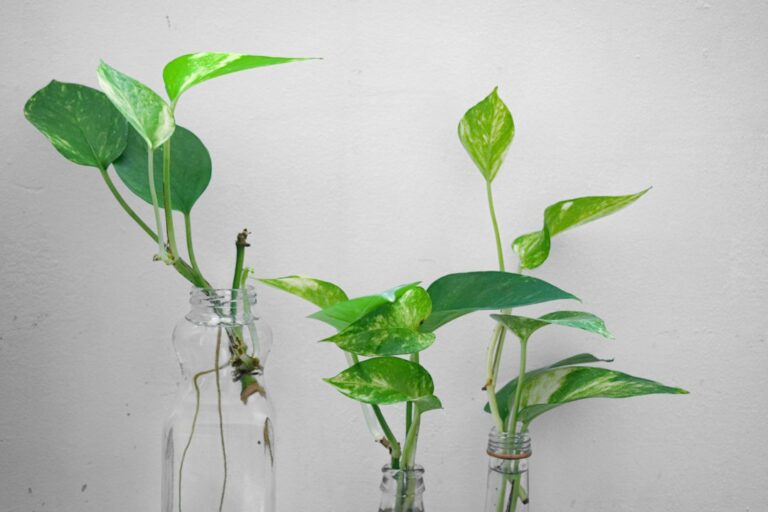
Cutting Not Rooting but Not Rotting? Here’s Why
A cutting not rooting but not rotting is usually stalled, not dead. The most common reasons are that the cutting has no node below the waterline or soil, it is sitting somewhere too cool or too dim, it is losing water faster than it can manage, or the plant is simply a slow rooter. Check for a node first, then move it somewhere warm with bright, indirect light, raise the humidity around it, and keep waiting as long as the stem stays green and firm.
That is the short version. The rest of this guide helps you work out which of those reasons applies to your cutting, because the fix depends on the cause.
Stalled vs Rotting: Make Sure You Know Which One You Have
Before you change anything, confirm it really is a stall. The two look very different up close.
| What you see | Stalled | Rotting |
|---|---|---|
| Stem at the cut end | Firm, green or tan, maybe a pale callus | Soft, dark, brown or black, mushy |
| Leaves | Still green, maybe a little limp | Yellowing fast, dropping |
| Smell (water cuttings) | None | Sour or unpleasant |
| Water | Clear | Cloudy or slimy |
If your cutting's base is soft or dark, that is a different problem. Our guide to a plant stem that is soft and mushy explains how to confirm rot and save what you can, usually by cutting above the damage and starting again.
If everything in the "Stalled" column matches, keep reading. A firm, green cutting is still alive and still has a chance.
Reason 1: There Is No Node Where Roots Can Form
This is the most common cause of a cutting that stays alive but never roots, and it is easy to check.
A node is the slightly swollen point on a stem where a leaf is, or was, attached. On many common houseplants, roots grow from nodes, not from the smooth stem between them. Virginia Cooperative Extension's guide Propagation by Cuttings, Layering and Division (Relf, Ball and Olsen, last reviewed March 2025, read September 27, 2026) says at least one node should be below the surface of the rooting medium, and that stem cuttings should be cut just below a node.
How to check: look at the part of the stem that is underwater or under the soil. Can you see a node there, often with a small bump or a brown aerial root nub?
The fix: if there is no node below the surface, make a fresh cut just below a node and set it back so that node sits in the water or mix. If your cutting is a single leaf with a bit of stalk and no piece of stem, it may root but never grow a new shoot, because there is no bud to grow from. In that case, take a new cutting that includes a node.
Reason 2: It Is Too Cool
Cold is one of the quietest reasons a cutting sits still. A cutting kept on a chilly windowsill, near a door, or in a cool room through fall and winter can stay green for weeks without doing anything.
Virginia Cooperative Extension advises keeping both the air and the rooting medium warm, at 70 to 75°F. Most homes run cooler than that in winter, especially next to glass at night.
How to check: put a thermometer next to the cutting for a day, or simply touch the jar or pot. If it feels cold, that is a strong suspect.
The fix: move the cutting away from cold glass and drafts to a warmer spot that still gets good light. The top of a fridge is warm but usually dark, so it is only a good spot if there is bright light nearby. If you suspect the cutting has actually been chilled enough to be damaged, our guide to cold damage on houseplants shows the signs.
Reason 3: The Light Is Wrong
Cuttings need light to make the energy they use to grow roots, but they cannot handle harsh sun yet. Virginia Cooperative Extension recommends bright, but not direct, light, and notes that an east window is fine but a west window is too warm.
Too dim: the cutting survives but has too little energy to root. This is common in winter, or on a shelf far from a window. If you are not sure your spot is bright enough, our guide to signs your plant needs more light explains what to look for.
Too much direct sun: leaves scorch or wilt, and the cutting spends its energy just holding on.
The fix: find the brightest spot you have that does not get strong direct sun, usually near, but not right against, a window.
Reason 4: The Cutting Is Losing Water Faster Than It Can Replace It
A cutting has no roots, so it cannot take up much water, but its leaves keep losing it. In dry indoor air, a leafy cutting can spend its time just staying alive instead of rooting.
Virginia Cooperative Extension suggests placing cuttings in a perforated or slitted clear plastic bag to raise humidity while allowing some air circulation.
The fix, in order of simplicity:
- Cover it loosely. A clear plastic bag or an upturned clear container over the pot, with a few holes, keeps moisture around the leaves.
- Reduce the leaf area. Virginia Cooperative Extension advises removing lower leaves that would touch or sit below the medium. If a cutting has many large leaves, removing one or two can help it cope.
- Keep the medium moist, not wet. The same guide says the medium should be moist before you insert cuttings.
Reason 5: It Is Trying to Flower
A cutting carrying flowers or flower buds is splitting its energy. Virginia Cooperative Extension advises removing flowers and flower buds so the cutting can use its energy and stored carbohydrates for root and shoot formation.
The fix: pinch off any flowers or buds. It feels like a waste, but it is the right trade.
Reason 6: The Medium Is the Problem
For soil-rooted cuttings, the mix matters more than people expect. Virginia Cooperative Extension says a rooting medium should be clean, porous enough for air and drainage, able to hold water, and low in fertilizer, because excessive fertility can damage or inhibit new roots.
Watch for:
- Heavy or compacted mix that stays wet and airless.
- Mix with added fertilizer. Many bagged potting mixes include it. For cuttings, a plain, low-fertility mix is safer. Our guide on how to read a bag of soil for indoor plants shows how to spot added fertilizer on the label.
- Old, reused mix that may carry disease.
For water-rooted cuttings, the "medium" is the water itself. Change it whenever it looks cloudy, and rinse the jar.
Reason 7: The Season or the Plant Is Just Slow
Sometimes nothing is wrong. Virginia Cooperative Extension notes that success with herbaceous plants is generally better in spring, when plants are actively growing and more likely to root quickly. A cutting taken in late fall or winter may wait for longer days before doing much.
Some plants also root far more slowly than others. Fast, soft-stemmed vines tend to root much more readily than thick-stemmed or woody plants. If yours is one of the slower types, patience may be the only fix.
How to Check for Roots Without Setting It Back
Pulling a cutting out every few days to look disturbs any roots that have started. Instead:
- In water: just look through the glass. Tiny white bumps at a node are the first sign.
- In soil: Virginia Cooperative Extension suggests tugging gently after 2 to 3 weeks and moving cuttings to their own pots once they resist the tug. Its advice is to dig them out rather than pull them out when it is time.
- New leaf growth is a good sign, but not proof on its own. Some cuttings push a leaf from stored energy before roots form.
A Quick Stalled-Cutting Checklist
Work through these in order:
- Is there a node below the surface? If not, recut below a node.
- Is it warm? If it feels cool, move it somewhere warmer.
- Is the light bright but not harsh? Adjust if not.
- Is it wilting or losing leaves? Add humidity with a loose cover.
- Are there flowers or buds? Pinch them off.
- Is the mix heavy or fertilized? Switch to a light, low-fertility mix.
- Is it winter, or a slow plant? Keep waiting while it stays green and firm.
When to Give Up (and When Not To)
Keep going as long as the cutting stays green and the stem stays firm. A healthy-looking stall is not a failure.
Start over if the stem turns soft or black, the leaves all yellow and drop, or the cutting shrivels. If it does, take a new cutting from healthy growth, just below a node, and use what you learned from this checklist. It helps to start two or three cuttings at once, so one slow one does not decide the outcome.
FAQ
Why is my cutting still green but not rooting?
It is usually stalled. The most common reasons are no node below the surface, cool temperatures, light that is too dim or too harsh, dry air, or simply a slow plant or season. Check for a node first, then warmth and light.
How long should I wait for a cutting to root?
It depends on the plant and conditions. Virginia Cooperative Extension suggests testing soil cuttings with a gentle tug after 2 to 3 weeks. Slower plants and winter cuttings can take much longer. As long as the stem stays green and firm, it is worth waiting.
Should I recut a cutting that won't root?
Only if there is a clear reason, such as no node below the surface, or damage at the base. Otherwise, fix the conditions first. Recutting a healthy cutting shortens it without solving the real problem.
Can a cutting root without a node?
For many common houseplants, roots form at nodes, which is why Virginia Cooperative Extension advises having at least one node below the medium. A leaf with no piece of stem may root but never grow a new shoot.
Does rooting hormone help a stalled cutting?
It can help some cuttings root faster. Virginia Cooperative Extension recommends a rooting hormone, preferably one containing a fungicide, applied when the cutting is taken. It will not fix a missing node, cold, or poor light.