
Grouping Plants for Humidity: Does It Really Work?
Short answer: yes, grouping plants for humidity works, but only a little and only in the small pocket of air around the cluster. Every plant releases water vapor through its leaves, and moisture also evaporates from damp potting mix. Put several plants close together and that moisture lingers near them instead of drifting away. It will not make a dry room humid. Think of grouping as a free, gentle boost that works best with several plants, in a smaller room with still air, and alongside other habits, not as a fix on its own.
That is the honest version. The rest of this guide explains why it works, when it is worth doing, how to set up a cluster so it helps rather than hurts, and how to tell whether it is doing anything in your home.
Why grouping plants raises humidity at all
Plants are constantly moving water. They pull it up from the roots and release it as vapor through tiny pores on their leaves, a process called transpiration. At the same time, water evaporates from the surface of damp potting mix.
One plant on its own adds very little moisture to a room, and whatever it adds spreads out and gets carried off by moving air. Several plants side by side are different. Their leaves partly shelter each other, the air between them moves less, and the moisture each one gives off stays close for a little longer. The result is what horticulturists call a microclimate: a small zone that is slightly more humid than the room around it.
The University of New Hampshire Extension, in a January 15, 2025 answer we read on September 23, 2026, describes exactly this: water evaporating from potting media or transpiring from leaves "can increase relative humidity by creating a microclimate," and placing more plants together can expand that effect. It adds a condition that matters a great deal: the strategy works best with several plants and in a small room with low airflow, so the moisture stays around the plants.
How much difference does it really make?
This is where most articles get vague, and we will not pretend to be more precise than the evidence. We could not find an extension service or botanical garden that publishes a reliable, measured figure for how much a plant grouping raises humidity in an ordinary home. Some garden blogs quote a specific percentage, but without data behind it, so we are not repeating one here.
What the authorities do agree on is the direction and the scale. The University of Illinois Extension houseplant care guide, read on September 23, 2026, says grouping plants "improves the humidity immediately surrounding them." The key word is immediately. The benefit is local.
For context, the same Illinois guide notes that during winter most homes have less than 30 percent humidity. UNH Extension (January 15, 2025) says most houseplants, excluding cacti, succulents and a few others, prefer a relative humidity of 40 to 60 percent, while tropical species thrive at 70 to 80 percent. So in a heated winter home the gap can be large, and a cluster of plants is unlikely to close it by itself. It can soften the edges, which is often all a common houseplant needs.
When grouping is worth doing (and when it is not)
Here is the rule you can actually follow. Use this table to decide how much to expect from grouping in your own situation.
| Your situation | What grouping will likely do | What to do |
|---|---|---|
| A few easygoing plants (pothos, snake plant, ZZ plant) in a normal room | Little, and they rarely need it | Grouping is optional; focus on watering and light |
| Several leafy tropical plants in a small room or corner with still air | A real, if modest, local boost | Group them; this is where the method shines |
| One or two fussy plants (calathea, fern) in a large, open, drafty room | Very little; moisture drifts away | Group if you like, but plan on a humidifier or a more enclosed spot |
| Plants beside a heating vent, radiator or exterior door | Almost nothing; moving dry air wins | Move the group first, then think about humidity |
| Cacti and succulents | Not needed and can work against you | Keep them apart, in drier air with good light |
The pattern is simple. Grouping helps most when there are enough plants to matter and the air around them is calm. It helps least where air moves a lot or where the room is very large.
Grouping plants for humidity: how to set up a cluster
A good cluster is not just plants shoved together. A few details make the difference between a helpful microclimate and a damp, stuffy corner.
Keep them close, not crammed
Set pots near each other so the foliage forms a loose canopy, but leave enough space that air can still pass between the leaves. Leaves pressed into each other stay wet longer and are where fungal spots and rot tend to start. Close but not touching is a good working rule.
Group plants with similar needs
A cluster shares one patch of light and one patch of air. Put plants together that like roughly the same light and humidity, such as a fern with a calathea and a peace lily, rather than a succulent next to a fern. If the light at that spot is weak, a shelf or rack with a light above it is often easier to manage than a windowsill, and our guide to a grow light setup for a plant shelf walks through how to arrange one.
Put the tallest plants at the back
Taller, bushier plants at the back and smaller ones in front form a natural wall that slows air movement through the group. It also keeps every plant within reach of the light.
Choose the right spot in the room
A corner or a shelf against an inside wall holds moisture better than the middle of an open room. Keep the whole group away from heating vents, radiators, air conditioning outlets and doors that open to the outside, since steady moving air carries off the moisture you are trying to keep.
Add a pebble tray under the group if you want a little more
Grouping and a pebble tray work on the same principle, and they pair well. UNH Extension (January 15, 2025) suggests filling a tray two to three inches deep with pebbles and water and setting pots on the stones, making sure they are not sitting in the water. It describes the benefit as small and says, like grouping, it works best with multiple plants in rooms with low air circulation. One wide tray under a whole cluster is simpler to maintain than a tray for every pot.
What grouping cannot do (the part most guides skip)
Grouping is a helpful habit, but it has real limits, and knowing them saves a lot of frustration.
It will not rescue a very dry room. If your home sits well below what your plants prefer, the moisture from a cluster gets diluted by the rest of the room. UNH Extension points to a humidifier placed close to the plants, paired with a hygrometer to check how well it is working, as the option that offers the most benefit.
It can make disease and pests easier to spread. Plants that touch, share still air and stay damp are a friendlier setting for fungal problems. Pests also move more easily between neighbors. Check leaf undersides regularly, and if one plant shows spider mites, mealybugs or fungal spots, pull it out of the group until it is clean.
It does not fix the most common causes of crispy leaves. Brown, dry leaf tips are often blamed on humidity when watering or light is the real cause. Before rearranging your plants, read through what causes brown tips on plant leaves and rule those causes out first. If the damage comes from too much direct sun, no amount of grouping will help.
It is not a replacement for good basic care. For most beginners, watering and light deserve attention before humidity does, which is why both feature in our list of beginner houseplant mistakes that kill plants.
How to check whether your grouping is working
Because nobody can give you a reliable number for your home, the most useful thing you can do is measure it yourself. It takes very little effort and costs very little.
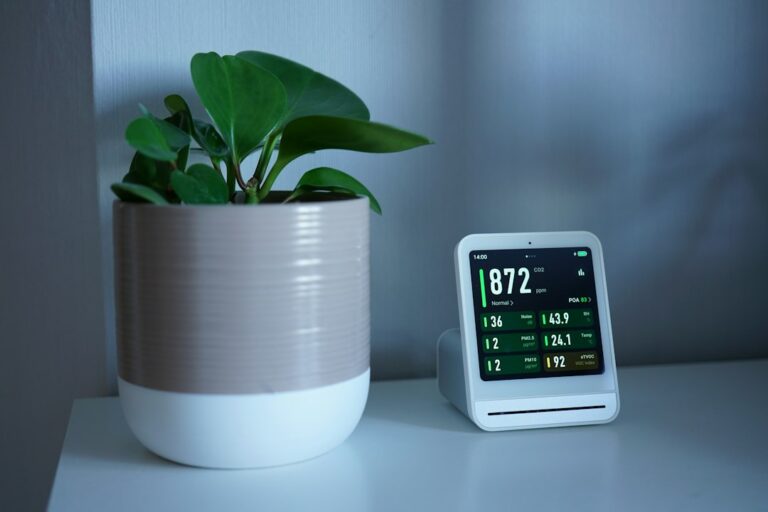
- Get a simple hygrometer. An inexpensive digital thermometer and hygrometer is enough. UNH Extension recommends pairing one with a humidifier to see how much it is helping, and the same logic applies to grouping.
- Take a baseline reading. Place it in an open spot in the same room, away from plants, and note the reading at the same time of day on a few different days.
- Move it into the cluster. Tuck it among the plants at leaf height and take readings at the same times of day again.
- Compare, then decide. If the reading inside the group is noticeably higher than the open room, grouping is doing its job. If there is barely any difference, your room is likely too large, too drafty or too dry for grouping alone, and a humidifier or a more sheltered spot is the next step.
This small test turns a vague tip into a decision based on your own space, which is far more useful than any general figure.
Signs your plants are happier in a group
Numbers are one check; the plants themselves are another. As new growth comes in, look for leaves that unfurl fully instead of getting stuck or tearing, fewer new brown tips on humidity-loving plants, and edges that stay soft rather than papery. Old damage will not reverse, so judge by the new growth.
Watch for the opposite signals too. Soil that stays wet much longer than before, a musty smell, white fuzz on the soil surface or spreading spots on leaves suggest the group is too tight or the air too still. Space the pots out a little and let more air through.
Grouping as a whole-routine habit
One pleasant side effect of a plant cluster is that care gets easier. Plants with similar needs sitting together are simpler to check and water in one pass. The same idea helps when you go away: moving plants together, out of direct sun, can slow how quickly they dry out, and our guide on how to water plants while on vacation covers the other steps to take before a trip.
The honest bottom line: grouping plants is free, easy and mildly helpful, especially for leafy tropical plants in a calm corner. Treat it as one layer of a sensible routine, measure whether it is making a difference, and add a humidifier only if your plants and your readings both say you need more.
FAQ
Does grouping plants together really increase humidity?
Yes, but only locally. Water vapor from leaves and damp potting mix lingers in the still air among the plants, creating a slightly more humid microclimate. University of Illinois Extension describes the benefit as improving humidity immediately surrounding the plants, not the whole room.
How close should plants be when grouping them for humidity?
Close enough that the foliage forms a loose canopy, but not so tight that leaves press against each other. Some airflow between plants helps leaves dry and lowers the risk of fungal problems and pests.
Is grouping plants better than misting?
For most homes, yes. University of Illinois Extension notes that misting affects humidity for only a short time, so it has to be repeated, and that too much misting can increase disease. Grouping creates a steadier, if small, microclimate with no daily effort.
Can I combine grouping with a pebble tray?
Yes, and they work well together. Set the whole cluster on one wide tray of pebbles and water, keeping the pots on the stones and not sitting in the water. Both methods work best with several plants in a room with low air movement.
Which plants should not be grouped for humidity?
Cacti, succulents and other plants that prefer dry air do not need a humid microclimate and are better kept in brighter, drier spots. Also separate any plant with pests or disease until it is clean, so the problem does not spread through the group.