Do Pebble Trays Work for Humidity? The Honest Science
Do pebble trays work for humidity? Yes, but only a little, and only right around the plant. Water evaporating from the tray adds moisture to the air near the leaves, then spreads out into the rest of the room almost immediately. University extension services still list pebble trays as a valid option, but they describe the effect as small. A tray will not change the humidity of your room. It can give a modest local boost, it works better under a group of plants than under one, and it costs almost nothing. If you have a fussy fern or calathea in dry winter air, a tray alone is rarely enough.
That is the short version. The rest of this guide explains why the effect is small, how to set a tray up so it does no harm, and how to check with your own eyes whether yours is doing anything at all.
What a Pebble Tray Is Supposed to Do
A pebble tray is a shallow saucer filled with gravel or stones, topped up with water, with the pot sitting on the stones rather than in the water. The idea is simple. Water evaporates from the tray, the air just above it gets a little moister, and the leaves sitting in that air lose water a little more slowly.
Nothing about that idea is wrong. Evaporation is real and it does add water vapor to the air. The question is not whether a tray adds moisture. It is whether the moisture stays near the plant long enough, and in a high enough amount, to make a difference the plant can feel.
Here is where most beginner advice goes quiet. Water vapor does not sit politely above the saucer. It mixes with the surrounding air and drifts away in every direction. Your room is also constantly swapping air with the rest of the house through doorways, heating vents and drafts. So the tray is working against a large, moving volume of air with a very small surface of water.
What the Extension Experts Actually Say
University extension services are the most useful sources here, because they are not selling trays or humidifiers.
The University of New Hampshire Extension, in an article published January 15, 2025 (read September 25, 2026), says most houseplants prefer a relative humidity of 40 to 60 percent, with tropical species doing best at 70 to 80 percent. It recommends a humidifier placed close to your plants as the method that offers the most benefit, and it notes that pebble trays work best with several plants and in a small room with low airflow. That last detail matters, and we will come back to it.
Nebraska Extension educator Sarah Browning, in a guide dated January 10, 2021 (read September 25, 2026), also describes the pebble tray as a way to raise humidity around the plant's foliage. Her instructions are specific: a tray one to two inches deep and two to three inches wider than the pot on each side, filled with stones, with the water kept below the base of the pot so the plant never sits in water. The same guide dismisses misting, because you would need to mist every few minutes to get a meaningful result.
Put those together and you get an honest picture. Extension services do not call pebble trays useless. They also never call them the strongest option. They sit in the middle: a small, local help.
Why the Boost Is So Small
Three things work against a pebble tray, and none of them are your fault.
Surface area. The amount of water a tray can release depends heavily on the area of water exposed to air. A saucer a few inches wider than a pot has a small exposed surface, and much of it is covered by stones and the pot itself.
Air movement. The moist air above the tray is replaced by drier room air all the time. Heating and cooling systems speed this up. The drier the room, the faster that exchange strips the extra moisture away.
Room volume. Even a modest living room holds a large volume of air compared with a saucer of water. A tray cannot meaningfully move the humidity of a whole room, which is why extension sources describe the effect as local.
Informal home measurements point the same way. Garden writer Robert Pavlis, on his Garden Myths site, describes an orchid grower who placed a humidity meter just above a pebble tray in winter and found only a slight rise at the stones that faded to nothing a short distance higher. One hobbyist test is not a lab study, but it lines up with the physics. The closer the leaves are to the tray, the more of that small benefit they get.
So, Do Pebble Trays Work for Humidity at Home?
Here is the rule you can actually follow. A pebble tray is worth setting up when these things are true:
- The plant is small and low. Leaves sitting close to the tray catch more of the moist air than leaves several feet above it.
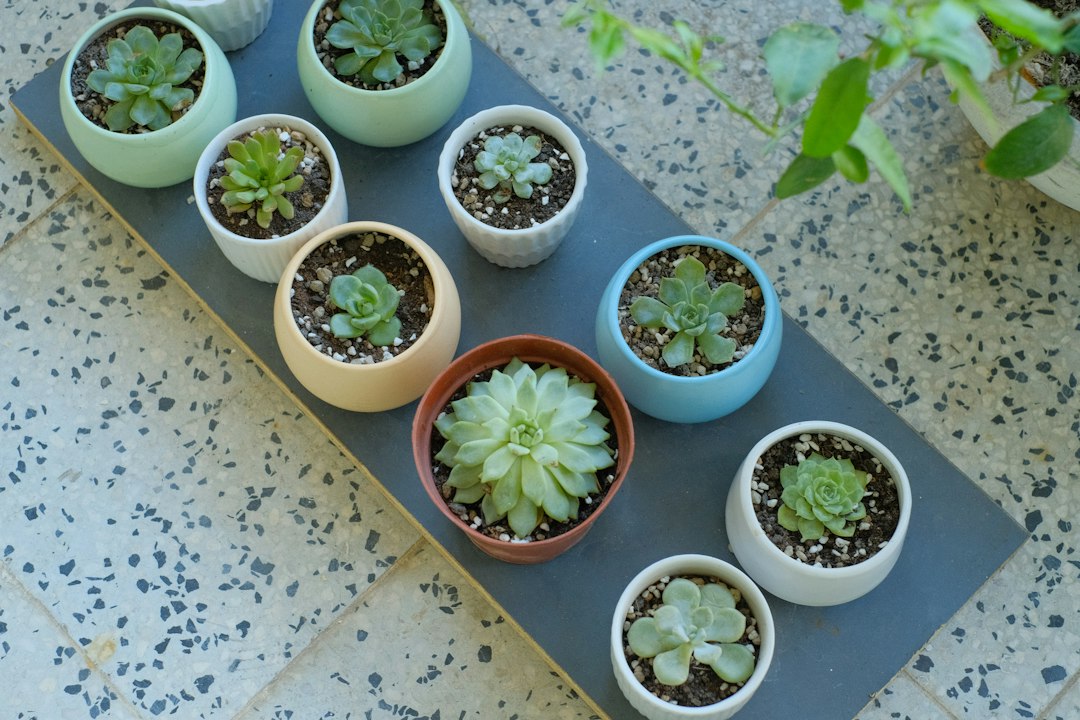
- You are grouping several plants. Many pots on one wide tray give you more exposed water and more leaves sharing the same pocket of air. The UNH guidance above points to this setup directly.
- The room is small and not drafty. A tray near a heating vent or an open doorway is fighting a losing battle.
- You want a free or cheap first step. A tray does no harm when it is set up correctly, so it is a reasonable thing to try before spending money.
A pebble tray is probably not enough when:
- The plant is a known humidity lover such as a fern, calathea or many orchids, and your home is dry in winter.
- The plant sits near a radiator, heating vent or air conditioner.
- Leaves keep browning at the tips and edges after you have ruled out watering problems. If you are not sure, start with our guide to brown tips on plant leaves, because low humidity is only one of several causes.
In those cases, a humidifier near the plants or an enclosed space such as a cloche or terrarium will do more. Both of those appear in the same extension guidance as stronger options.
How to Set Up a Pebble Tray So It Does No Harm
The biggest risk with a pebble tray is not that it fails to help. It is that it quietly keeps the roots wet. Follow these steps.
- Choose a tray wider than the pot. Nebraska Extension suggests two to three inches of extra width on each side and a depth of one to two inches.
- Fill it with stones or gravel. Any clean, washed stones work. The stones exist only to hold the pot above the water.
- Set the pot on top of the stones. The bottom of the pot must sit above the waterline.
- Add water to just below the top of the stones. Never let the water touch the base of the pot or wick up through the drainage hole.
- Top up as it evaporates, and rinse now and then. Standing water can grow algae and collect mineral crust from tap water. A quick rinse keeps it clean. If you see white crust building up, our guide to hard water and mineral buildup explains what it is.
When you water the plant itself, drain the pot first and then return it to the tray. If excess water pours through and floods the stones, the pot ends up sitting in water, which is exactly what the tray setup is meant to prevent. Constantly wet soil is one of the fastest routes to trouble, and our guide to root rot signs in houseplants shows what to look for if you suspect it has already started.
The Simple Home Test: Is Your Tray Doing Anything?
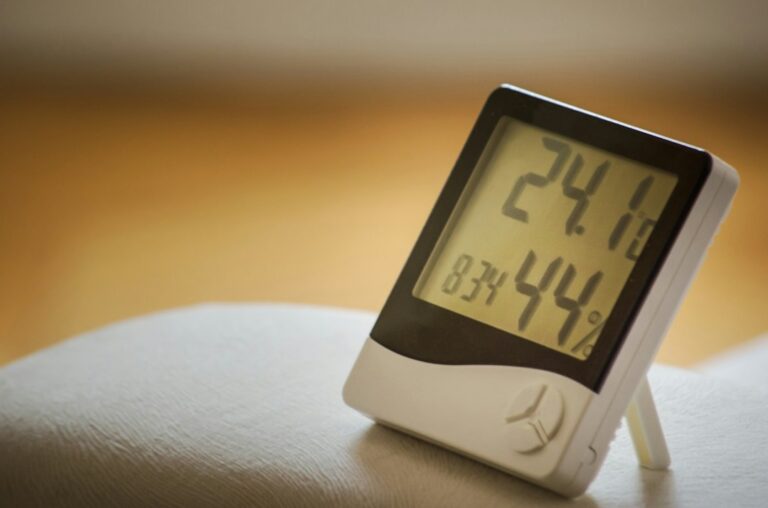
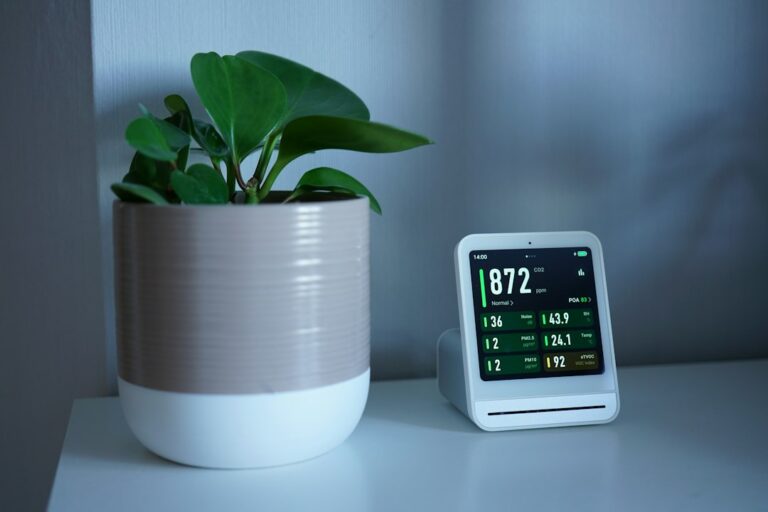
Most articles on this topic stop at "it helps a little." You do not have to take anyone's word for it, including ours. You can check your own setup with an inexpensive digital hygrometer, the same kind of monitor UNH Extension recommends pairing with a humidifier.
- Take a room reading first. Place the hygrometer on a shelf or table away from plants, water and vents. Leave it until the number stops changing, then note it.
- Move it to the tray. Set it at leaf height, right beside the plant on the tray. Let it settle again and note the number.
- Compare the two. If the reading at the plant is barely different from the room reading, the tray is not doing much in your home. If there is a clear difference, it is helping locally.
- Repeat in winter. Heating season is when indoor air is usually driest, so a winter reading tells you the most.
Hygrometers vary in accuracy, so treat small differences with caution. What you are looking for is a clear, repeatable gap, not a single decimal point. If your readings show little difference and your plant is still struggling, you now have evidence rather than a guess, and you can move on to a stronger method with confidence.
Pebble Tray vs. Other Humidity Methods
Here is how the common methods compare, based on the extension guidance cited above.
| Method | What the sources say | Best for |
|---|---|---|
| Misting | Nebraska Extension calls it ineffective unless done every few minutes | Not recommended as a humidity fix |
| Pebble tray | A small boost around the plant; UNH says it works best with several plants in a small, low-airflow room | Small, low plants and grouped plants |
| Grouping plants | Plants close together create a small pocket of slightly higher humidity, per Nebraska Extension | Anyone with several plants |
| Cloche or terrarium | Traps moisture around the plant, per Nebraska and UNH Extension | Small, very humidity-hungry plants |
| Humidifier near plants | UNH calls it the option that offers the most benefit when placed close by | Dry homes and humidity-loving plants |
Notice that the pebble tray and grouping work best together. If you only do one thing today, put several plants on one wide tray instead of giving each plant its own small saucer.
Common Pebble Tray Mistakes
- Letting the pot sit in water. This defeats the purpose and risks rot. Keep the water level below the pot base.
- Expecting it to fix a dry room. It cannot. It only helps the air right around the plant.
- Treating it as a watering system. The tray does not water the plant. Keep checking the soil as usual. If you need a refresher, see how to tell if your plant needs water.
- Forgetting to clean it. Stagnant water collects algae and minerals over time.
- Placing it next to a vent. Moving air strips the moisture away faster than the tray can add it.
The Honest Verdict
Pebble trays are not a myth and they are not magic. They add a small amount of moisture to the air right next to your plant, and that benefit fades fast with distance. They do the most good under a group of small plants in a calm, compact room. They do the least good under one tall plant next to a heating vent.
If your plants look fine, a tray is a harmless, cheap habit you can keep. If your plants are showing stress and your hygrometer shows little change at the tray, the tray is not your answer, and a humidifier or an enclosed case is the next honest step.
FAQ
Do pebble trays work for humidity in a whole room?
No. Extension guidance describes the effect as local, meaning it helps the air right around the plant. Water vapor spreads out and mixes with the room air quickly, so a tray cannot noticeably change the humidity of an entire room.
Should the pot sit in the water on a pebble tray?
No. The pot should sit on top of the stones, with the water level below the base of the pot. Nebraska Extension warns that a plant sitting in water ends up with constantly wet soil, which can lead to root rot.
Is a pebble tray better than misting?
For most people, yes. Nebraska Extension notes that misting would need to be repeated every few minutes to raise humidity meaningfully. A pebble tray provides a small, steady effect without that effort, as long as it is set up correctly.
What kind of stones should I use in a pebble tray?
Any clean, washed gravel or decorative stones will do. The stones only need to lift the pot above the water. Rinse them occasionally to clear away algae and mineral buildup.
How do I know if my pebble tray is helping?
Use a digital hygrometer. Take one reading away from your plants and one at leaf height on the tray, letting each settle. A clear, repeatable difference means the tray is helping locally. Little or no difference means you likely need a stronger method.