
Can You Over Humidify a Plant? Signs, Limits and Fixes
Can you over humidify a plant? Yes, but rarely in the way people fear. At the humidity a lived-in room can comfortably hold, the air itself seldom harms common houseplants. The damage comes from what extra moisture sets up: leaves that stay wet long enough for gray mold, potting mix that dries so slowly the roots suffer, and water collecting on cold windows and walls, which usually shows up before your plants are in trouble.
So the fix is rarely "turn the humidifier off." It is "keep the moisture in the air, not on the leaves or in the soil." Here is how to tell which problem you have, where the real limits sit, and a routine that keeps added humidity helpful.
When Can You Over Humidify a Plant? Three Ways It Happens
Too much moisture reaches a plant by three routes. Each one leaves different clues.
1. Leaves that stay wet. Gray mold, the fungal disease most tied to damp indoor conditions, needs water on the leaf surface or air that is close to saturated. University of Maryland Extension's page on gray mold, or Botrytis blight, on indoor plants (read September 24, 2026) lists the conditions that favor it as wet leaves, high humidity, cool temperatures and cloudy, overcast days. A humidifier aimed straight at the foliage, or misting late in the day, can keep leaves wet for hours.
2. Potting mix that dries too slowly. Plants lose less water through their leaves when the air is very humid, so they draw less from the pot, and the mix stays wet longer. Keep the same watering schedule after raising the humidity and you can overwater without changing anything else.
3. The room itself. Your home has a moisture ceiling of its own. Water beading on glass or walls is the sign you have reached it.
The rest of this guide takes each route in turn.
Wet Leaves: The Gray Mold Line
Gray mold is the disease most tied to excess moisture indoors. University of Maryland Extension describes it as often beginning with fairly large grayish to tan areas on older leaves or spent flowers, with dusty gray spores that are easy to see. Infected areas can enlarge quickly and cause the tissue to collapse.
The useful number comes from the UC Statewide IPM Program's gray mold page (read September 24, 2026): spores start new infections only after plants have been continuously wet for 6 or more hours, or when relative humidity has stayed above about 90 percent for 6 or more hours.
That tells you where the real risk lives. An ordinary room held at a sensible setting is nowhere near 90 percent. But a leaf sitting in a humidifier's mist plume, a plant misted in the evening and left wet overnight, or a crowded shelf where air never moves can all cross that line.
University of Maryland Extension's management advice is refreshingly practical: anything that lowers humidity, decreases leaf wetness or increases air circulation helps. Water early in the day so leaf surfaces dry quickly, space plants so air can move between them, and in most home conditions, remove infected parts and shift to drier conditions.
Wet Soil: Edema, Rot and Gnats
The second route is slower and easier to miss, because nothing looks wrong with the air.
Edema. The UC IPM page on edema (read September 24, 2026) describes raised, scabby areas, especially on the undersides of leaves, often brown or tan and about 1/16 inch across. It explains that edema often develops when soil is especially wet and transpiration is reduced, such as in cloudy weather or exceptionally high humidity. Roots take up water faster than the leaves can release it, and the excess damages leaf tissue. The reassuring part: UC IPM says the damage is aesthetic and does not threaten plant health. The blisters will not heal, but new leaves can come in clean once watering eases off and drainage improves. Its photo examples include kalanchoe, a common succulent houseplant.
Root trouble. Mix that stays wet for days leaves roots short of air. If a plant in a humid room starts yellowing and its stems soften, check the roots before adding more water; our guide to root rot signs in houseplants shows what healthy and rotting roots look like.
Surface life. A constantly damp surface is where white fuzz and tiny flies show up first. White mold on houseplant soil is usually a sign the top layer is staying wet, and fungus gnats on houseplants are a sign the mix is staying moist enough for their larvae. Both point to the same fix: let the mix dry more between waterings.
The Room: Your House Hits Its Limit First
Here is the part most humidifier guides leave out. In a home, the ceiling on humidity is usually set by the building, not by the plants.
The U.S. Environmental Protection Agency's brief guide to mold, moisture and your home (last updated February 18, 2026, read September 24, 2026) advises keeping indoor humidity below 60 percent, ideally between 30 and 50 percent. It also says that if you see condensation or moisture collecting on windows, walls or pipes, you should act quickly to dry the surface and reduce the moisture source.
Compare that with what the plants want. University of New Hampshire Extension (January 15, 2025, read September 24, 2026) says most houseplants, excluding cacti, succulents and a few others, prefer 40 to 60 percent relative humidity. A room kept in the 40s or low 50s suits most plants and stays under the EPA ceiling. Pushing the whole room higher mostly buys you wet windows.
That makes your windows a free second gauge. If you wake up to water running down the inside of the glass, the room is holding more moisture than its coldest surfaces can handle, whatever your plants would prefer. Turn the humidifier down, or move it closer to the plants and away from the window, so the extra moisture stays where it is needed.
Warning Signs at a Glance
| What you see | What it usually points to | First step |
|---|---|---|
| Grayish to tan patches with dusty gray fuzz on old leaves or spent flowers | Gray mold, favored by wet leaves and still, humid air | Remove affected parts, keep water off leaves, add air movement |
| Small raised, scabby blisters on leaf undersides | Edema: wet soil plus slow water loss from leaves | Water less often and improve drainage |
| White fuzz on the soil surface | A surface that stays damp | Let the top of the mix dry out |
| Tiny flies around the pot | Mix staying moist for long stretches | Water less often |
| Yellowing leaves, soft stems, sour-smelling mix | Roots sitting wet | Check the roots |
| Water beading on windows or walls | The room is too humid for the house | Turn humidity down |
How to Check Whether You Have Overdone It
Three checks, all free once you own a hygrometer.
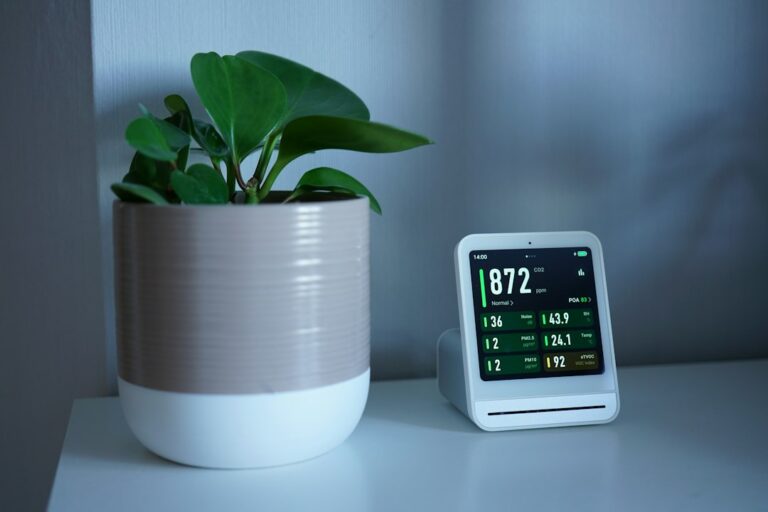
Read the air at leaf height. A hygrometer on the far wall tells you about the far wall. Put it among the plants you are humidifying, out of direct sun and out of the mist. Compare the typical reading with the ranges above.
Touch the leaves in the morning. If leaves near the humidifier feel damp, or you can see droplets on them or on the furniture nearby, the mist is landing rather than mixing into the air. That is leaf wetness, and it matters more than the number on the hygrometer.
Time the drying. After raising humidity, notice how many days the mix now takes to dry compared with before. If it has slowed, water less often. Check the soil every time rather than watering on the calendar.
What More Humidity Cannot Fix
Over-humidifying often starts as a fix for a problem that was never about humidity. Brown tips, drooping and yellow leaves all have several possible causes, and watering is behind many of them. If a plant is still struggling after the air has been humid for weeks, more humidity is unlikely to be the answer, and the classic mix-up is covered in overwatered vs underwatered: how to tell.
It is also worth conceding a trade-off. The moist air humidity lovers enjoy is also the air gray mold enjoys, especially when it is still. You cannot have maximum humidity and zero disease risk at once. Moderate humidity with moving air is the honest compromise for a home.
A Simple Routine You Can Follow
- Measure humidity at leaf height and keep the room below 60 percent, the EPA's ceiling for homes.
- Place the humidifier near the plants but not aimed at them, so mist never settles on leaves.
- Water, and mist if you must, early in the day so leaves dry before evening.
- Leave space between pots so air can move through the group.
- Check the soil before every watering, and expect it to dry more slowly once humidity rises.
- Remove dead leaves and spent flowers, where gray mold often starts.
- If condensation appears on windows or walls, turn the humidity down that day.
- Clean the humidifier tank as its manual directs.
Frequently Asked Questions
What humidity is too high for houseplants?
For the house, the EPA advises staying below 60 percent, and UNH Extension puts the preferred range for most houseplants at 40 to 60 percent. For the plants, the bigger risk is wet leaves: UC IPM says gray mold infections need 6 or more hours of continuous wetness or relative humidity above about 90 percent.
Can a humidifier cause root rot?
Not directly. But humid air slows how fast the mix dries, so if you keep watering on the same schedule, roots can end up sitting wet. Check the soil before each watering once the humidifier is running.
Can too much humidity cause mold on plants?
It can contribute. University of Maryland Extension lists wet leaves, high humidity, cool temperatures and cloudy days as the conditions that favor gray mold on indoor plants. Keeping mist off the foliage and air moving lowers the risk.
Should I run a humidifier for my plants at night?
Only if the mist is not settling on leaves and the windows stay dry. Leaves that stay wet overnight are the main concern, which is why University of Maryland Extension recommends watering early in the day.
Are succulents harmed by high humidity?
The bigger risk is usually the soil. UC IPM's edema examples include kalanchoe, a succulent, and edema follows wet soil combined with reduced water loss from the leaves. Keep succulents out of the humidifier's path and water them only when the mix is dry.