Plants That Need High Humidity (and Which Don’t)
The short answer: the plants that need high humidity are mostly thin-leaved tropical plants from rainforest floors. Ferns (especially maidenhair and Boston fern), calatheas, prayer plants (Maranta), rex begonias and nerve plants (Fittonia) are the ones that genuinely struggle in dry indoor air. Many other popular houseplants, including pothos, philodendrons, dracaenas, Chinese evergreen, cast iron plant, cacti and succulents, handle ordinary home humidity just fine. If your plant is not on the first list, humidity is probably not your problem.
That last sentence matters more than any list. A lot of beginners buy a humidifier for a plant that was actually thirsty, overwatered or sunburned. So below you will find which plants truly need humid air, which ones only like it, how to tell humidity damage from other problems, and the few fixes that are worth your time.
Why some plants need humid air and others don't
Leaves lose water to the air all the time. When the air is dry, they lose it faster. Plants that evolved on shaded, damp forest floors tend to have thin, wide leaves that were never built to hold water back, so dry air pulls moisture out of them faster than the roots can replace it. The result is the classic crisp, brown edge.
Plants from drier places took the opposite route. Succulents and cacti store water in thick tissue. Many tough foliage plants, like cast iron plant and Chinese evergreen, have leathery or waxy leaves that slow water loss.
So a useful rule you can actually follow: the thinner and more papery the leaf, the more likely the plant cares about humidity. A maidenhair fern's delicate fronds and a calathea's thin, patterned leaves sit at one end. A snake plant or a jade plant sits at the other. You can often make a good guess just by touching the leaf.
The three groups: needs it, likes it, doesn't care
Most "high humidity plants" lists online mix all three of these groups together, which is why they feel confusing. Sorting them this way tells you where to spend your effort.
| Group | Examples | What dry air usually does | What to do |
|---|---|---|---|
| Truly needs high humidity | Maidenhair fern, Boston fern, calathea, prayer plant (Maranta), rex begonia, nerve plant (Fittonia) | Brown, crispy leaf edges and tips, dropped leaflets, curling | Group them, use a pebble tray or humidifier, or grow the fussiest ones in a terrarium or cabinet |
| Likes humidity but usually adapts | Moth orchids, anthuriums, alocasias, bird's nest fern, many philodendrons | Slower growth, occasional brown tips, new leaves that struggle to unfurl | Grouping and steady watering are usually enough |
| Doesn't need extra humidity | Pothos, dracaena, Chinese evergreen (Aglaonema), cast iron plant (Aspidistra), snake plant, cacti, succulents | Little or nothing | Leave them alone. Extra humidity can even encourage rot in succulents |
The first and third groups are backed directly by extension guidance. In a January 10, 2021 article that we read on September 23, 2026, Nebraska Extension in Lancaster County names ferns, rex begonias, prayer plant and calathea as plants requiring high humidity, and lists cacti, succulents, cast iron plant, Chinese evergreen, devil's ivy, philodendrons and dracaenas as plants that tolerate low humidity well. The middle group is a judgment call based on how these plants are commonly grown, and individual plants vary.
Plants that need high humidity, one by one
Maidenhair fern (Adiantum)
This is the fussiest common houseplant on the list. Its fronds are so fine that a few dry days can crisp them. Guidance from the UConn Home and Garden Education Center (2017 fact sheet, read September 23, 2026) says maidenhair fern "needs high humidity and consistent moisture to survive." If you want an easy fern, this is not it.
Boston fern
Tougher than maidenhair, but it shows dry air quickly by shedding tiny leaflets onto the floor. The same UConn fact sheet notes a Boston fern will drop leaflets if it gets too dry. If your fern leaves a trail of crunchy bits, humidity and watering are the first two things to check.
Calathea and prayer plant (Maranta)
These are the plants most people are thinking of when they search this topic. Both have thin leaves with bold patterns, and both brown at the edges in dry, heated rooms. They also react to irregular watering, which is why calathea browning is so often misdiagnosed. More on that below.
Rex begonia
Grown for its dramatic, often metallic leaves. It wants humid air, but it also dislikes wet leaves and soggy soil, so it is a plant where a pebble tray or a nearby humidifier works better than spraying the foliage.
Nerve plant (Fittonia)
A small forest-floor plant that collapses dramatically when its soil dries out and perks up after watering. It is one of the easiest plants to grow in a closed terrarium, which holds humid air around it without any daily effort from you.
Which plants don't need high humidity (even if lists say they do)
Search results for humid-room plants often include snake plant, aloe, spider plant and pothos. These plants will happily live in a bathroom, but that is not the same as needing one. Tolerating humidity and requiring it are different things.
This matters for two reasons. First, you do not need to buy anything extra for these plants. Second, putting a succulent like aloe or jade into a steamy, dim bathroom can do more harm than good, because damp conditions and low light slow how fast the soil dries.
There is also a surprising exception inside the fern family. UConn's fact sheet describes the Japanese holly fern as requiring less humidity than most other ferns. If you love the look of ferns but live in a dry apartment, that is a friendlier place to start than a maidenhair.
Is it really humidity? Rule these out first
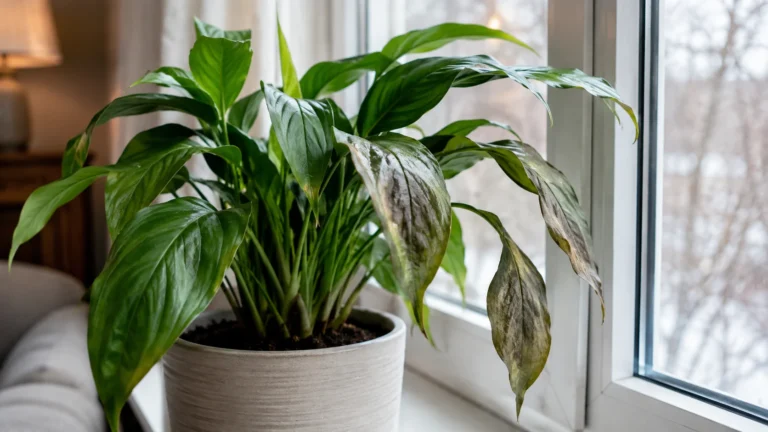
Here is the section most lists skip. Brown leaf edges are the classic sign of dry air, and Nebraska Extension calls drying and browning around leaf edges or tips "a common symptom of low humidity." But the same symptom has several other causes, and a humidifier will not fix any of them.
Before you blame the air, check these:
- Watering pattern. Soil that swings from bone dry to soaked is one of the most common causes of browning. Our guide to brown tips on plant leaves walks through how to tell watering damage from other causes.
- Where the brown shows up. Dry-air damage usually starts at the very tips and edges of the leaves, especially on newer growth. If whole leaves are going brown and crispy from the base upward, look at roots and watering first.
- Sun. Pale, bleached or brown patches in the middle of a leaf, on the side facing a window, point to leaf scorch from too much direct sun, not dry air.
- Heat sources. A plant beside a radiator, heating vent or space heater gets hit with hot, dry air far worse than the rest of the room. Moving it a few feet can fix the problem for free.
If you rule these out and the plant is in the "truly needs" group, humidity is your likely culprit.
How much humidity is enough? Where sources disagree
This is where honest advice gets a little messy. Nebraska Extension says that for plants, humidity needs vary by species, "but generally 70-80% is best." The same article notes that the Mayo Clinic recommends 30 to 50 percent indoor humidity for human health and comfort, and that many homes sit lower than that. Meanwhile, UConn's fern guidance suggests a humidifier near the plant to reach 30 to 50 percent in the room.
So what should you aim for? Our reading of both sources is this: the higher figure describes what humid-loving plants prefer, not what a normal living room can or should hold. Keeping a whole room very humid for a fern can be uncomfortable for you and encourages mold on walls and window frames.
The practical rule: raise humidity around the plant, not the whole house. Group humidity lovers together, give them a pebble tray or a small humidifier nearby, and move the truly fussy ones (maidenhair, Fittonia) into a terrarium or a clear cabinet where humid air stays put. If you want to track it, a basic hygrometer placed near the plants tells you far more than guessing.
Fixes that work, and one that mostly doesn't
Grouping plants. Plants release water through their leaves, so a cluster creates a slightly more humid pocket than one plant alone. Nebraska Extension notes that several plants grouped together can benefit each other. It costs nothing.
Pebble trays. Fill a tray with pebbles, add water, and set the pot on top so the pot bottom sits above the waterline. UConn advises keeping at least ¼ inch of water in the tray, never letting the pot touch the water, and washing or replacing the gravel at three-month intervals to stop algae. The pot must not sit in water, because constantly wet roots lead to rot.
A humidifier. This is the most reliable option for a group of demanding plants. A small one placed near your plant corner does more than a large one across the room. Keep it clean, and keep an eye on condensation on nearby windows.
Terrariums and cabinets. For maidenhair and nerve plants in dry homes, an enclosed space is often the difference between constant crisping and easy care.
Misting. This is the one to be skeptical about. Nebraska Extension states plainly that "misting plants is not an effective solution." UConn's fern guidance takes a softer view and calls misting helpful in winter when heating dries the air. We read that disagreement as a sign that misting is at best a short-lived extra, not a fix. If you enjoy it, use room-temperature water and do it in the morning, but do not rely on it for a plant in the "truly needs" group.
One more trap: do not answer dry-air symptoms by watering more. Extra water does not raise humidity, and soggy soil causes its own damage. Overwatering sits near the top of the list of common beginner houseplant mistakes for exactly this reason.
Choosing plants for a dry home
If your home runs dry in winter and you do not want to fuss, the simplest path is to choose from the "doesn't need it" group: pothos, philodendrons, dracaenas, Chinese evergreen, cast iron plant, snake plant, and succulents in a bright window. If you already own a calathea or a fern and want to keep it, pick one or two fixes above and stick with them, rather than trying everything at once.
And if you are shopping for your first humidity lover, a Boston fern or a prayer plant is more forgiving than a maidenhair fern. Start there, learn how it reacts to your home, and add fussier plants once you know your rooms.
FAQ
What houseplants need the most humidity?
Maidenhair fern, Boston fern, calathea, prayer plant (Maranta), rex begonia and nerve plant (Fittonia) are the common houseplants most likely to struggle in dry indoor air. Maidenhair fern is usually the most demanding of the group.
Do pothos and snake plants need high humidity?
No. Both handle normal indoor humidity well. They can live in a humid bathroom if the light is good, but they do not need extra humidity to stay healthy.
How do I know if my plant needs more humidity?
Look for browning that starts at the tips and edges of leaves, especially on a thin-leaved plant in a heated room. Before adding humidity, rule out uneven watering, direct sun and nearby heat sources, which cause similar browning.
Does misting help plants that need high humidity?
Not much. Nebraska Extension calls misting ineffective, and while some guidance suggests it helps a little in winter, the effect is brief. Grouping plants, a pebble tray or a small humidifier nearby do far more.
Is a bathroom a good spot for humidity-loving plants?
It can be, as long as the bathroom has a window with decent natural light. Humidity alone will not keep a fern or calathea healthy in a dark room, so light still comes first.