Self-Watering Pots: Honest Pros and Cons
A self-watering pot holds a water reservoir beneath or beside the soil, and a wick or a raised soil column draws moisture up as the roots use it, so the soil stays consistently moist without daily watering. That's genuinely useful for plants that want steady moisture and are easy to overwater on a manual schedule. It's actively harmful for plants that need to dry out between waterings, including most succulents, cacti, and drought-tolerant houseplants like ZZ plant and snake plant, because a reservoir that never runs dry keeps their roots sitting in constant moisture, which is close to the exact condition that causes root rot. The pot isn't good or bad on its own; it's a good match for some plants and a bad one for others, and the mismatch is where the real risk sits.
How a self-watering pot actually works
Most designs share the same basic structure: an inner pot holding the plant and soil sits above or beside a separate water reservoir, connected by a wick, a fabric strip, or direct contact between the soil and a raised water level. As the plant's roots draw moisture out of the soil, more water moves up from the reservoir through capillary action to replace it, the same physical principle behind bottom watering. You refill the reservoir on its own schedule, often weekly or less often depending on the reservoir size and how fast the plant is using water, rather than checking and watering the soil surface directly.
The core idea is that the soil settles into a steady moisture level instead of the wet-then-dry cycle that manual top watering creates, since the reservoir keeps replenishing what the roots take up.
What this genuinely solves well
Consistency for plants that dislike drying out. Some houseplants, many ferns, calatheas, and other thin-leaved tropicals, do best with soil that stays lightly and evenly moist rather than cycling between soaked and bone dry. A self-watering pot removes the guesswork and the risk of forgetting, since the reservoir does the work of keeping that steady moisture level going.
Fewer missed waterings for people who travel or forget. If the actual failure mode in your house is a plant going too long without water, not too little, a reservoir genuinely reduces that risk. Refilling a reservoir every week or two is a much lower-effort habit than checking soil on individual plants.
Less mess. Because water is drawn up from below rather than poured from above, there's less risk of splashing water on furniture, floors, or nearby surfaces, and no dripping saucer to empty after every watering session.
Where it causes real harm
This is the part that gets glossed over in a lot of gadget-focused content: a self-watering pot's entire mechanism is built around keeping soil consistently moist, and that is exactly the wrong condition for plants that need their roots to dry out between waterings. ZZ plant and snake plant store water in thick rhizomes and leaves specifically so they can tolerate long dry spells, and their root systems are adapted to periods of dry soil, not constant moisture. Most succulents and cacti are the same, evolved for soil that dries fast and stays dry for extended stretches.
Put one of these plants in a reservoir system with the soil column sitting in contact with a water level that never runs dry, and the roots are effectively kept wet all the time, with no chance to breathe the way they would in a normal dry-out cycle. That's a close match to the conditions that cause root rot in a badly overwatered plant on a manual schedule: sustained moisture around the roots, low oxygen at the root zone, and the conditions favored by the fungi behind root rot. The pot didn't do anything wrong mechanically; it did exactly what it's designed to do, for a plant that needed the opposite.
The plants that do well, and the plants that don't
| Does well in a self-watering pot | Does badly in a self-watering pot |
|---|---|
| Peace lily, calathea, ferns: plants that like consistent moisture | ZZ plant, snake plant: drought-tolerant, rhizome or leaf water storage |
| Most tropical foliage plants that wilt quickly if allowed to dry fully | Succulents and cacti: adapted to dry, fast-draining conditions |
| Herbs and plants you tend to underwater from forgetting | Any plant already prone to root rot in your care |
If you're not sure which category a plant falls into, the general rule is: if a plant is usually recommended as drought tolerant, forgiving of missed waterings, or storing water in thick leaves, keep it out of a self-watering reservoir. If a plant wilts within a day or two of the soil drying out and generally wants to stay lightly moist, it's a reasonable candidate.
What to check before you use one
Not every product labeled "self-watering" behaves the same way, and a couple of practical checks matter more than the marketing:
- Confirm there's still a way for the soil to dry out somewhat, rather than the wick or soil column sitting in constant contact with standing water at all times. Some designs let you control how much the soil draws up; others don't.
- Empty and clean the reservoir occasionally, since standing water that sits for weeks can develop algae or become a source for fungus gnats, whose larvae breed in consistently damp soil.
- Don't treat the reservoir as "set and forget" forever. Check on the plant periodically the way you would any other, since a clogged wick or a reservoir that's run dry unnoticed can leave a plant thirsty despite the system supposedly handling it.
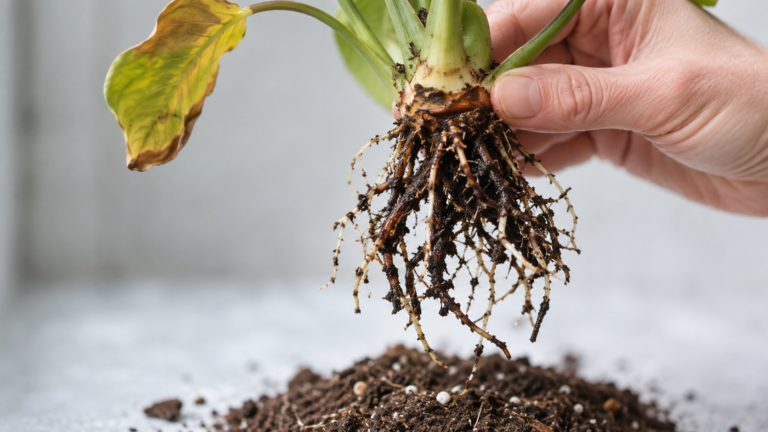
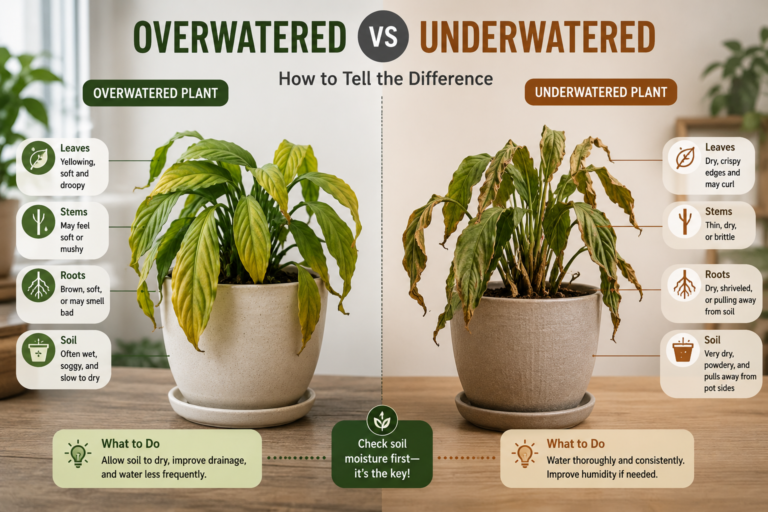
If a plant in a self-watering pot does start showing signs of a wet-root problem, such as yellowing leaves, a soft stem base, or soil that never seems to dry, root rot signs and rescue covers what to check and how to intervene, and overwatered vs underwatered helps confirm it's actually a moisture issue before you change anything else.
How this fits with the rest of your watering routine
A self-watering pot changes how water gets delivered, not whether the plant-matching rules still apply. The full method for watering correctly, whichever way the water arrives, is in how to water houseplants, and if you're weighing a reservoir system against manually watering from below, bottom watering vs top watering covers the closest manual equivalent: sitting a pot in water for a set time rather than a continuous reservoir.
If you're set on trying one for a ZZ plant or a snake plant anyway, at minimum let the soil dry out fully between reservoir refills rather than keeping it topped up continuously. Our ZZ plant and snake plant care guides cover why that dry-out period matters so much for these particular plants.
Frequently asked questions
Are self-watering pots good for beginners?
They can be, for the right plant. They reduce missed waterings and mess for plants that like consistent moisture, but they're a poor fit for drought-tolerant plants that need their soil to dry out between waterings, so the plant matters more than the beginner status.
Can a self-watering pot cause root rot?
Yes, if it's used for a plant that needs to dry out between waterings. Constant moisture at the roots, which is exactly what these pots are designed to provide, is close to the condition that causes root rot in an overwatered plant on any watering method.
Which houseplants should never go in a self-watering pot?
Drought-tolerant plants that store their own water are the clearest no: ZZ plant, snake plant, and most succulents and cacti. Their root systems are adapted to dry-out periods that a constant reservoir removes.
How often do I need to refill a self-watering pot?
It varies with reservoir size and how fast the plant is using water, but many designs need refilling somewhere between weekly and every couple of weeks. Check the reservoir level directly rather than assuming a fixed interval.
Do self-watering pots need a drainage hole too?
Designs vary, so check the specific product's instructions. Some rely entirely on the reservoir and wick system without a separate overflow; using one without understanding how it drains excess water risks the same waterlogging a badly drained ordinary pot causes.