Heating Dries Out Houseplants: Winter Humidity Fixes
Short answer: when heating dries out houseplants, winter damage shows up first at the leaf edges. Warming cold winter air without adding moisture makes its relative humidity fall. Iowa State University Extension (read September 24, 2026) notes that many homes sit at only 10 to 20 percent humidity in winter, well below the 40 to 50 percent many houseplants prefer. The fix is humidity near the plants and less hot air on them, not more water, because roots drink less in winter's low light.
That last point is where most winter plant trouble starts. This guide explains why the heat dries the air, how to tell dry air from dry soil, and a simple routine for the heating season.
Why Heating Dries Out Houseplants: Winter Air, Explained
Relative humidity is not a measure of how much water is in the air. It is how much water the air holds compared with the most it could hold at that temperature. Warm air can hold much more water than cold air.
In winter, the air coming into your home from outside is cold and carries little moisture. When the heating warms it up, the amount of water stays the same, but the air's capacity grows. The percentage drops. Nebraska Extension educator Sarah Browning (read September 24, 2026) puts it plainly: in winter, furnaces produce warm, dry air.
That is why Iowa State's winter figure is so low. Nothing is removing water from your plants' surroundings on purpose. The heat simply makes the same air thirstier, and it pulls moisture from leaves and the surface of the potting mix faster.
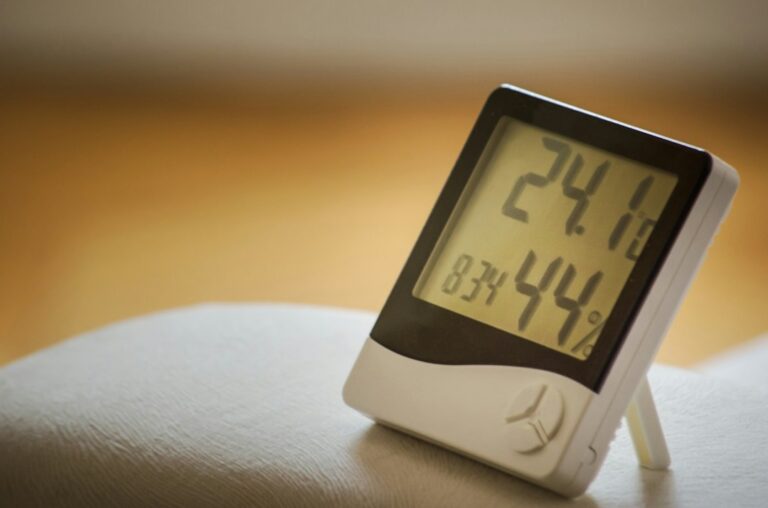
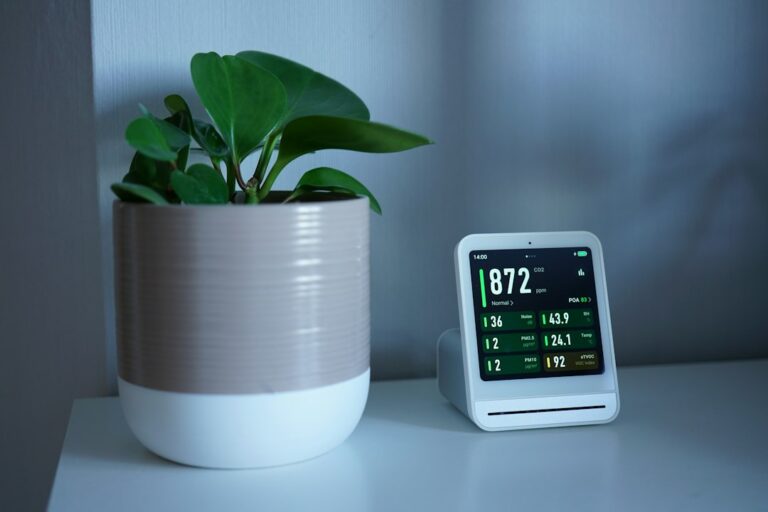
You can watch this happen at home. Put a hygrometer at leaf height among your plants in early fall and note the typical reading. Check again a week or two after the heating comes on. The difference is your own home's version of the winter humidity drop, and it tells you how much help your plants actually need.
Which Plants Feel It First
Not every plant cares. Nebraska Extension names ferns, Rex begonias, prayer plant (Maranta) and Calathea among the plants that need high humidity to grow well. If you own any of them, they are the plants to watch first once the heat comes on.
Location matters too. A plant sitting in the stream of air from a heat vent, or on or beside a radiator, lives in air that is warmer and drier than the rest of the room. Nebraska Extension's advice is to avoid placing plants on or near radiators, heat vents and ducts, as well as outside doors. You do not need to rearrange the house. You only need to get the plant out of the direct heat.
Signs Your Plant Is Reacting to Heated Air
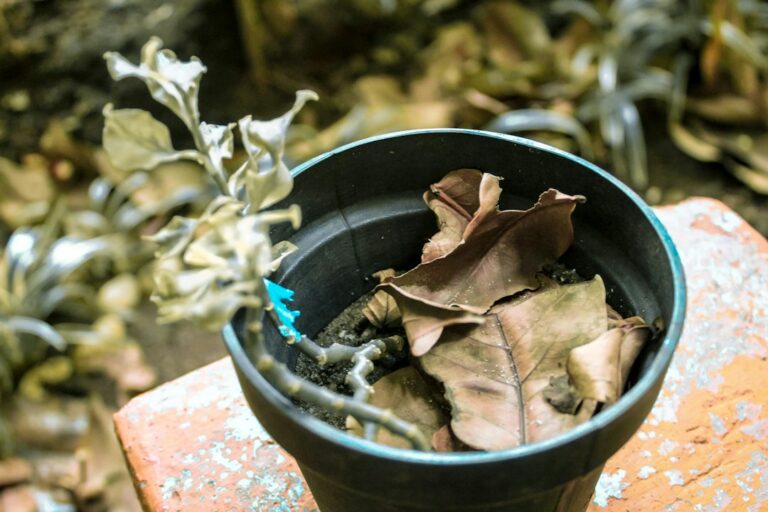
Brown, dry leaf edges and tips. Nebraska Extension lists drying and browning around leaf edges or tips as a common symptom of low humidity. It is the classic winter sign. The same symptom has other causes, including watering problems and mineral buildup, so it is worth ruling those out with our guide to brown tips on plant leaves.
Tiny pests you did not have in summer. Spider mites like warm, dry conditions. UConn Extension has described spider mites thriving in hot, dry weather, and the University of Arizona Cooperative Extension notes that high humidity is unsuited to them. A heated winter room can suit them well. Look for fine speckling on leaves and faint webbing, and see our guide to spider mites on houseplants for what to do next.
Leaves near cold glass. Winter stress comes from both directions. North Carolina State Extension's Kinsey Watkins (read September 24, 2026) notes that winter can bring drafty windows as well as dry hot air from vents, and that drastic swings in conditions are hard on plants. Damage from cold looks different from dry-air damage, and cold damage on houseplants shows how to tell them apart.
Dry Air or Dry Soil? The Winter Watering Trap
Here is the mistake the heating season sets up. The leaves look dry, so the plant gets more water. But the roots are not asking for it.
Illinois Extension's Richard Hentschel (read September 24, 2026) explains that late fall through December bring some of the lowest light levels into our homes, and that nearly all houseplants are "coasting" all winter. They are not actively growing, so they cannot use water the way they used to. His advice: you will be watering less often, and it is better to keep soils on the dry side, but plants should never wilt. North Carolina State Extension agrees that winter watering can be significantly reduced, because slower growth means less water uptake.
So in a heated home you often get two opposite conditions at once: dry air around the leaves and a root zone that stays moist for longer than you expect. The warm, dry air can make the top of the mix feel dry even when the mix below is still wet.
The answer is to check deeper before you water. North Carolina State Extension suggests three ways: feel the upper 2 inches of soil with your finger, learn how heavy the pot feels when saturated compared with when it is dry, or push a wooden skewer down into the pot and pull it out to see whether moist mix clings to it.
| Clue | Points to dry air | Points to dry soil |
|---|---|---|
| Where the damage is | Brown, crisp leaf edges and tips | The whole plant droops or wilts |
| The mix 2 inches down | Still moist | Dry |
| Weight of the pot | Still heavy | Noticeably light |
| What helps | More humidity near the plant, less hot air on it | A thorough watering |
For the full winter rhythm, our guide to watering houseplants in winter explains why less is right.
What Actually Helps During the Heating Season
Extension services agree on a short list.
Redirect the hot air. Illinois Extension's advice is simple: if you can turn off or redirect the hot, dry air from a heater vent, your houseplants will be happier. Moving a plant a little way out of the stream of air counts too.
Group your plants. Iowa State explains that water evaporating from the potting soil, plus water lost through the leaves, raises humidity in the space around a group. Illinois Extension suggests grouping plants for the winter so they share that humidity.
Use a pebble or gravel tray. Iowa State recommends trays filled with pea gravel or pebbles, with water added but the bottoms of the pots kept above the water line. Evaporation from the tray raises the humidity nearby.
Run a humidifier near the plants. Iowa State calls humidifiers an excellent way to increase relative humidity in the home, and North Carolina State Extension suggests placing one near your plants.
Skip the misting. Iowa State says misting is not an effective way to raise humidity, because foliage dries quickly and you would have to mist several times a day.
Hold the fertilizer. Illinois Extension advises against feeding houseplants while they are inactive.
What Not to Do
Do not water more to fix crisp tips. It is the most common winter mistake, and it trades a cosmetic problem for a root problem.
Do not push the whole house to tropical humidity. Cold windows are where extra moisture shows up first in winter. The U.S. Environmental Protection Agency's guide to mold, moisture and your home (read September 24, 2026) advises keeping indoor humidity below 60 percent and acting quickly if condensation collects on windows, walls or pipes. Raise humidity close to the plants that need it instead.
Do not expect brown tips to turn green again. Damaged tissue stays brown. Judge your changes by the new leaves that grow after you make them. Trimming the brown edge with clean scissors is purely cosmetic and is fine if it bothers you.
A Simple Heating-Season Routine
- Before the heat comes on, note your hygrometer reading at leaf height.
- A week or two after the heat starts, read it again.
- Move any plant out of the direct stream of hot air, and off radiators.
- Group humidity-loving plants together, and add a pebble tray or a humidifier near them if the reading has dropped a lot.
- Check the mix 2 inches down, or feel the pot's weight, before every watering.
- Water less often than in summer, but do not let plants wilt.
- Look under leaves for spider mites every week or two.
- If windows or walls start to fog with condensation, turn the humidifier down.
Frequently Asked Questions
Does central heating dry out plants?
It dries the air around them. Heating warms indoor air without adding moisture, so relative humidity falls. Iowa State University Extension notes that many homes drop to 10 to 20 percent humidity in winter, and leaves lose moisture faster in that air.
Should I water my houseplants more in winter because of the heating?
Usually not. Illinois Extension explains that houseplants are barely growing in winter's low light and cannot use water the way they do in summer. Check the mix a couple of inches down before watering, and fix dry air with humidity rather than extra water.
Is it bad to put plants near a radiator or heat vent?
Yes, for most houseplants. Nebraska Extension advises against placing plants on or near radiators, heat vents and ducts, because the air there is hotter and drier than the rest of the room.
What humidity do houseplants need in winter?
Iowa State University Extension says many houseplants prefer 40 to 50 percent relative humidity. Measure yours at leaf height with a hygrometer, and raise humidity near the plants that need it most.
Does misting help plants in dry winter air?
Not in any lasting way. Iowa State University Extension says plant foliage dries quickly after misting, so it would have to be done several times a day to make a difference.