Terrarium for Humidity Loving Plants: Is It Worth It?
Short answer: a terrarium for humidity loving plants works because the glass traps the water that evaporates from the soil and leaves, so the air around the plant stays far more humid than the room. For a small, slow-growing plant that browns in dry indoor air, an enclosure is the strongest humidity option you have. The catches are real, though: it needs bright indirect light but no direct sun, it limits how big the plant can get, and a fully sealed case can be too humid for many plants.
This guide treats the terrarium as a humidity tool, one option alongside a humidifier, grouping and pebble trays. It covers how an enclosure works, which kind suits which situation, a quick fit test for your plant, and the trade-offs most terrarium guides skip.
How an Enclosure Raises Humidity
Plants and potting mix release water vapor all the time. In an open room, that vapor drifts away. Under glass, it stays.
Nebraska Extension educator Sarah Browning (read September 24, 2026) describes the classic cloche as a tall, bell-shaped glass cover placed over humidity-loving plants to trap moisture evaporating from the soil or released from the leaves, maintaining a higher level of humidity. University of New Hampshire Extension's guide to raising humidity for houseplants (read September 24, 2026) calls terrariums, cloches and aquariums excellent ways to maintain a high-moisture environment.
There is one important detail. An open glass bowl is not the same thing. The University of Arizona Cooperative Extension explains that a container with a wide-open top lets water vapor escape into the room and cannot recycle moisture, so it behaves more like a dish garden. In dry air, it will not hold a humid environment. If humidity is the reason you want glass, the glass needs a lid or a cover.
Terrarium for Humidity Loving Plants vs Other Humidity Options
| Option | Where it raises humidity | Best for | Main catch |
|---|---|---|---|
| Cloche or closed case | Inside the glass, to a very high level | One or a few small, slow plants | Light, heat, size limits and too-constant air |
| Humidifier near the plants | Around the plants, or a whole small room | A shelf or collection, larger plants | Needs to run for hours, needs cleaning, can overshoot |
| Grouping plants | The space around the group | Several plants together | A local effect only |
| Pebble tray | Right around one pot | One plant | The pot must sit above the water, not in it |
| Misting | Briefly, on the leaves | Not recommended for humidity | Nebraska Extension calls it not an effective solution |
UNH Extension notes that a humidifier gives the most benefit when it sits close to the plants, and that it will likely need to run for several hours every day. That is the real comparison. A humidifier works on the room around the plant. A case creates a small room of its own.
Three Kinds of Enclosure, and What Each Does
A cloche over one plant. The simplest version. A glass bell sits over a single potted plant and holds humidity around it. It suits one small plant that needs a boost, and it lifts off in seconds.
A closed case or jar with a lid. The University of Arizona Cooperative Extension guide explains that a truly airtight case cycles water continuously and needs no further watering, while a case that is closed but not sealed dries slowly and needs infrequent watering. The same guide adds a warning that surprises many people: most plants rely on transpiration to pull water up from their roots, and in a permanently saturated atmosphere transpiration is limited, which can kill many kinds of plants.
A partly open case or glass cabinet. A case kept with a slight opening loses some water vapor on purpose. According to the Arizona guide, a partly open case with a humid interior suits a wide variety of plants that might not tolerate the saturated air of a sealed one, though it must be watched and watered before it dries out. Larger enclosures also buffer changes better, because more air and more mix slow both drying and overheating.
The idea is old. The Arizona guide points to the Wardian cases used to grow and transport plants in the 19th century as the original model of a nearly closed case.
Keep the Plant in Its Pot
You do not have to build anything to use an enclosure for humidity. The Arizona guide notes that a terrarium can be used as a humid chamber for plants in pots, and that collectors managing a collection often prefer it this way. Potted plants can be moved in and out easily, and the empty case can be washed clean.
For most people with one struggling plant, that is the practical version: the plant stays in its own pot, and the glass becomes its humid room. If the plant outgrows the case or stops needing it, it simply comes back out.
Does Your Plant Fit? A Quick Test
An enclosure is the right tool only when the answer to all five questions is yes.
- Is the plant small and slow-growing? UNH Extension says closed terrariums are best suited for smaller, compact plants, and the Arizona guide notes that a plant should not need regular pruning just to fit.
- Is it comfortable in bright indirect light rather than direct sun? The Arizona guide describes terraria as suited to plants that are small, shade-loving and tolerant of high humidity.
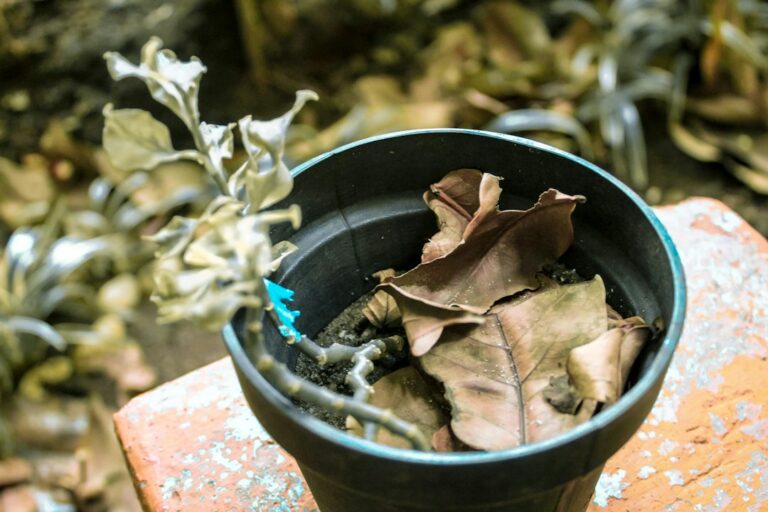
- Does it really need more humidity than your room gives? Nebraska Extension lists drying and browning around leaf edges and tips as a common symptom of low humidity, but that symptom has other causes too. Rule them out with our guide to brown tips on plant leaves before you buy glass.
- Can it cope with steady, unchanging conditions? The Arizona guide points out that many plants need air circulation or seasonal changes, and that conditions inside a terrarium can be too constant.
- Do you have the light? More on that below, because it is the question most people skip.
If you answered no to any of these, a humidifier, grouping or a pebble tray is the better fit.
The Trade-Offs Most Terrarium Guides Skip
Light is harder than it looks. The Arizona guide says the typical light level indoors is too low for a terrarium, so it needs a spot near a window or artificial light, and it calls artificial light the best option. A plant that was already stretching toward the window will not improve under glass. If you are unsure, check the signs your plant needs more light first.
Direct sun can cook it. The same guide calls a window risky, because direct sunlight can overheat the inside of a terrarium, and the amount and direction of sunlight through a window changes during the year. Sealed cases are the most vulnerable, and even a partly open case can overheat. The safest spot gets bright indirect light. If you ever see pale, bleached patches on the side facing the window, read up on leaf scorch on houseplants and move the case out of the sun.
More enclosed is not always better. It is tempting to seal the lid tight for maximum humidity. The Arizona guide warns that a saturated atmosphere limits transpiration, and that stress from excessive humidity and poor air circulation is hard to recognize. UNH Extension's simple rule is to occasionally lift the lid of any closed vessel to prevent excess moisture from building up.
It has a size limit. Every enclosure has a ceiling. A plant that grows fast will outgrow it, and then you are back to managing room humidity anyway.
Using a Cloche or Case: The Short Version
- Keep the plant in its own pot inside the glass.
- Put the case in bright indirect light, never in direct sun.
- Lift the lid or cloche now and then to let fresh air in.
- Water less often than you did outside the glass, and check the mix before each watering.
- Watch the plant itself. New growth that looks healthy is your sign the arrangement is working.
If You Want to Build a Planted Terrarium
Building a planted terrarium from scratch, with layers, growing media and a planting plan, is a hobby of its own and goes well beyond using glass for humidity. If that is where you are headed, the University of Arizona Cooperative Extension guide, The Terrarium: An Oasis of Humidity for Plants (May 2023, read September 24, 2026), is a thorough, independent place to start. For a potted plant that simply needs more humid air, a cloche or a case is one good answer among several, and often the simplest one.
Frequently Asked Questions
Does a terrarium really increase humidity for plants?
Yes, if it is closed or mostly closed. The glass traps moisture from the soil and leaves. UNH Extension calls terrariums, cloches and aquariums excellent ways to maintain a high-moisture environment.
Is an open terrarium good for humidity-loving plants?
Not for humidity. The University of Arizona Cooperative Extension explains that a wide-open top lets water vapor escape, so an open container cannot hold humid air in a dry room. It works more like a dish garden.
Can I put a potted plant inside a terrarium?
Yes. The Arizona guide describes using a terrarium as a humid chamber for plants in pots, which makes them easy to move in and out and keeps the case easy to clean.
Should I lift the lid of a cloche or closed case?
Yes, now and then. UNH Extension advises occasionally lifting the lid of any closed vessel to prevent excess moisture from building up, and the Arizona guide notes that a partly open case suits many plants that would not tolerate fully saturated air.
Can a terrarium get too hot?
Yes. The Arizona guide warns that direct sunlight can overheat a terrarium's interior and that sealed cases are the most vulnerable. Keep enclosures in bright indirect light.